Ron Johnston
Sign in to saveAlso known as Ronald John Johnston, R. J. Johnston
British geographer (1941-2020)
Person · Open Library
- Works
- 38
Top works
- Developments in Electoral Geography
- One-Game Wonder
- Future of Geography
- Future-Oriented Technology Analysis
- Geography of Elections
via Open Library + Wikidata
Music · MusicBrainz
- Type
- Person
- Gender
- Male
- Origin
- United States
- Active from
- 1961-01-22
- Active to
- 2019-09-11
Discography
- Songs of Pain1980
- The What of Whom1982
- Don’t Be Scared1982
- Hi, How Are You1983
- More Songs of Pain1983
- Yip/Jump Music1983
- Continued Story1985
- Respect1985
- Retired Boxer1987
- Merry Christmas1988
via MusicBrainz · CC0
Listeners · Last.fm
- Listeners
- 8
- Total plays
- 585
<a href="https://www.last.fm/music/Ron+Johnston">Read more on Last.fm</a>
Described at
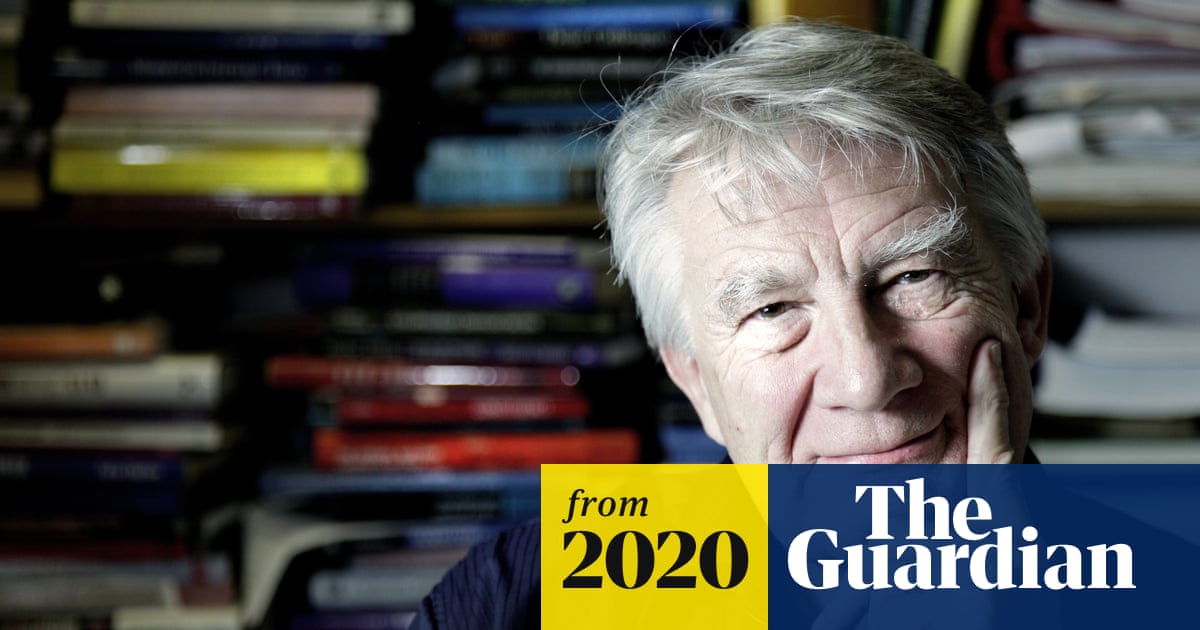
Ron Johnston obituary | Geography | The Guardian
Human geographer who showed that voters are influenced not only by their beliefs, but by where they live and work
theguardian.com →Ron Johnston published many books, specialising increasingly in elections and constituency boundaries. Photograph: Chrystal Cherniwchan Ron Johnston published many books, specialising increasingly in elections and constituency boundaries. Photograph: Chrystal Cherniwchan Ron Johnston, who has died aged 79, was a human geographer whose work in the field of electoral geography was drawn upon by political parties and policymakers, and influenced legislation on constituency boundaries. Also renowned as a historian of his subject, due to his magisterial account of Anglo-American human geography, Geography and Geographers (1979) , and a prolific scholar who published about 40 books and 800 papers on a wide range of subjects, from the late 1970s Ron specialised increasingly in elections. In books such as Geography of Elections (1979), co-authored by Peter Taylor, and Putting Voters in Their Place (2006), which he and I wrote, Ron showed that voters’ decisions are influenced not only by their personal beliefs, but also by where they live and work. He demonstrated that, contrary to common belief, national television and media campaigns had not rendered constituency campaigning obsolete. In fact, he showed, the harder candidates worked on local campaigning, the better they did. But it was his work on electoral systems and constituency boundaries that was most influential. Britain’s first-past-the-post system is disproportional, giving larger parties a larger share of seats than votes. Ron demonstrated that it could also be biased: even if two parties obtained the same vote-share nationally, the geography of their support could result in one winning more seats. Moreover, he showed that, between 1992 and 2010, a systematic bias favoured Labour over the Conservatives. Had the two parties tied on the national vote in 2001, Labour would still have obtained about 140 more seats. Part of the pro-Labour bias resulted from traditional Labour-voting constituencies having smaller electorates due to declining populations, and because of Scottish and Welsh over-representation at Westminster, so that it took fewer votes to elect each Labour MP. But, Ron also showed, most of the pro-Labour bias between 1992 and 2010 was created by other factors, such as turnout and efficient campaigning. In the three most recent UK elections, the Conservatives benefited from more efficient constituency campaigning. To minimise inequalities in constituency electorates, independent boundary commissions periodically redraw Britain’s constituency map. In The Boundary Commissions (1999), co-authored by David Rossiter and me, Ron revealed the inner workings and consequences of these reviews, and exposed the contradictions in the legal framework guiding the commissions’ activities. The framework enshrined two main principles: the arithmetic (equalising constituency electorates) and the organic (respecting community ties). But before 2011, when legislation changed, it did not prioritise one over the other, nor did it specify just how much electorates should vary from one seat to the other. When in 1983 Labour took the commissions to court (hoping to delay a review that would lose them seats), Ron was an expert witness, showing that the constituency map could be redrawn in thousands of different ways, many producing greater equality than the commissions’ plans. Subsequently, he designed alternative rules for boundary reviews. This influenced the new legislation in 2011 , establishing the priority of the arithmetic principle, and setting tight limits on the permissible range in constituency electorates. But the new rules, Ron realised, made it likely that future reviews would produce unprecedentedly radical changes to the constituency map, with adverse consequences for continuity of community representation. In front of parliamentary committees, he exposed these likely unintended consequences and described how they might be mitigated, again influencing (unsuccessful) at
Excerpt from a page describing this subject · 11,109 chars · not written by Vinony
Wikidata facts
- Instance of
- human
- Given name
- John
- Family name
- Johnston
- Gender
- male
- Citizenship
- United Kingdom
- Place of birth
- Swindon
- Occupation
- university teacher
- Educated at
- Monash University
- Employer
- Monash University
- Languages spoken
- English language
- Image
- Ron Johnston-FIG 1999 (2).jpg
Show 9 more facts
- described at URL
- www.theguardian.com/science/2020/jul/16/ron-johnston-obituary
- date of birth
- 1941-03-30
- member of
- British Academy
- date of death
- 2020-05-29
- name in native language
- Ron Johnston
- manner of death
- natural causes
- cause of death
- myocardial infarction
- writing language
- English language
- Commons category
- Ron Johnston
Sources (7)
via Wikidata · CC0