
File:Rudyard_Kipling_(portrait).jpg · Wikimedia Commons · See Wikimedia Commons
Rudyard Kipling
Sign in to saveAlso known as Joseph Rudyard Kipling, R. Kipling, Kipling
English writer and poet (1865–1936)
OverviewAI-generated
Rudyard Kipling was a writer whose professional career spanned from 1886 to 1932. He is recognized in the Nobel Literature collection and the American Academy Arts Sciences collection. His body of work includes 36 items.
Kipling received one Nobel Prize. He was born on December 30, 1865, and died on January 18, 1936. Following his death, his remains were buried or cremated on January 21 and January 23, 1936.
Synthesized by Vinony from 10 facts across 4 sources: Wikidata, Europeana Sparql, Nobel Prize, Vinony collections. Generated from structured data (not the Wikipedia text) and checked against those facts — may still contain errors.
Film & TV
Bombay, Bombay Presidency, British India [now Mumbai, Maharashtra, India]
Born in Bombay, Bombay Presidency, British India, the son of John Lockwood Kipling, a museum director and author and illustrator. This was at the height of the "British Raj", so he was brought up by Indian nurses ("ayahs"), who taught him something of the beliefs and tongues of India. He was sent "home" to England at the age of six to live with a foster mother, who treated him very cruelly.
Known for
- It's Pretty, but is it Art? — Self (archive footage)2023
via TMDB
Nobel Prize
- The Nobel Prize in Literature1907
“in consideration of the power of observation, originality of imagination, virility of ideas and remarkable talent for narration which characterize the creations of this world-famous author”
Wikidata facts
- Instance of
- human
- Gender
- male
- Citizenship
- United Kingdom of Great Britain and Ireland
- Place of birth
- Mumbai
- Place of death
- London
- Father
- John Lockwood Kipling
- Occupation
- traveler
- Position held
- rector
- Employer
- University of St Andrews
- Languages spoken
- English language
- Native language
- English language
- Award
- honorary degree
- Notable work
- Gunga Din
- Field of work
- children's and young adult literature
- Image
- Kiplingcropped.jpg
Show 24 more facts
- Commons Creator page
- Rudyard Kipling
- topic's main category
- Category:Rudyard Kipling
- place of burial
- Golders Green Crematorium
- Commons category
- Rudyard Kipling
- date of birth
- 1865-12-30
- date of death
- 1936-01-18
- Commons gallery
- Rudyard Kipling
- archives at
- Harry Ransom Center
- member of
- Freemasonry
- nominated for
- Nobel Prize in Literature
- start of work period
- 1886-00-00
- end of work period
- 1932-00-00
- influenced by
- Robert Louis Stevenson
- ethnic group
- English people
- cause of death
- ulcer
- date of burial or cremation
- 1936-01-23
- writing language
- English language
- name in native language
- Joseph Rudyard Kipling
- birth name
- Joseph Rudyard Kipling
- personal library at
- British Library
- has works in the collection
- Stedelijk Museum Amsterdam
- P12749
- Gotthelf Bergsträsser
- P8168
- USAir Flight 1493
- manner of death
- natural causes
Sources (13)
via Wikidata · CC0
Works in European collections
36 objects attributed to Rudyard Kipling, held across European museums, libraries & archives · via Europeana

Kim

Naulahka

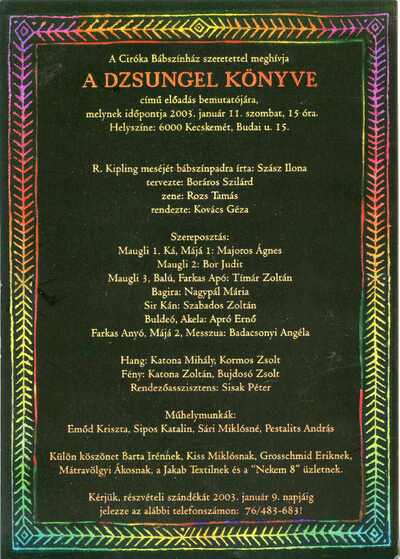
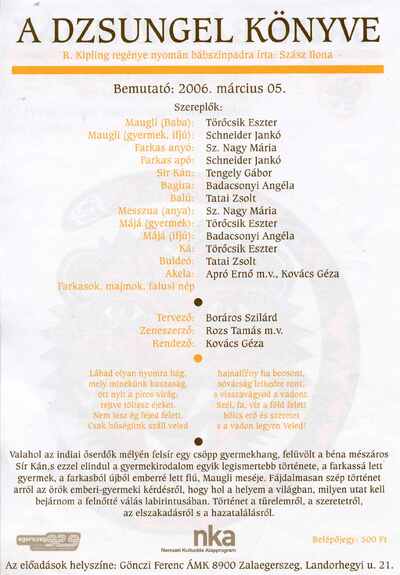
A dzsungel könyve

A maharadzsa kincse

Az elefántkölyök

Magyar Vakok és Gyengénlátók Országos Szövetségének hangoskönyvtára

A dsungel könyve
Der schwarze Jack und andere Geschichten. Das Mädchen aus Birma und andere Geschichten
Untitled
Untitled
Untitled
Untitled
Untitled
Untitled
Untitled
Untitled
Untitled
Untitled
Untitled
Untitled
Untitled
Untitled
Untitled
Untitled
Untitled
Untitled
Untitled
Untitled
Untitled
Untitled
Untitled
Untitled
Untitled
Untitled
Untitled
Untitled
~40 min read
Encyclopedic overview
Joseph Rudyard Kipling (/ˈrʌdjərd/ RUD-yərd; 30 December 1865 – 18 January 1936) was an English journalist, novelist, poet and short-story writer. He was born in British India, which inspired much of his work.
Kipling's works of fiction include the Jungle Book duology (The Jungle Book, 1894; The Second Jungle Book, 1895), Kim (1901), the Just So Stories (1902) and many short stories, including "The Man Who Would Be King" (1888). His poems include "Mandalay" (1890), "Gunga Din" (1890), "The Gods of the Copybook Headings" (1919), "The White Man's Burden" (1899) and "If—" (1910). He is seen as an innovator in the art of the short story. His children's books are classics; one critic noted "a versatile and luminous narrative gift".
Excerpted from Wikipedia’s “Rudyard Kipling” article, available under the CC BY-SA 4.0 licence.
Gallery (13)
Available in 125 languages
- Español
- Français
- Deutsch
- 中文
- 日本語
- Русский
- Português
- Italiano
- العربية
- हिन्दी
- Afrikaans
- Albanian
- Amharic
- Aragonese
- Armenian
- Asturian
- azb
- Azerbaijani
Show 106 more
- Bahasa Indonesia
- Balinese
- Bangla
- Bashkir
- Basque
- be_x_old
- Belarusian
- Bhojpuri
- Bosnian
- Breton
- Bulgarian
- Burmese
- Catalan
- Central Kurdish
- Crimean Tatar
- Croatian
- Czech
- Danish
- Egyptian Arabic
- Esperanto
- Estonian
- Faroese
- Fiji Hindi
- Filipino
- Finnish
- Galician
- Georgian
- Greek
- Guarani
- Gujarati
- Haitian Creole
- Hakka Chinese
- Hebrew
- Hungarian
- hyw
- Icelandic
- Ido
- Iloko
- Interlingua
- Irish
- Javanese
- Kannada
- Kara-Kalpak
- Kazakh
- Kotava
- Kurdish
- Kyrgyz
- Latin
- Latvian
- Lingua Franca Nova
- Lithuanian
- Lombard
- Low German
- Luxembourgish
- Macedonian
- Malagasy
- Malay
- Malayalam
- Marathi
- Mazanderani
- Mingrelian
- Nederlands
- Norwegian
- Norwegian Nynorsk
- Occitan
- Pashto
- Picard
- Piedmontese
- Polski
- Punjabi
- Quechua
- Romanian
- Rusyn
- Sardinian
- Scots
- Scottish Gaelic
- Serbian
- Serbian (Latin)
- simple
- skr
- Slovak
- Slovenian
- Svenska
- Swahili
- Tajik
- Tamil
- Tatar
- Telugu
- Tiếng Việt
- Türkçe
- Ukrainian
- Urdu
- Uzbek
- Volapük
- Waray
- Welsh
- West Flemish
- Western Frisian
- Western Panjabi
- Wu Chinese
- Yoruba
- zh_min_nan
- zh_yue
- فارسی
- ไทย
- 한국어
via Wikidata sitelinks · CC0