File:Iwan_Nikolajewitsch_Kramskoj_002.jpg · Wikimedia Commons · See Wikimedia Commons
Rusalka
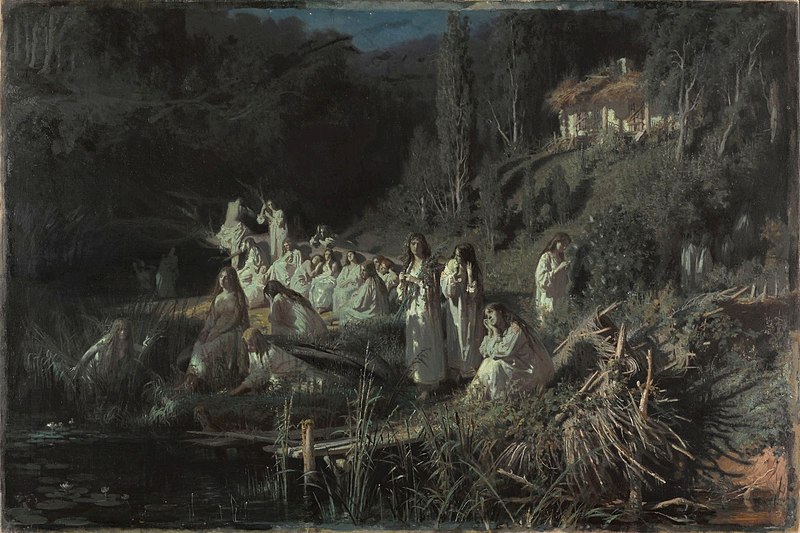
Sign in to savethumb|300px| Ivan Kramskoi, Rusalki ("The Mermaids"), 1871
Wikidata facts
- Part of
- Russian folklore
- Gender
- female
- Image
- Rusalki by Andrey Shishkin.jpg
- Said to be same as
- undine
Show 2 more facts
- Commons category
- Rusalka
- different from
- mermaid
via Wikidata · CC0
~16 min read
Encyclopedic overview
13 sectionsContents
- Etymology
- Origin and appearance
- Variations
- Region-specific
- Rusalka week
- Known rusalki
- Modern depictions of rusalki
- List of notable works featuring rusalki
- See also
- References
- Sources
- Further reading
- External links
thumb|300px| Ivan Kramskoi, Rusalki ("The Mermaids"), 1871
In Slavic folklore, the rusalka (plural: rusalki; , , plural: русалки; , plural: rusałki) is a female entity, often malicious toward mankind and frequently associated with water. It has counterparts in other parts of Europe, such as the French Melusine and the Germanic Nixie. Folklorists have proposed a variety of origins for the entity, including that they may originally stem from Slavic paganism, where they may have been seen as benevolent spirits. Rusalki appear in a variety of media in modern popular culture, particularly in Slavic language-speaking countries, where they frequently resemble the concept of the mermaid.
Excerpted from Wikipedia’s “Rusalka” article, available under the CC BY-SA 4.0 licence.