File:Various_scalpels.png · Wikimedia Commons · See Wikimedia Commons
scalpel
Sign in to saveAlso known as lancet, lance, hobby knife, X-Acto knife, surgical lance, surgical knife
A scalpel or bistoury is a small and extremely sharp bladed instrument used for surgery, anatomical dissection, podiatry and various handicrafts. A lancet is a double-edged scalpel.
A scalpel is a small surgical tool with an extremely sharp blade used by surgeons, doctors, and craftspeople to make precise cuts during operations, dissections, and detailed handiwork. It matters because its sharpness and small size allow medical professionals to perform delicate procedures with accuracy and minimal damage to surrounding tissue.
AI-generated from the Wikipedia summary — may contain errors.
Key facts
- Tool.image
- Various scalpels.png
- Tool.image_upright
- yes
- Tool.caption
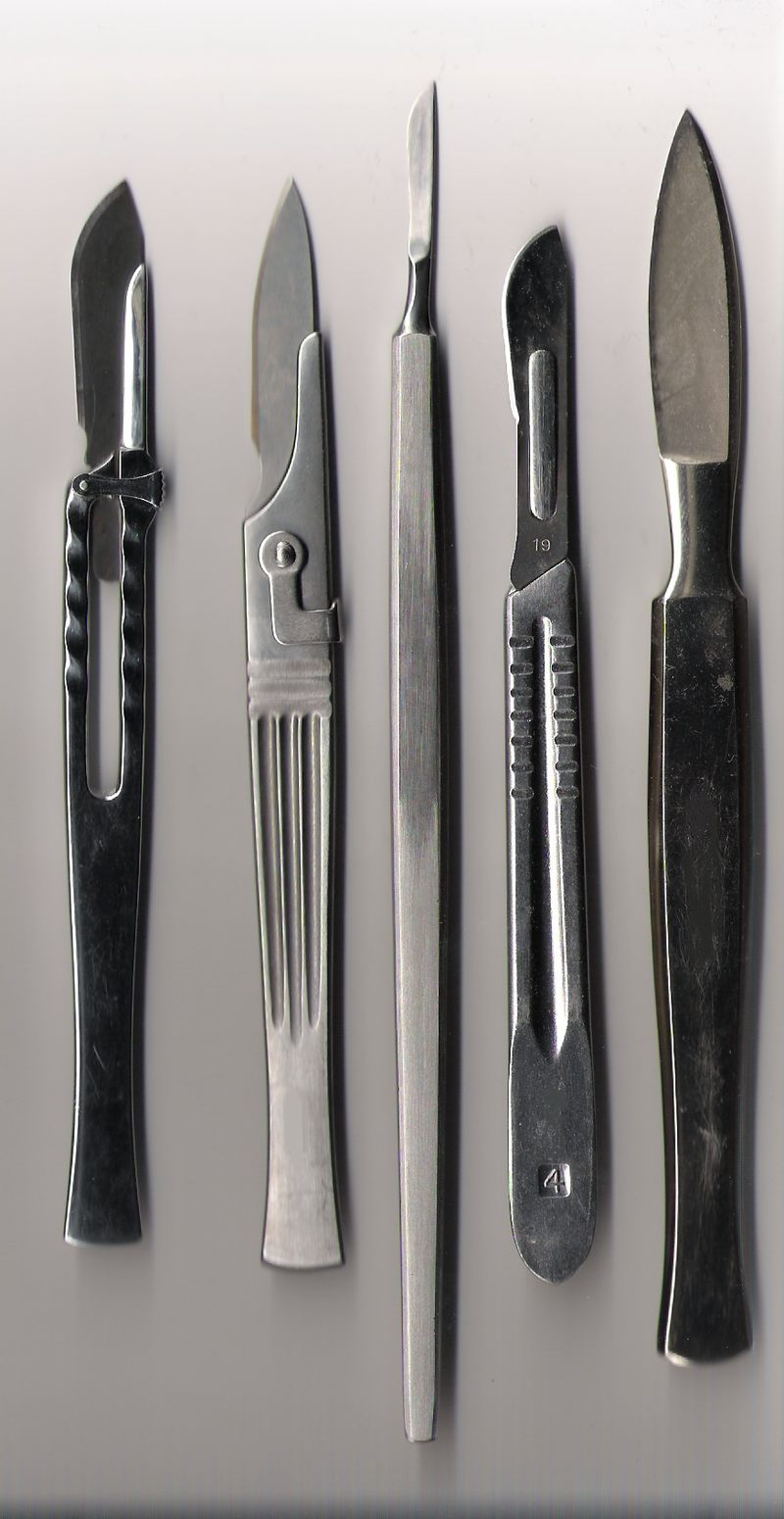
- Various scalpels. The first (from left), second, and fourth have replaceable blades. The fifth is a lancet.
- Tool.used_with
- Stencil, surgery
- Tool.classification
- Cutting tool
- Tool.related
- Lancet, utility knife, laser scalpel
via Wikipedia infobox
Wikidata facts
- Subclass of
- knife
- Material used
- steel
- Image
- Various scalpels.png
- Has use
- surgical operation
Show 3 more facts
- Commons category
- Scalpels
- NCI Thesaurus ID
- C28218
- described by source
- Encyclopædia Britannica 11th edition
Sources (3)
via Wikidata · CC0
~12 min read
Encyclopedic overview
10 sectionsContents
- History
- Operation
- Types
- Surgical
- Handicraft
- Blades
- Safety
- See also
- References
- External links
A scalpel or bistoury is a small and extremely sharp bladed instrument used for surgery, anatomical dissection, podiatry and various handicrafts. A lancet is a double-edged scalpel.
Scalpel blades are usually made of hardened and tempered steel, stainless steel, or high carbon steel; in addition, titanium, ceramic, diamond and even obsidian knives are not uncommon. For example, when performing surgery under MRI guidance, steel blades are unusable (the blades would be drawn to the magnets and would also cause image artifacts). Historically, the preferred material for surgical scalpels was silver. Scalpel blades are also offered by some manufacturers with a zirconium nitride–coated edge to improve sharpness and edge retention. Others manufacture blades that are polymer-coated to enhance lubricity during a cut.
Excerpted from Wikipedia’s “scalpel” article, available under the CC BY-SA 4.0 licence.