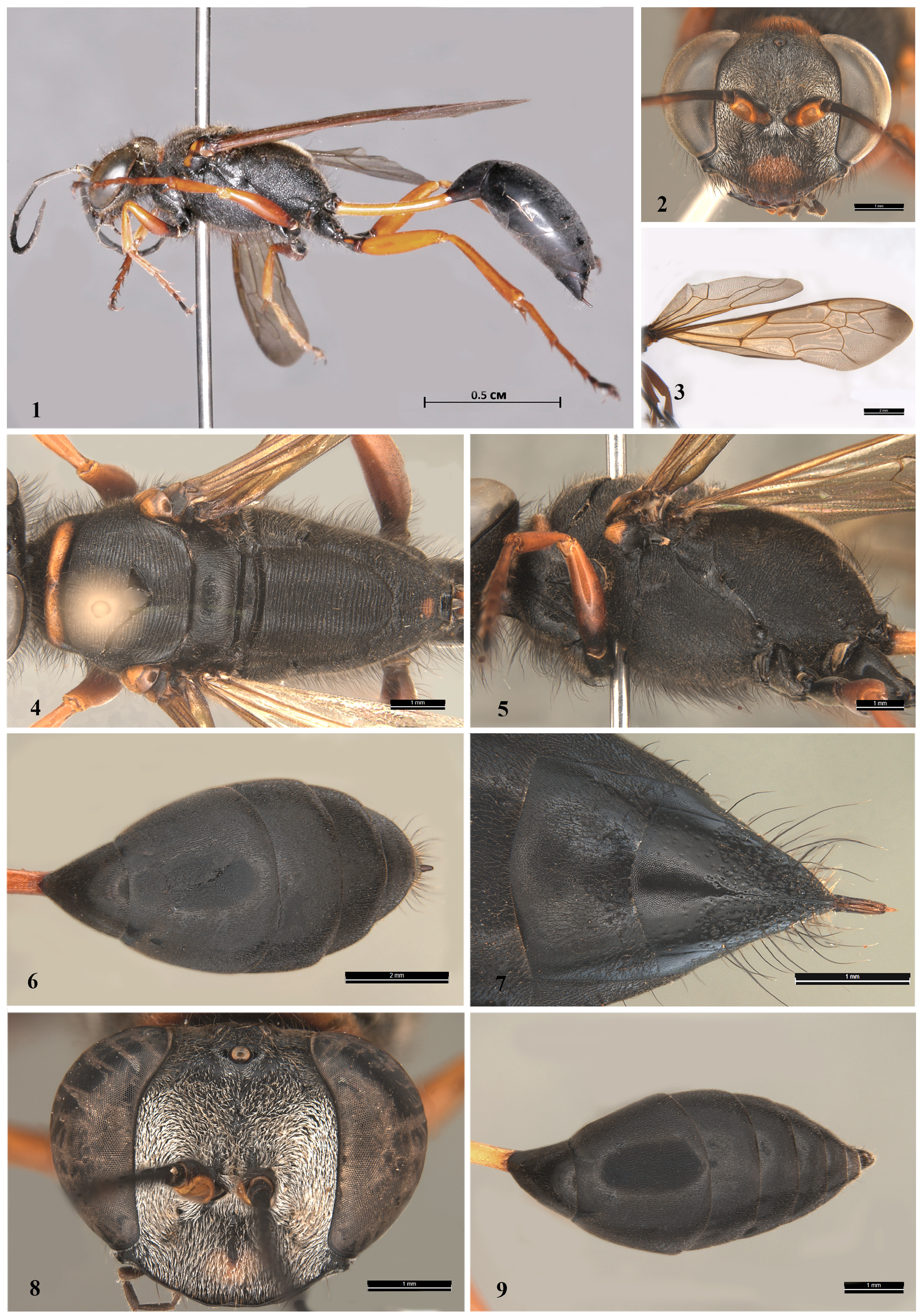
Anagha, S.;Kumar, P. Girish;Binoy, C.;Mazumdar, P. C.;Sureshan, P. M.
Sceliphron
Sign in to savethumb|thumbtime=8|A Sphecidae wasp, probably [[Sceliphron caementarium, investigates two squash bugs, but does not attempt capture to provision its nest.]]
Species
GENUS
- KingdomAnimalia
- PhylumArthropoda
- ClassInsecta
- OrderHymenoptera
- FamilySphecidae
Sceliphron (Pelopoeus Latreille, 1802) — род роющих ос (Sphecidae), включающий более 30 видов.
via GBIF
Wikidata facts
- Image
- Sceliphron caementarium MHNT Profil.jpg
Show 2 more facts
- Commons category
- Sceliphron
- taxon name
- Sceliphron
Sources (1)
via Wikidata · CC0
~4 min read
Article
4 sectionsContents
- ''Sceliphron'' species
- See also
- References
- External links
thumb|thumbtime=8|A Sphecidae wasp, probably [[Sceliphron caementarium, investigates two squash bugs, but does not attempt capture to provision its nest.]]
Sceliphron, also known as black-and-yellow mud dauber wasps or black mud-dauber wasps, is a genus of Hymenoptera of the Sphecidae family of wasps. They are solitary mud daubers and build nests made of mud. Nests are frequently constructed in shaded niches, often just inside of windows or vent openings, and it may take a female only a day to construct a cell requiring dozens of trips carrying mud. Females will add new cells one by one to the nest after each cell is provisioned. They provision these nests with spiders, such as crab spiders, orb-weaver spiders and jumping spiders in particular, as food for the developing larvae. Each mud cell contains one egg and is provided with several prey items. Females of some species lay a modest average of 15 eggs over their whole lifespan. Various parasites attack these nests, including several species of cuckoo wasps, primarily by sneaking into the nest while the resident mud dauber is out foraging.
Gallery (4)
Available in 16 languages
- Español
- Français
- Deutsch
- Русский
- Português
- Italiano
- Azerbaijani
- Bahasa Indonesia
- Catalan
- Cebuano
- Malay
- Nederlands
- Svenska
- Tiếng Việt
- Waray
via Wikidata sitelinks · CC0