File:Flag_of_Edward_England.svg · Wikimedia Commons · See Wikimedia Commons
sea piracy
Sign in to saveAlso known as maritime hijacking, maritime piracy, sea hijacking, piracy
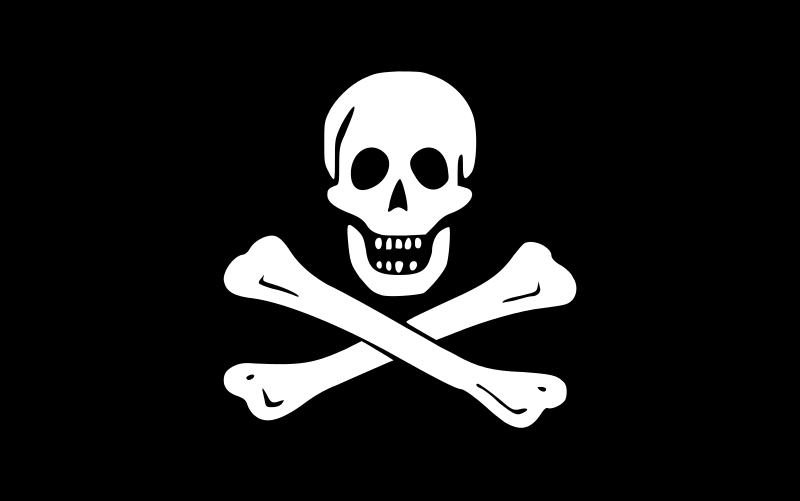
thumb|upright=1.35|The traditional "Jolly Roger" flag of piracy
I can see the context provided is only an image caption about a pirate flag, which doesn't contain enough information to write an accurate two-sentence overview of sea piracy covering what it is and why it matters. I would need additional context with substantive information about sea piracy to fulfill this request accurately.
AI-generated from the Wikipedia summary — may contain errors.
Wikidata facts
Show 8 more facts
- Commons category
- Piracy
- topic's main category
- Category:Piracy
- Commons gallery
- Piracy
- topic's main Wikimedia portal
- Portal:Piracy
- practiced by
- pirate
- different from
- aircraft hijacking
- facet of
- maritime law
- on focus list of Wikimedia project
- Wikipedia:Vital articles/Level/4
via Wikidata · CC0
~109 min read
Encyclopedic overview
56 sectionsContents
- Etymology
- History
- Europe
- Antiquity
- Middle Ages
- Mediterranean corsairs
- Southeast Asia
- East Asia
- Piracy in the Ming dynasty
- Illegal trade and authority
- Hierarchy and structure
- Clientele
- South Asia
- Persian Gulf
- Madagascar
- Caribbean
- Canary Islands
- North America
- Culture and social structure
- Rewards
- Loot
- Punishment
- Role of women
- Democracy among Caribbean pirates
- Pirate Code
- Known pirate shipwrecks
- Privateers
- Commerce raiders
- Contemporary piracy{{anchor|1990s–2010s|1990s–2020s}}
- Anti-piracy measures
- Self-defense
- Self protection measures
- Patrol
- Legal aspects
- United Kingdom laws
- Definition of piracy jure gentium
- Jurisdiction
- Piracy committed by or against aircraft
- Sentence
- History
- United States laws
- International law
- Effects on international boundaries
- Law of nations
- International conventions
- Articles 101 to 103 of UNCLOS
- IMB definition
- Uniformity in maritime piracy law
- Cultural perceptions
- Economics of piracy
- Piracy and entrepreneurship
- See also
- References
- Notes
- Bibliography
- External links
thumb|upright=1.35|The traditional "Jolly Roger" flag of piracy
Piracy is an act of robbery or criminal violence by ship or boat-borne attackers upon another ship or a coastal area, typically with the goal of stealing cargo and valuable goods, or taking hostages. Those who conduct acts of piracy are called pirates, and vessels used for piracy are called pirate ships. The earliest documented instances of piracy were in the 14th century BC, when the Sea Peoples, a group of ocean raiders, attacked the ships of the Aegean and Mediterranean civilisations. Narrow channels which funnel shipping into predictable routes have long created opportunities for piracy, as well as for privateering and commerce raiding.
Excerpted from Wikipedia’s “sea piracy” article, available under the CC BY-SA 4.0 licence.
Gallery (52)
Available in 96 languages
- Español
- Français
- Deutsch
- 中文
- 日本語
- Русский
- Português
- Italiano
- العربية
- हिन्दी
- Afrikaans
- Albanian
- Armenian
- Assamese
- Asturian
- azb
- Azerbaijani
- Bahasa Indonesia
Show 77 more
- Bangla
- Basque
- bat_smg
- Belarusian
- Bikol
- Bosnian
- Breton
- Bulgarian
- Burmese
- Catalan
- cdo
- Central Kurdish
- Chuvash
- Cornish
- Crimean Tatar
- Croatian
- Czech
- Danish
- Esperanto
- Estonian
- Faroese
- Filipino
- Finnish
- Galician
- Georgian
- Greek
- Guarani
- Hakka Chinese
- Hausa
- Hebrew
- Hungarian
- hyw
- Icelandic
- Ido
- Kabyle
- Kannada
- Kazakh
- Latvian
- Lithuanian
- Macedonian
- Malagasy
- Malay
- Marathi
- Nederlands
- Northern Frisian
- Norwegian
- Norwegian Nynorsk
- Occitan
- Polski
- Punjabi
- Romanian
- Scots
- Serbian
- simple
- Sinhala
- Slovenian
- Somali
- Svenska
- Swahili
- szy
- Tamil
- Tiếng Việt
- Türkçe
- Ukrainian
- Urdu
- Uzbek
- Venetian
- Welsh
- Western Frisian
- Wu Chinese
- Yiddish
- Yoruba
- zh_classical
- zh_min_nan
- zh_yue
- فارسی
- 한국어
via Wikidata sitelinks · CC0