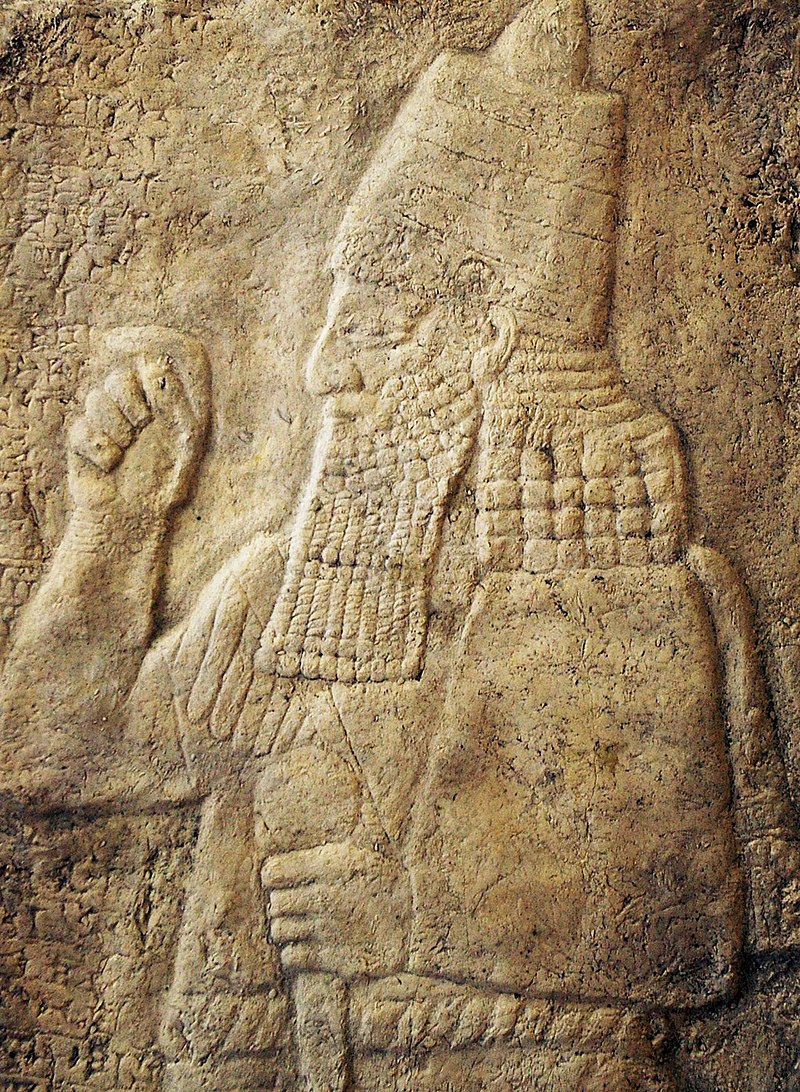
File:Sanherib-tr-4271.jpg · Wikimedia Commons · See Wikimedia Commons
Sennacherib
Sign in to saveAlso known as Rey endel Asiria Senaquerib, King of Assyria Sennacherib, roi d'Assyrie Sennachérib, Sennachérib, Sin-akhkheeriba, King Sennacherib of Assyria, re di Assiria Sennacherib, King of Assyria Sanherib
Sennacherib ( or , meaning "Sîn has replaced the brothers") was the king of the Neo-Assyrian Empire from 705BC until his assassination in 681BC. The second king of the Sargonid dynasty, Sennacherib is one of the most famous Assyrian kings for the role he plays in the Hebrew Bible, which describes his campaign in the Levant. Other events of his reign include his destruction of the city of Babylon in 689BC and his renovation and expansion of the last great Assyrian capital, Nineveh.
Sennacherib was king of the Neo-Assyrian Empire from 705 to 681 BC and is best known today for his military campaigns in the Levant, which are described in the Hebrew Bible, as well as for destroying Babylon and rebuilding the capital city of Nineveh. His reign marked an important period in ancient Mesopotamian history, though it ended with his assassination in 681 BC.
AI-generated from the Wikipedia summary — may contain errors.
Key facts
- Royalty.name
- Sennacherib
- Royalty.native_lang1
- Akkadian
- Royalty.image
- Sanherib-tr-4271.jpg
- Royalty.alt
- Sennacherib's portrait on the cast of a rock relief
- Royalty.caption
- Cast of a rock relief of Sennacherib from the foot of Mount Judi, near Cizre
- Royalty.reign
- 705–681BC
- Royalty.dynasty
- Sargonid dynasty
- Royalty.predecessor
- Sargon II
- Royalty.successor
- Esarhaddon
- Royalty.father
- Sargon II
- Royalty.mother
- Ra'īmâ
- Royalty.birth_place
- Nimrud (?)
- Royalty.death_date
- 20 October 681BC (aged )
- Royalty.death_place
- Nineveh
- Royalty.issue link
- Family and children
- Royalty.issue pipe
- among others
- Royalty.succession
- King of the Neo-Assyrian Empire
via Wikipedia infobox
Wikidata facts
- Instance of
- human
- Gender
- male
- Citizenship
- Babylon
- Place of birth
- Nimrud
- Place of death
- Nineveh
- Spouse
- Naqi'a
- Father
- Sargon II
- Occupation
- sovereign
- Participant in
- Sennacherib's campaign in the Levant
- Family
- Sargonid dynasty
- Noble title
- emperor
- Image
- Sennacherib.jpg
Show 7 more facts
- Commons category
- Sennacherib
- date of death
- 0681-10-20
- relative
- Abtalion
- described by source
- Encyclopædia Britannica 11th edition
- date of birth
- 0745-00-00
- topic's main category
- Category:Sennacherib
- cause of death
- stab wound
Sources (2)
via Wikidata · CC0
~68 min read
Encyclopedic overview
25 sectionsContents
- Early life
- As crown prince
- Assyria and Babylonia
- Reign
- Death of Sargon II and succession
- First Babylonian campaign
- War in the Levant
- Sennacherib at the gates of Jerusalem
- Resolving the Babylonian problem
- Elamite campaign and revenge
- Destruction of Babylon
- Renovation of Nineveh
- Conspiracy, murder and succession
- Family and children
- Character
- Legacy
- In popular memory
- Archaeological discoveries
- Titles
- See also
- Notes
- References
- Citations
- Sources
- External links
Sennacherib ( or , meaning "Sîn has replaced the brothers") was the king of the Neo-Assyrian Empire from 705BC until his assassination in 681BC. The second king of the Sargonid dynasty, Sennacherib is one of the most famous Assyrian kings for the role he plays in the Hebrew Bible, which describes his campaign in the Levant. Other events of his reign include his destruction of the city of Babylon in 689BC and his renovation and expansion of the last great Assyrian capital, Nineveh.
Although Sennacherib was one of the most powerful and wide-ranging Assyrian kings, he faced considerable difficulty in controlling Babylonia, which formed the southern portion of his empire. Many of Sennacherib's Babylonian troubles stemmed from the Chaldean tribal chief Marduk-apla-iddina II, who had been Babylon's king until Sennacherib's father defeated him. Shortly after Sennacherib inherited the throne in 705BC, Marduk-apla-iddina retook Babylon and allied with the Elamites. Though Sennacherib reclaimed the south in 700BC, Marduk-apla-iddina continued to trouble him, probably instigating Assyrian vassals in the Levant to rebel, leading to the Levantine War of 701 BC, and himself warring against Bel-ibni, Sennacherib's vassal king in Babylonia.
Excerpted from Wikipedia’s “Sennacherib” article, available under the CC BY-SA 4.0 licence.
Gallery (44)
Available in 60 languages
- Español
- Français
- Deutsch
- 中文
- 日本語
- Русский
- Português
- Italiano
- العربية
- Afrikaans
- Amharic
- Aramaic
- Armenian
- azb
- Azerbaijani
- Bahasa Indonesia
- Bangla
- Basque
Show 41 more
- Belarusian
- Bulgarian
- Catalan
- Central Kurdish
- Czech
- Danish
- Egyptian Arabic
- Esperanto
- Filipino
- Finnish
- Georgian
- Greek
- Hebrew
- Hungarian
- Latin
- Lithuanian
- Malagasy
- Malay
- Malayalam
- Mingrelian
- Nederlands
- Norwegian
- Occitan
- Polski
- Romanian
- Scots
- Serbian
- Serbian (Latin)
- simple
- Slovenian
- Svenska
- Tiếng Việt
- Türkçe
- Ukrainian
- Urdu
- Waray
- Western Panjabi
- Yiddish
- zh_min_nan
- فارسی
- 한국어
via Wikidata sitelinks · CC0