File:Shoelaces_20050719_001.jpg · Wikimedia Commons · See Wikimedia Commons
shoelaces
Sign in to saveAlso known as shoestrings, bootlaces, shoelace, shoe lace
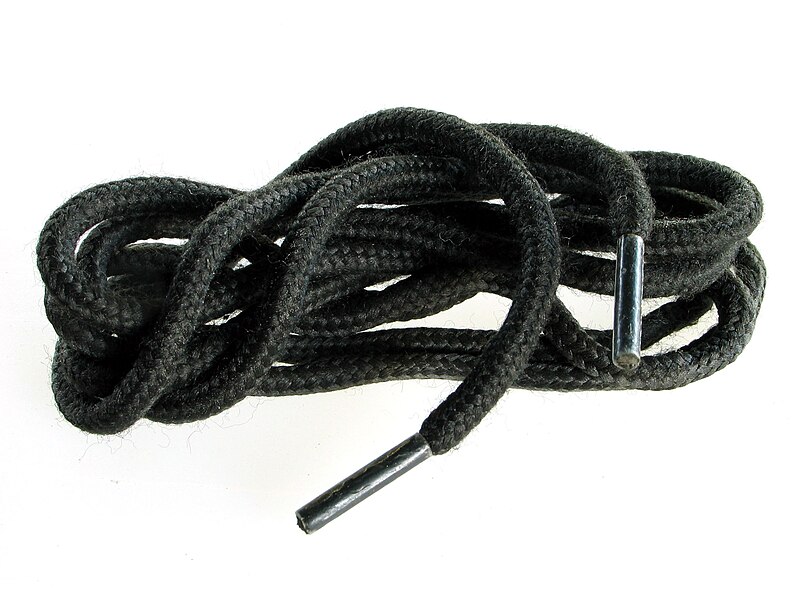
thumb|upright=1.35|Black shoelace Shoelaces, also called shoestrings (US English) or bootlaces (UK English), are a system commonly used to secure shoes, boots, and other footwear. They typically consist of a pair of strings or cords, one for each shoe, finished off at both ends with stiff sections, known as aglets. Each shoelace typically passes through a series of holes, eyelets, loops or hooks on either side of the shoe. Loosening the lacing allows the shoe to open wide enough for the foot to be inserted or removed. Tightening the lacing and tying off the ends secures the foot firmly within
Wikidata facts
- Part of
- shoe
- Image
- Shoelaces 03.jpg
Show 2 more facts
- Commons category
- Shoelaces
- Commons gallery
- Shoelaces
Sources (1)
via Wikidata · CC0
~13 min read
Encyclopedic overview
21 sectionsContents
- Shoelace construction
- Elasticized
- Lace-locking systems
- Shoelace tying
- Common bow
- Other more secure knots
- Length
- Shoe lacing
- Common lacing methods
- Straight-bar lacing
- Criss-cross lacing
- Cobwebbing
- Other lacing methods
- History
- Myths
- CIA shoelace code
- Shoelace accessories
- Photos of shoelaces
- See also
- References
- External links
thumb|upright=1.35|Black shoelace Shoelaces, also called shoestrings (US English) or bootlaces (UK English), are a system commonly used to secure shoes, boots, and other footwear. They typically consist of a pair of strings or cords, one for each shoe, finished off at both ends with stiff sections, known as aglets. Each shoelace typically passes through a series of holes, eyelets, loops or hooks on either side of the shoe. Loosening the lacing allows the shoe to open wide enough for the foot to be inserted or removed. Tightening the lacing and tying off the ends secures the foot firmly within the shoe. The laces can be tied in different shapes, most commonly a simple bow.
== Shoelace construction == Traditional shoelaces were made of leather, cotton, jute, hemp, or other materials used in the manufacture of rope. Modern shoelaces often incorporate various synthetic fibers, which are generally more slippery and thus more prone to coming undone than those made from traditional fibers. On the other hand, smooth synthetic shoelaces generally have a less rough appearance, suffer less wear from friction, and are less susceptible to rotting from moisture. Shoelaces can be coated, either in the factory or with aftermarket products, to increase friction and help them stay tied. Specialized fibers like flame resistant nomex are applied in safety boots for firefighters.
Excerpted from Wikipedia’s “shoelaces” article, available under the CC BY-SA 4.0 licence.