Music · MusicBrainz
- Type
- Person
- Gender
- Male
- Origin
- United States
- Active from
- 1975-12-19
Discography
via MusicBrainz · CC0
Listeners · Last.fm
- Listeners
- 2
- Total plays
- 128
<a href="https://www.last.fm/music/Silas+Soule">Read more on Last.fm</a>
Described at
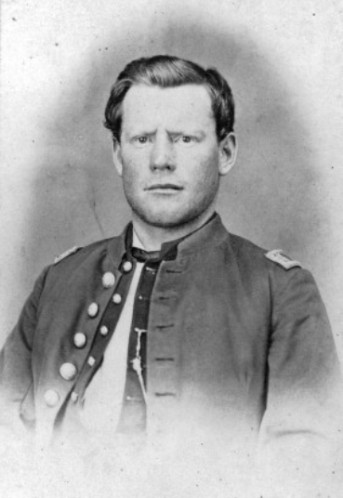
The Life of Silas Soule - Sand Creek Massacre National Historic Site (U.S. National Park Service)
nps.gov →Official websites use .gov A .gov website belongs to an official government organization in the United States. Secure .gov websites use HTTPS A lock ( Lock Locked padlock icon ) or means you've safely connected to the .gov website. Share sensitive information only on official, secure websites. A respected Union officer and gentleman, Captain Silas S. Soule proved his convictions by refusing to fire at the Sand Creek Massacre. This man of character, born in Maine to an abolitionist family, moved to Kansas in the late 1850's. The Soule family was one of the founding families of Lawrence, Kansas and very active in the Underground Railroad. Following the execution of famed abolitionist John Brown in 1859, Silas Soule traveled to Harper's Ferry, West Virginia, in an attempt to rescue two of Brown's followers. The rescue mission failed but Soule proved his courage and resourcefulness. Five years later at Sand Creek, his convictions would be tested again. The 1st Regiment was sent to New Mexico to stop an invading Confederate Army. The Armies clashed in March at Glorietta Pass, near Pecos, NM, and of the intense fighting, Soule "recalled fighting hand to hand over rocks, stumps and trees." The Coloradans, under the command of Colonel John Slough and Major John Chivington helped bring about a Union victory that saw the collapse of Confederate invasion. After Glorietta Pass, the 1st Regiment was officially converted to a cavalry unit and stationed throughout Colorado Territory. Commanding Officer Colonel John Chivington promoted Soule to Captain and assigned him to Fort Lyon along the Santa Fe Trail. In September 1864, Soule and his commanding officer, Major Edward Wynkoop, participated in the Smoky Hill peace talks with Cheyenne and Arapaho Peace Chiefs. Later, he traveled with Wynkoop and the Cheyenne and Arapaho Chiefs to Denver for a meeting at Camp Weld with Governor and ex-officio Superintendent of Indian Affairs John Evans and Chivington. Soule's presence at both of these important peace meetings reinforced the decisions he made at Sand Creek on November 29, 1864, when he showed extraordinary courage in refusing to participate in the massacre of the peaceful Cheyenne and Arapaho. During the attack, Soule and his company of soldiers refused to fight and in the days following the massacre, Soule wrote the chilling and explicit letter that is reproduced below. He was one of the first to testify against Chivington during the Army's investigation in January 1865. In April of 1865, Silas Soule married Hersa Coberly and the couple made their home in Denver. Less than 80 days following his testimony to the military inquiry, Soule was shot and killed in the streets of Denver while performing his duties as Provost Marshal. His murderers, though known, were never brought to justice. Letter from Captain Soule to his former commanding officer, Major Ned Wynkoop. This letter details the firsthand experiences of Soule at the Sand Creek Massacre and helped to bring awareness of the events of November 29, 1864 to a wider public. Please read with empathy and care; this letter is graphic and disturbing. Two days after you left here the 3rd Reg. with a Battalion of the 1st arrived here, having moved so secretly that we were not aware of their approach until they had Pickets around the post, allowing no one to pass out! They arrested Capt. Bent and John Vogle and placed guards around their houses. Then they declared their intention to massacre the friendly Indians camped on Sand Creek. Major Anthony gave all information, and eagerly joined in with Chivington and Co. and ordered Lieut. Cramer with his whole Co. to join the command. As soon as I knew of their movement I was indignant as you would have been were you here, and were you here, and went to Cannon's room, where a number of officers of the 1st and 3rd were congregated and told them that any man who would take part in the murders, knowing the circumstances as we did, was a low lived
Excerpt from a page describing this subject · 12,800 chars · not written by Vinony
Wikidata facts
- Instance of
- human
- Gender
- male
- Citizenship
- United States
- Place of birth
- Bath
- Place of death
- Denver
- Languages spoken
- English language
- Conflict
- New Mexico Campaign
- Military branch
- Union Army
- Military rank
- major
- Image
- Captain Silas S. Soule (cropped).jpg
Show 6 more facts
- date of death
- 1865-04-23
- date of birth
- 1838-07-26
- manner of death
- homicide
- Commons category
- Silas Stillman Soule
- cause of death
- gunshot wound
Sources (3)
via Wikidata · CC0
Available in 7 languages
via Wikidata sitelinks · CC0