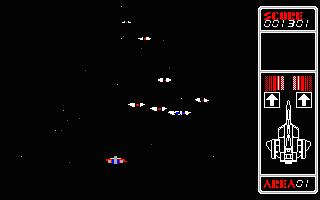
Silpheed (1986) · RAWG · Courtesy of RAWG
Silpheed
Sign in to saveis a video game developed by Game Arts and designed by Takeshi Miyaji. It made its debut on the Japanese PC-8801 in 1986, and was ported to the FM-7 and MS-DOS soon after. It was later remade for the Sega CD and has a sequel called Silpheed: The Lost Planet for the PlayStation 2.
Game details · IGDB
In Silpheed, the player pilots a spaceship through levels of increasing difficulty, in a pseudo-3D vertically scrolling field, shooting everything in his path. New weapons will become available as he gathers points, and power-ups are sprinkled throughout the levels. The game is one of the first-ever that used music as a selling point.
- Released
- 1986
- Genres
- Shooter
- Platforms
- Apple IIGS, PC-8800 Series, TRS-80 Color Computer, DOS, FM-7, Sega CD
- Game modes
- Single player
- Developer
- Game Arts
- Publisher
- Sega, Game Arts, Tec Toy Indústria de Brinquedos, Sierra
Wikidata facts
- Instance of
- video game
- Genre
- shoot 'em up
- Country of origin
- Japan
- Publisher
- Game Arts
- Developer
- Game Arts
- Platform
- Sega CD/Mega CD
- Game mode
- single-player video game
Show 1 more fact
- publication date
- 1986-12-05
via Wikidata · CC0
~6 min read
Encyclopedic overview
8 sectionsContents
- Gameplay
- Release
- Ports
- Sega CD
- Reception
- Legacy
- References
- External links
is a video game developed by Game Arts and designed by Takeshi Miyaji. It made its debut on the Japanese PC-8801 in 1986, and was ported to the FM-7 and MS-DOS soon after. It was later remade for the Sega CD and has a sequel called Silpheed: The Lost Planet for the PlayStation 2.
Silpheed is the name of the spacecraft that the player controls, and is most likely derived from the famous ballet, La Sylphide. Like many shooter games, the story involves using the Silpheed as Earth's last effort to save itself from destruction by a powerful enemy invasion. The original 1986 PC-88 version used 3D polygonal graphics on top of a tilted third-person backdrop. The 1993 Sega CD version later used pre-rendered computer animation as a full motion video background, a technique previously used by the Namco System 21 arcade game Galaxian 3.
Excerpted from Wikipedia’s “Silpheed” article, available under the CC BY-SA 4.0 licence.