File:Chaplin,_Charlie_(His_New_Job)_03.jpg · Wikimedia Commons · See Wikimedia Commons
slapstick
Sign in to saveAlso known as slapstick comedy
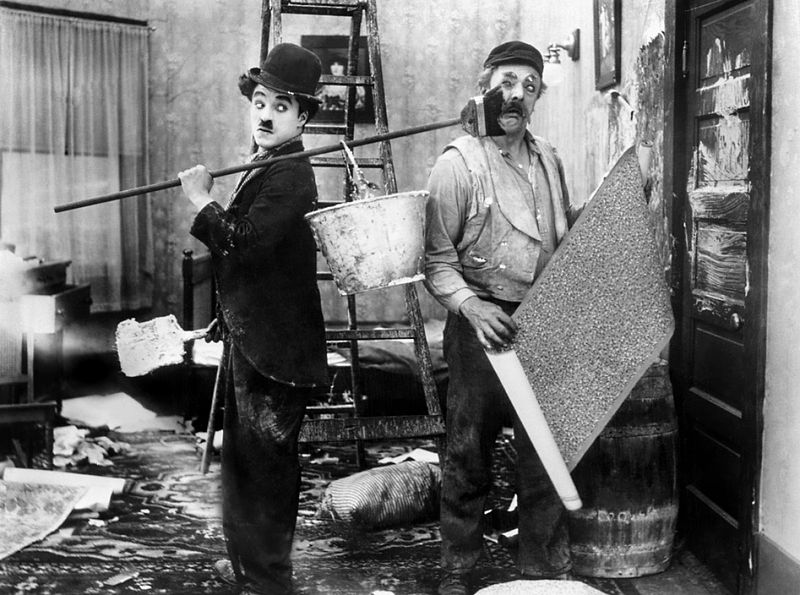
thumb|A slapstick scene from the 1915 Charlie Chaplin film [[His New Job. Chaplin started his film career as a physical comedian, and his later work continued to contain elements of slapstick.]] Slapstick is a style of humor involving exaggerated physical activity that exceeds the boundaries of normal physical comedy, which may involve both intentional violence and violence by mishap, often resulting from physical abuse and/or inept use of props.
Wikidata facts
- Subclass of
- physical comedy
- Image
- Stannie Dum and Ollie Dee.jpg
Show 1 more fact
- hashtag
- slapstick
via Wikidata · CC0
~6 min read
Encyclopedic overview
8 sectionsContents
- Origins
- Early uses
- Fred Karno and music hall
- In film and television
- 20th century fad
- See also
- References
- External links
thumb|A slapstick scene from the 1915 Charlie Chaplin film [[His New Job. Chaplin started his film career as a physical comedian, and his later work continued to contain elements of slapstick.]] Slapstick is a style of humor involving exaggerated physical activity that exceeds the boundaries of normal physical comedy, which may involve both intentional violence and violence by mishap, often resulting from physical abuse and/or inept use of props.
The term arises from a device developed for use in the broad, physical comedy style known as ''commedia dell'arte in 16th-century Italy. The "slap stick" consists of two thin slats of wood, which makes a "slap" when striking another actor, with little force needed to make a loud—and comical—sound. The physical slap stick remains a key component of the plot in the traditional and popular Punch and Judy puppet show. More contemporary examples of slapstick humor include The Three Stooges, The Naked Gun and Mr. Bean.
Excerpted from Wikipedia’s “slapstick” article, available under the CC BY-SA 4.0 licence.