
File:Space_Needle_2011-07-04.jpg · Wikimedia Commons · See Wikimedia Commons
Space Needle
Sign in to saveobservation tower in Seattle, Washington, United States
Key facts
- Preceded by
- Smith Tower
- Surpassed by
- Safeco Plaza
- Status
- Completed
- Type
- Observation tower / Gyro tower
- Location
- 400 Broad St, Seattle, Washington , U.S.
- Construction started
- April 17, 1961
- Completed
- December 8, 1961
- Opening
- April 21, 1962
- Owner
- Space Needle Corporation
- Antenna spire
- 605.00 ft (184.404 m)
- Top floor
- 518 ft (158 m)
- Architecture firm
- John Graham & Company
- Structural engineer
- John K. Minasian, Victor Steinbrueck
- Main contractor
- Howard S. Wright Construction Co.
- Designated
- April 19, 1999
via Wikipedia infobox
Official website
Space Needle
Seattle's #1 most iconic view. Rise 605 ft. above the city as you lean out on floor-to-forever glass. If you see only one thing, see everything!
spaceneedle.com →Link to the official site · 5,755 chars · not written by Vinony
Wikidata facts
- Instance of
- tourist attraction
- Part of
- Seattle Center
- Country
- United States
- Located in
- Seattle
- Official website
- www.spaceneedle.com
- Image
- Seattle, October 6, 2023 - 60.jpg
- Height
- 184
Show 10 more facts
- inception
- 1961-04-17
- Commons category
- Space Needle
- architectural style
- Googie
- structural engineer
- Victor Steinbrueck
- date of official opening
- 1962-04-21
- floors above ground
- 6
- number of elevators
- 3
- native label
- Space Needle
- social media followers
- 48332
- hashtag
- SpaceNeedle
Sources (6)
via Wikidata · CC0
~23 min read
Encyclopedic overview
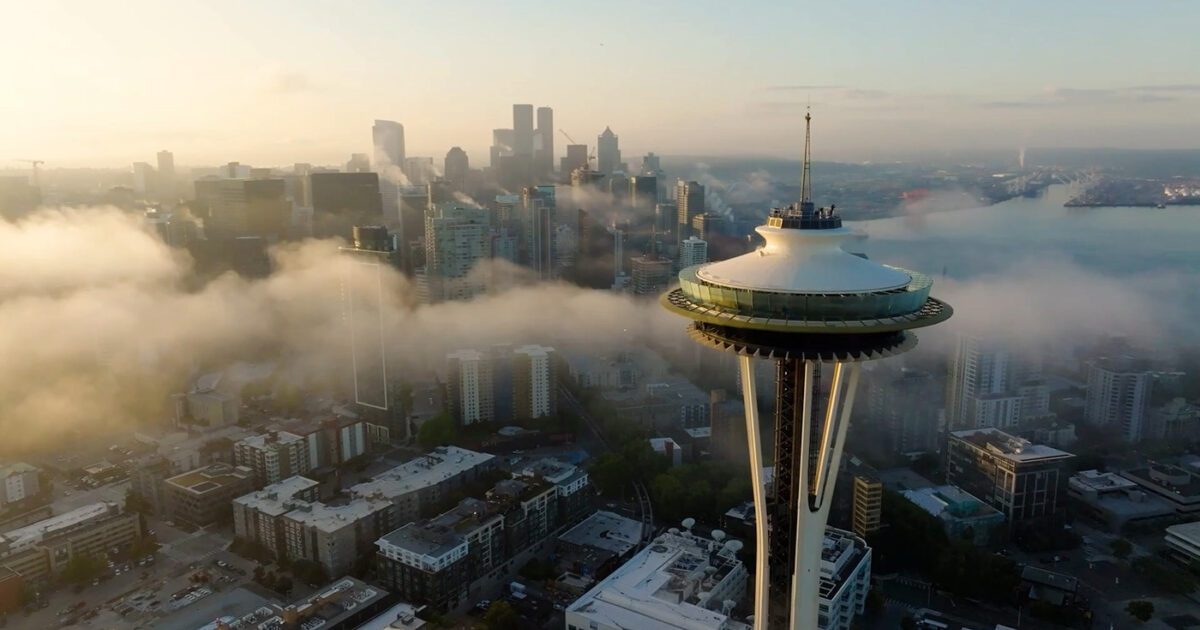
The Space Needle is an observation tower in Seattle, Washington, United States. Considered to be an icon of the city, it has been designated a Seattle landmark. Located at 400 Broad Street in the Lower Queen Anne neighborhood, it was built in the Seattle Center for the 1962 World's Fair, which drew more than 2.3 million visitors.
At 605 ft (184 m) high, the Space Needle was once the tallest building west of the Mississippi River in the United States. The tower is 138 ft (42 m) wide, weighs 9,550 short tons (8,660 metric tons), and is built to withstand winds of up to 200 mph (320 km/h) and earthquakes of up to 9.0 magnitude, as strong as the 1700 Cascadia earthquake.
Excerpted from Wikipedia’s “Space Needle” article, available under the CC BY-SA 4.0 licence.