Kochhann, Karlos G. D.;Baecker-Fauth, Simone;Fauth, Gerson
Spumellaria
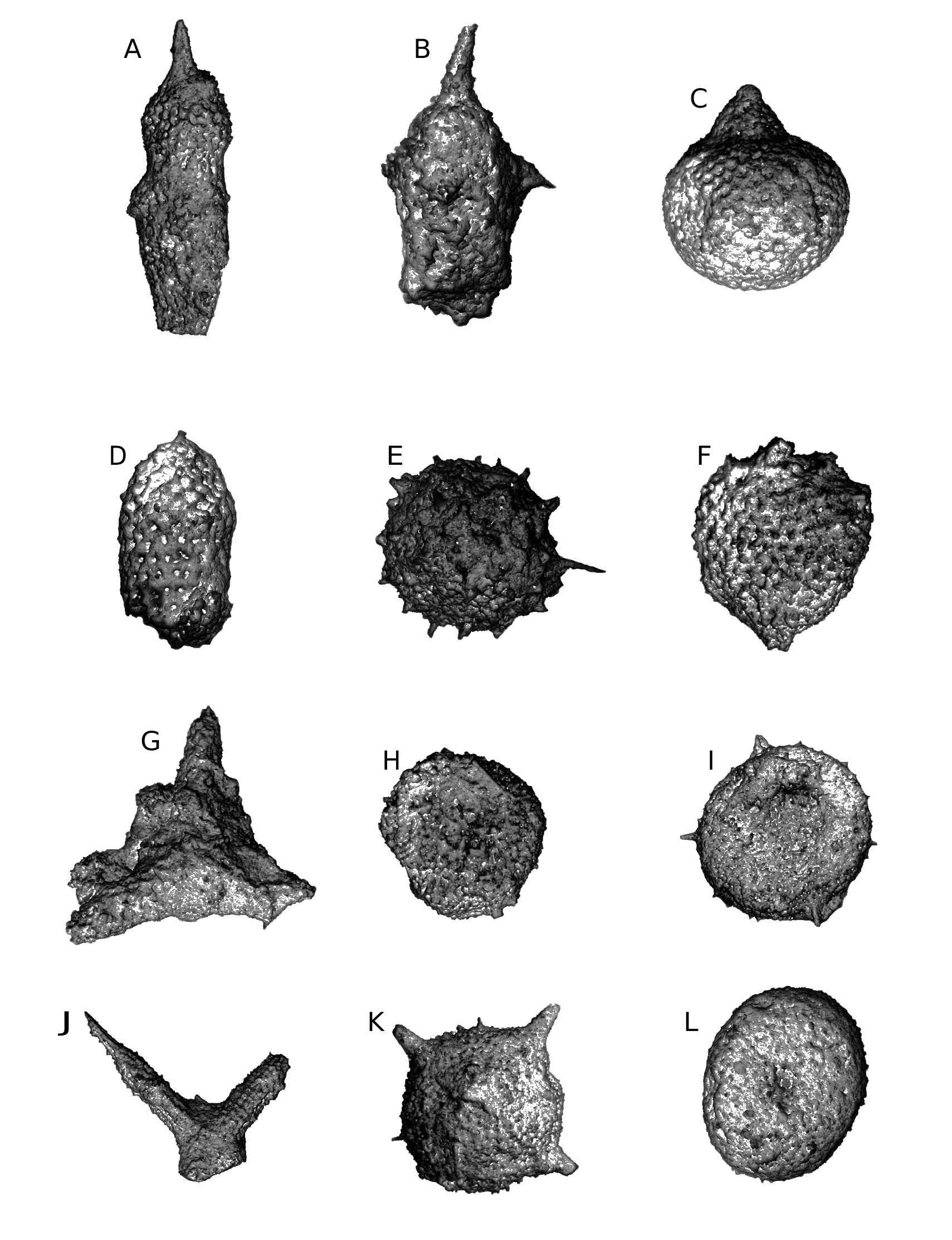
Sign in to saveSpumellaria is an order of radiolarians in the class Polycystinea. They are ameboid protists appearing in abundance in the world's oceans, possessing a radially-symmetrical silica (opal) skeleton that has ensured their preservation in fossil records. They are holoplanktonic, meaning they spend their whole lives classified as plankton. Spumellaria are globally distributed and a big part of our ocean’s silica biogeochemical cycle. Before diatoms, they were the main contributors to siliceous ocean sediments. They belong among the oldest Polycystine organisms, dating back to the lower Cambrian (ca
Species
コロスファエラ目
ORDER
- KingdomChromista
- PhylumRadiozoa
- ClassPolycystina
- OrderSpumellaria
via GBIF
Wikidata facts
- Instance of
- taxon
- Parent taxon
- Polycystine
- Image
- Haeckel Spumellaria.jpg
Show 3 more facts
- taxon name
- Spumellaria
- taxon rank
- order
- Commons category
- Spumellaria
Sources (1)
via Wikidata · CC0
~4 min read
Encyclopedic overview
5 sectionsContents
- Morphology and shell growth
- Families
- Gallery
- References
- External links
Spumellaria is an order of radiolarians in the class Polycystinea. They are ameboid protists appearing in abundance in the world's oceans, possessing a radially-symmetrical silica (opal) skeleton that has ensured their preservation in fossil records. They are holoplanktonic, meaning they spend their whole lives classified as plankton. Spumellaria are globally distributed and a big part of our ocean’s silica biogeochemical cycle. Before diatoms, they were the main contributors to siliceous ocean sediments. They belong among the oldest Polycystine organisms, dating back to the lower Cambrian (ca. 515 million years). Their skeletons are easily preserved and therefore are frequently used as tools in paleo-environmental reconstruction studies.
Historically, many concentric radiolarians have been included in the Spumellaria order based on the absence of the initial spicular system, an early-develop structure that, by its lacking, sets them apart from Entactinaria despite their similar morphology. Living exemplars of the order feed by catching prey, such as copepod nauplii or tintinnids, on the adhesive ends of their pseudopodia extending radially from their skeleton; however, some have been observed as mixotrophs living in symbiosis with various photosynthetic algal organisms such as dinoflagellates, cyanobacteria, prasinophytes or haptophytes, which may cause their distribution to center in the greatest abundance and diversity within trophical waters.
Excerpted from Wikipedia’s “Spumellaria” article, available under the CC BY-SA 4.0 licence.