Encyclopedia of Life · EOL (see source)
Stichodactylidae
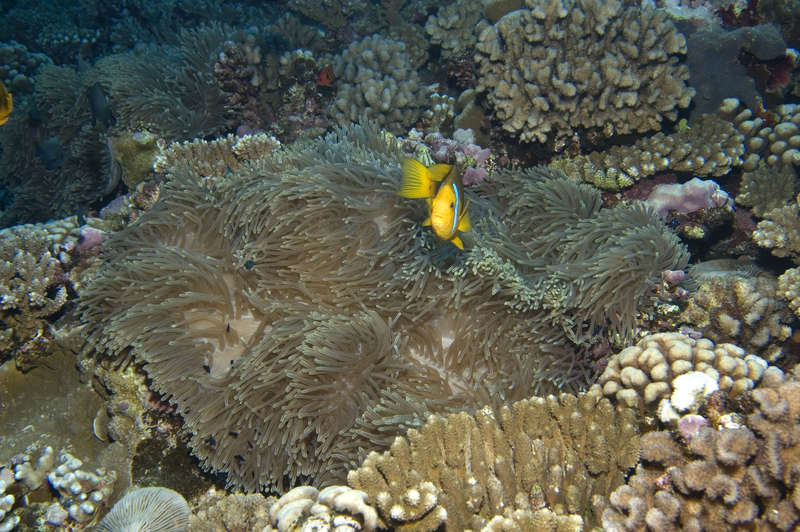
Sign in to saveStichodactylidae is a family of sea anemones that contains the genera Stichodactyla (carpet anemones) and Radianthus. These species reside exclusively within the shallow waters of the tropical Indo-Pacific area and are in the main family of sea anemones that hosts several varieties of clownfishes. Most species of sea anemones are harmless to humans, but at least some species of the genus Stichodactyla are highly venomous and their sting may cause anaphylactic shock and organ failure (notably acute liver failure). In contrast, the venom of Radianthus spp. has shown potential in the treatment of
Species
ハタゴイソギンチャク科
FAMILY
- KingdomAnimalia
- PhylumCnidaria
- ClassAnthozoa
- OrderActiniaria
- FamilyStichodactylidae
Los esticodactílidos (Stichodactylidae) son una familia de anémonas de mar, de la clase Anthozoa. Dos de sus géneros, Heteractis y Stichodactyla, incluyen algunas de las anémonas hospedantes más conocidas por su relación mutualista con las especies de peces payaso, del género Amphiprion. Se distribuyen en las aguas tropicales y subtropicales del Indo-Pacífico y del Atlántico. Principalmente asociadas a arrecifes.
via GBIF
Museum specimens
- Specimen records
- 7
- With media
- 3
- Family
- Stichodactylidae
- Collections
- CAS, USNM, WAM
- Recorded in
- Philippines, Indonesia, Australia
Wikidata facts
- Instance of
- taxon
- Parent taxon
- Actinioidea
- Image
- Maldive anemonefish.jpg
Show 4 more facts
- topic's main category
- Category:Stichodactylidae
- taxon name
- Stichodactylidae
- taxon rank
- family
- Commons category
- Stichodactylidae
Sources (1)
via Wikidata · CC0
~2 min read
Encyclopedic overview
4 sectionsContents
- Discovery
- Genera and species
- Gallery
- References
Stichodactylidae is a family of sea anemones that contains the genera Stichodactyla (carpet anemones) and Radianthus. These species reside exclusively within the shallow waters of the tropical Indo-Pacific area and are in the main family of sea anemones that hosts several varieties of clownfishes. Most species of sea anemones are harmless to humans, but at least some species of the genus Stichodactyla are highly venomous and their sting may cause anaphylactic shock and organ failure (notably acute liver failure). In contrast, the venom of Radianthus spp. has shown potential in the treatment of lung cancer.
==Discovery== C. Collingwood first reported species of the genus Stichodactylidae in 1868 after taking note of the existence of gigantic sea-anemones in the China Sea, containing quasi-parasitic fish.
Excerpted from Wikipedia’s “Stichodactylidae” article, available under the CC BY-SA 4.0 licence.