File:EmperorSuleiman.jpg · Wikimedia Commons · See Wikimedia Commons
sultan
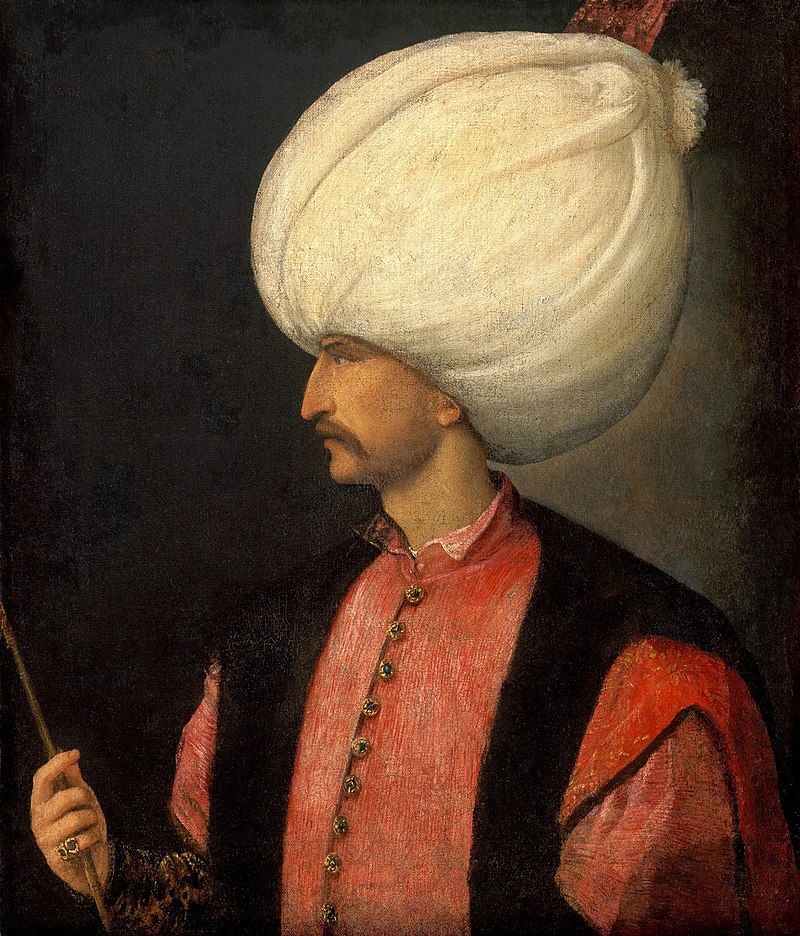
Sign in to savethumb|Suleiman the Magnificent, the longest-reigning [[sultan of the Ottoman Empire|281x281px]]
A sultan is a ruler or monarch, most commonly associated with Islamic empires and kingdoms throughout history. The title matters because sultans wielded significant political and often religious authority over large territories and populations, shaping major civilizations like the Ottoman Empire.
AI-generated from the Wikipedia summary — may contain errors.
Wikidata facts
Show 8 more facts
- Commons category
- Sultans
- described by source
- Encyclopædia Britannica 11th edition
- topic's main category
- Category:Sultans
- female form of label
- سلطانة
- male form of label
- سلطان
- P8168
- Akim
- on focus list of Wikimedia project
- Wikipedia:Vital articles/Level/4
- organization directed by the office or position
- sultanate
Sources (1)
via Wikidata · CC0
~22 min read
Encyclopedic overview
24 sectionsContents
- Etymology
- History of the term
- Feminine forms
- Compound ruler titles
- Princely and aristocratic titles
- Military rank
- Current sultans
- Former sultans and sultanates
- Sultanates in the Balkans & Anatolia
- Caucasus
- Levant & Egypt
- Arabia
- Maghreb
- Sub-saharan Africa
- {{largediv|Horn of Africa}}
- {{largediv|Swahili Coast}}
- ''Mfalume''
- ''Sultani''
- ''Maliki''
- Persia and Central Asia
- Indian superregion
- Southeast and East Asia
- See also
- References
thumb|Suleiman the Magnificent, the longest-reigning [[sultan of the Ottoman Empire|281x281px]]
Sultan (; ', ) is a position with several historical meanings. Originally, it was an Arabic abstract noun meaning "strength", "authority", "rulership", derived from the verbal noun ', meaning "authority" or "power". Later, it came to be used as the title of certain rulers who claimed almost full sovereignty (i.e., not having dependence on any higher ruler) without claiming the overall caliphate, or to refer to a powerful governor of a province within the caliphate. The adjectival form of the word is "sultanic", and the state and territories ruled by a sultan, as well as his office, are referred to as a sultanate ( ').
Excerpted from Wikipedia’s “sultan” article, available under the CC BY-SA 4.0 licence.
Gallery (38)
Available in 102 languages
- Español
- Français
- Deutsch
- 中文
- 日本語
- Русский
- Português
- Italiano
- العربية
- हिन्दी
- Albanian
- Albanian
- Aragonese
- Armenian
- Asturian
- azb
- Azerbaijani
- Bahasa Indonesia
Show 83 more
- Bangla
- Banjar
- Bashkir
- Basque
- be_x_old
- Belarusian
- Bikol
- Bosnian
- Breton
- Bulgarian
- Catalan
- Cebuano
- Central Kurdish
- Chuvash
- Croatian
- Czech
- Danish
- Egyptian Arabic
- Esperanto
- Estonian
- Filipino
- Finnish
- Galician
- Georgian
- Greek
- Hebrew
- Hungarian
- Icelandic
- Ido
- Iloko
- Irish
- Javanese
- Kannada
- Kazakh
- Kurdish
- Latin
- Latvian
- Limburgish
- Lithuanian
- Macedonian
- Malagasy
- Malay
- Malayalam
- Mingrelian
- Mongolian
- Nederlands
- Northern Frisian
- Norwegian
- Norwegian Nynorsk
- Occitan
- Pashto
- Polski
- Punjabi
- Romanian
- Serbian
- Serbian (Latin)
- Sicilian
- simple
- Sindhi
- Slovak
- Slovenian
- Svenska
- Swahili
- Tajik
- Tamil
- Tiếng Việt
- Türkçe
- Turkmen
- Ukrainian
- Urdu
- Uzbek
- Welsh
- Western Frisian
- Western Panjabi
- Wu Chinese
- Yiddish
- Zaza
- zh_classical
- zh_min_nan
- zh_yue
- فارسی
- ไทย
- 한국어
via Wikidata sitelinks · CC0