
ta'ziyeh
Sign in to saveAlso known as taziyeh, ta'ziya, ta'zia, tazia, shabih-khani
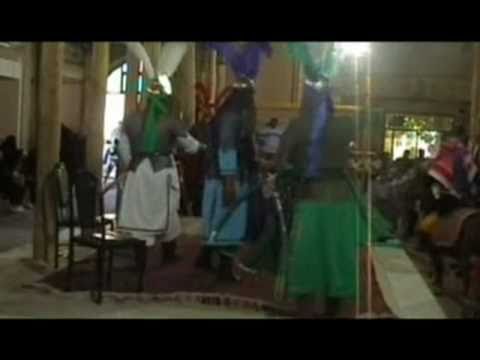
'''Ta'ziyeh, also spelled as ta'zieh''' ( , from Arabic , 'condolence'), is a dramatic art form of Iran, performed by Shia Muslims, and historically also called shabih-khani ( ), though this term is less commonly used today .
Key facts
- Performing art.name
- Ta'ziyehShabih-khani
- Performing art.image
- Muharram in cities and villages of Iran-342 16 (147).jpg
- Performing art.culture
- Iran
- Intangible heritage.ICH
- The ritual dramatic art of Ta'zīye
- Intangible heritage.State Party
- Iran
- Intangible heritage.ID
- 00377
- Intangible heritage.Region
- APA
- Intangible heritage.Year
- 2010
- Intangible heritage.Session
- 5th
- Intangible heritage.List
- Representative
via Wikipedia infobox
Described at
L’art dramatique rituel du Ta‘zīye - UNESCO Patrimoine culturel immatériel
ich.unesco.org →Votre navigateur n'est pas supporté par cette application. Merci d'utiliser des versions récentes de navigateurs tels que Google Chrome, Firefox, Edge ou Safara pour accéder aux interfaces 'Dive'. Le Ta‘zīye (ou Taziyeh) est un art dramatique rituel qui met en scène des événements religieux, des récits historiques et mythiques et des contes populaires. Chaque représentation comporte quatre éléments : poésie, musique, chant et mouvements. Les représentations peuvent dans certains cas comporter une centaine de rôles qui se répartissent entre personnages historiques, religieux, politiques, sociaux, surnaturels, réels, imaginaires et fantastiques. Chaque pièce de Ta‘zīye est unique par son thème, ses costumes et sa musique. Les représentations sont riches en symboles, conventions, codes et signes que les spectateurs iraniens comprennent parfaitement ; elles se déroulent sur une scène, sans éclairage ni décors. Les acteurs sont exclusivement des hommes qui jouent donc les rôles féminins ; ce sont, pour la plupart, des amateurs qui gagnent leur vie grâce à une autre activité, mais qui jouent pour obtenir une récompense spirituelle. Si le Ta‘zīye tient une place importante dans la culture, la littérature et l’art iranien, ses pièces rituelles inspirent également des proverbes en usage dans la vie courante. Ses représentations aident à promouvoir et à renforcer les valeurs religieuses et spirituelles, l’altruisme et l’amitié tout en préservant les traditions anciennes, la culture nationale et la mythologie iranienne. Le Ta‘zīye joue également un rôle significatif dans la préservation de l’artisanat qui lui est associé, notamment la confection des costumes, la calligraphie et la fabrication des instruments. Sa flexibilité lui a permis de devenir un langage commun à différentes communautés, favorisant la communication, l’unité et la créativité. Le Ta‘zīye est transmis par l’exemple et l’enseignement oral, directement de maître à élève.
Excerpt from a page describing this subject · 9,928 chars · not written by Vinony
Wikidata facts
- Instance of
- ritual
- Country of origin
- Safavid Iran
- Image
- Muharram in cities and villages of Iran-342 16 (147).jpg
Show 4 more facts
- described at URL
- ich.unesco.org/en/RL/00377
- Commons category
- Ta'ziyeh
- intangible cultural heritage status
- Representative List of the Intangible Cultural Heritage of Humanity
- native label
- تعزیه
Sources (1)
via Wikidata · CC0
~17 min read
Encyclopedic overview
25 sectionsContents
- Etymology and terminology
- Religious background
- History
- Pre-Islamic roots
- Islamic-era development
- Beginnings
- Peak under the Qajars
- Decline
- Staging
- Performance spaces
- Costumes and character representation
- Animals in performances
- Dramatic techniques
- ''Goriz'' or theatrical digressions and secular themes
- Music and vocal performance
- Symbolism in movements
- Women in ta'ziyeh
- Influence and modern adaptations
- Gallery
- See also
- Notes
- References
- Sources
- Further reading
- External links
'''Ta'ziyeh, also spelled as ta'zieh''' ( , from Arabic , 'condolence'), is a dramatic art form of Iran, performed by Shia Muslims, and historically also called shabih-khani ( ), though this term is less commonly used today .
Performances of ta'ziyeh have often been described as "Iranian passion plays". They reenact the events of the Battle of Karbala (680 CE), centering on the tragic death of Husayn ibn Ali, a grandson of the Islamic prophet Muhammad, along with his family members and companions on the plains of Karbala (present-day Iraq). The event, which resulted from a political struggle over leadership of the Muslim community after Muhammad's death, became a powerful symbol of sacrifice, resistance, and justice in Shia Islam.
Excerpted from Wikipedia’s “ta'ziyeh” article, available under the CC BY-SA 4.0 licence.