
Taekkyeon
Sign in to saveAlso known as Taekkyon
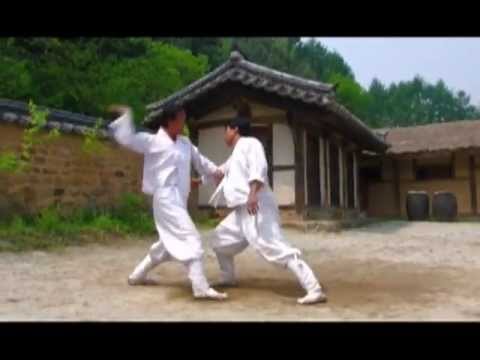
Taekkyon (; ), also spelled taekkyeon, is a traditional Korean martial art. It is characterized by a fluid, dynamic footwork called pumbalbgi, or "stepping-on-triangles". Taekkyon includes hand and foot techniques to unbalance, trip, or throw the opponent. In competitive taekkyon points are scored by throwing the opponent or landing kicks on their head. A taekkyon practitioner is called a "taekkyon-kkun". Practitioners, referees, and coaches wear taekkyon uniforms, which today are based on traditional garments such as the gouijeoksam, or, depending on the school, the cheollik for competitions.
Key facts
- Martial art.image
- 270px
- Martial art.name
- Taekkyon
- Martial art.aka
- Taekgyeon, Taekkyeon, Taekyun
- Martial art.focus
- Self-defense with a focus on kicks, trips, throws in competitions
- Martial art.hardness
- Light-contact (pushing hands) Full-contact (strikes, kicks, throws, takedowns etc.)
- Martial art.country
- Korea
- Martial art.parenthood
- Subak
- Martial art.website
- Four associations: www.koreataekkyon.com www.krtga.com www.taekyun.org taekkyeon.net wtkf.org
- Korean name/auto.hangul
- 택견; 태껸
- Korean name/auto.ipa
- tʰɛk̚k͈jʌn
via Wikipedia infobox
Described at
Taekkyeon, a traditional Korean martial art - UNESCO Intangible Cultural Heritage
ich.unesco.org →Taekkyeon is a traditional Korean martial art that makes use of fluid, rhythmic dance-like movements to strike or trip up an opponent. The graceful movements of a well-trained Taekkyeon performer are gentle and circular rather than straight and rigid, but can explode with enormous flexibility and strength. The feet play as important a role as the hands. In spite of its gentle impression, Taekkyeon is an effective martial art highlighting a broad variety of offensive and defensive skills employing all available fighting methods. It also teaches consideration: a skilled Taekkyeon practitioner can rapidly dominate an opponent, but a true master knows how to make an opponent withdraw without incurring damage. As a part of seasonal farming-related traditions, Taekkyeon serves to facilitate community integration, and as a sport accessible to all plays a major role in promoting public health. Taekkyeon is also practised by a great number of people as a daily activity. There are approximately fifty recognized practitioners of Taekkyeon at present, and the Korean Taekkyeon Association plays a significant role in the transmission and promotion of this traditional martial art. 1. Knowledge and practices concerning nature and the universe (308) 2. Performing arts (411)
Excerpt from a page describing this subject · 10,704 chars · not written by Vinony
Wikidata facts
- Instance of
- combat sport
- Subclass of
- martial arts
- Country
- South Korea
- Country of origin
- South Korea
- Official website
- www.taekkyeon.org
- Image
- Dae-Kwae-Do.jpg
Show 6 more facts
- Commons category
- Taekkyeon
- McCune–Reischauer romanization
- T'aekkyŏn
- Revised Romanization
- Taekgyeon
- intangible cultural heritage status
- National Intangible Cultural Heritage in South Korea
- native label
- 태껸
Sources (1)
via Wikidata · CC0
~21 min read
Encyclopedic overview
25 sectionsContents
- History
- Techniques
- ''Pumbalki'' (footwork)
- ''Hwalgaejit'' (deceptive arm movements)
- ''Baljil'' (kicks)
- ''Sonjil'' (strikes)
- ''Taejil'' (throws)
- ''Ttanjuk'' (joint locks)
- Competitive taekkyon
- Organizations
- Korea Taekkyon Federation
- Widae Taekkyeon Association
- Korea Traditional Taegkyeon Association
- Kyulyun Taekyyun Association
- Ranks
- Uniform
- Historical records on Taekkyon and street fighting
- Taekkyon and taekwondo
- In popular culture
- Comics
- Movies
- Television series
- See also
- References
- External links
Taekkyon (; ), also spelled taekkyeon, is a traditional Korean martial art. It is characterized by a fluid, dynamic footwork called pumbalbgi, or "stepping-on-triangles". Taekkyon includes hand and foot techniques to unbalance, trip, or throw the opponent. In competitive taekkyon points are scored by throwing the opponent or landing kicks on their head. A taekkyon practitioner is called a "taekkyon-kkun". Practitioners, referees, and coaches wear taekkyon uniforms, which today are based on traditional garments such as the gouijeoksam, or, depending on the school, the cheollik for competitions.
Since the twentieth century, taekkyon has come to be seen as a living link to Korea's past. As such, it has provided historical references for modern Korean martial arts and is often considered as the oldest martial discipline of Korea. It was almost wiped out during the Japanese occupation, before being rediscovered after the Korean War. It influenced the name and conceptualization of taekwondo.
Excerpted from Wikipedia’s “Taekkyeon” article, available under the CC BY-SA 4.0 licence.