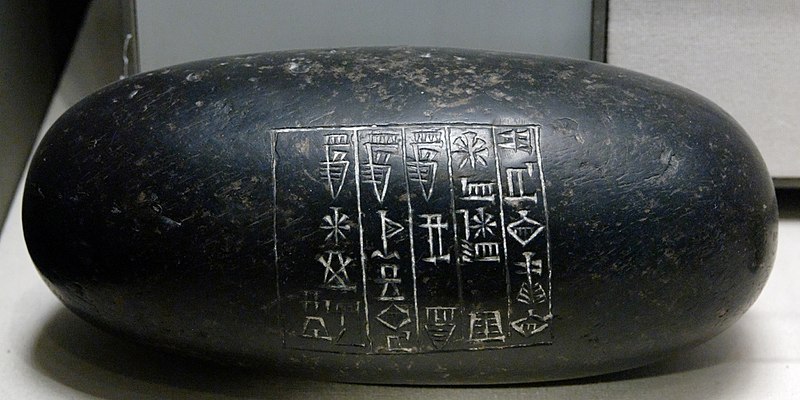
File:5-mina_weight_Shu-Shin_Louvre_AO246.jpg · Wikimedia Commons · See Wikimedia Commons
~9 min read
Encyclopedic overview
Sumerian tablet with measurement glyphs The talent (Ancient Greek: τάλαντον, talanton, Latin: talentum, Biblical Hebrew: kikkar כִּכָּר, Ugaritic: kkr (𐎋𐎋𐎗), Phoenician: kkr (𐤒𐤒𐤓), Syriac: kakra (ܟܲܟܪܵܐ),, Akkadian: kakkaru or gaggaru in the Amarna tablets, later Aramaic: qintara ( קינטרא)) was a unit of weight used in the ancient world, often used for weighing gold and silver.
In the Hebrew Bible, it is recorded that the gold used in the work of the sanctuary (tabernacle), where the Ark of the Covenant was, weighed 29 talents and 730 shekels, and silver 100 talents and 1,775 shekels (1 talent = 3,000 shekels). The enormous wealth of King Solomon is described as receiving 666 gold talents per year.
Excerpted from Wikipedia’s “talent” article, available under the CC BY-SA 4.0 licence.