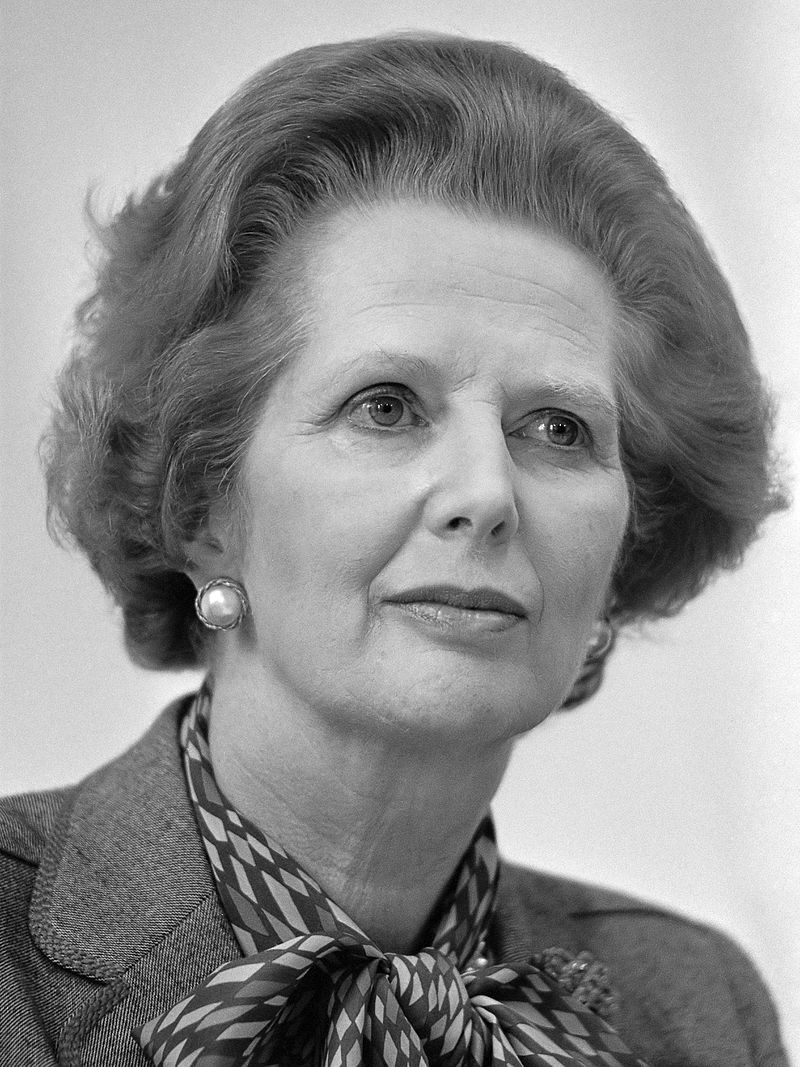
File:Margaret_Thatcher_(1983).jpg · Wikimedia Commons · See Wikimedia Commons
Thatcherism
Sign in to saveThatcherism is a form of British conservative ideology named after Conservative Party leader Margaret Thatcher that relates to not just her political platform and particular policies, but also her personal character and style of management while in office. Proponents of Thatcherism are referred to as Thatcherites. The term has been used to describe the principles of the British government under Thatcher from the 1979 general election to her resignation in 1990. In international terms, Thatcherites have been described as a part of the general socio-economic movement known as neoliberalism, with
Wikidata facts
- Instance of
- political ideology
- Subclass of
- conservatism in the United Kingdom
- Named after
- Margaret Thatcher
Show 1 more fact
- native label
- Thatcherism
via Wikidata · CC0
~29 min read
Encyclopedic overview
23 sectionsContents
- Overview
- Thatcherism before Thatcher
- Ideological definition
- Thatcherism as a form of government
- Criticism
- <span class="anchor" id="economicposition"></span>Economic positions
- Thatcherite economics
- Trade union legislation
- Domestic and social positions
- Thatcherite morality
- Sermon on the Mound
- Foreign policy
- Atlanticism
- Europe
- Dispute over the term
- Criticism
- Thatcher's legacy
- See also
- References
- Notes
- Bibliography
- Further reading
- External links
Thatcherism is a form of British conservative ideology named after Conservative Party leader Margaret Thatcher that relates to not just her political platform and particular policies, but also her personal character and style of management while in office. Proponents of Thatcherism are referred to as Thatcherites. The term has been used to describe the principles of the British government under Thatcher from the 1979 general election to her resignation in 1990. In international terms, Thatcherites have been described as a part of the general socio-economic movement known as neoliberalism, with different countries besides the United Kingdom (such as the United States) sharing similar policies around expansionary capitalism.
Thatcherism represents a systematic, decisive rejection and reversal of the post-war consensus inside Great Britain in terms of governance, whereby the major political parties largely agreed on the central themes of Keynesianism, the welfare state, nationalised industry, and close regulation of the British economy before Thatcher's rise to prominence. Under her administration, there was one major exception to Thatcherite changes: the National Health Service (NHS), which was widely popular with the British public. In 1982, Thatcher promised that the NHS was "safe in our hands".
Excerpted from Wikipedia’s “Thatcherism” article, available under the CC BY-SA 4.0 licence.