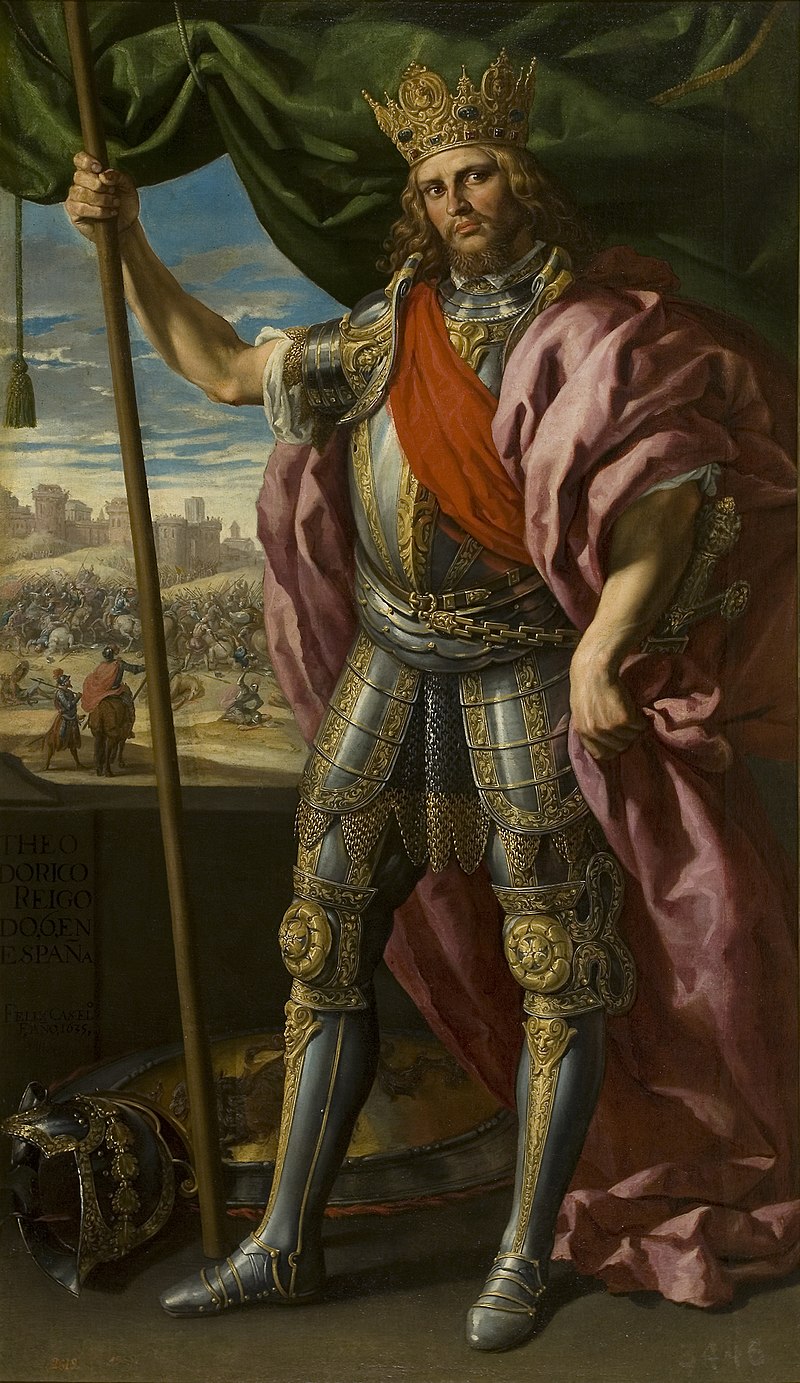
File:Félix_Castello,_"Teodorico,_rey_godo",_1635.jpg · Wikimedia Commons · See Wikimedia Commons
Theodoric I was a king of the Visigoths, a Germanic people who controlled parts of Europe during the early medieval period. He is historically significant as a leader of one of the major Germanic kingdoms that emerged after the fall of the Roman Empire.
AI-generated from the Wikipedia summary — may contain errors.
Wikidata facts
- Instance of
- human
- Gender
- male
- Occupation
- sovereign
- Position held
- king of Wisigoths
- Family
- Balti dynasty
- Noble title
- king of Wisigoths
- Conflict
- Battle of the Maureaco Fields
- Image
- Félix Castello, "Teodorico, rey godo", 1635.jpg
- Significant event
- Battle of the Maureaco Fields
Show 7 more facts
- date of birth
- 0393-00-00
- Commons category
- Teodorico I
- date of death
- 0451-07-15
- place of burial
- Marne
- different from
- Theuderic I
- birth name
- Þiudarīks
- relative
- Alaric I
Sources (1)
via Wikidata · CC0
~7 min read
Encyclopedic overview
Theodoric I (Gothic: Þiudarīks; Latin: Theodericus; c. 390 or 393 – 20 or 24 June 451) was the king of the Visigoths from 418 to 451. Theodoric is famous for his part in stopping Attila the Hun at the Battle of the Catalaunian Plains in 451, where he was killed.
Early career
Excerpted from Wikipedia’s “Theodoric I” article, available under the CC BY-SA 4.0 licence.