File:Emb_logo.png · Wikimedia Commons · See Wikimedia Commons
Theosophy
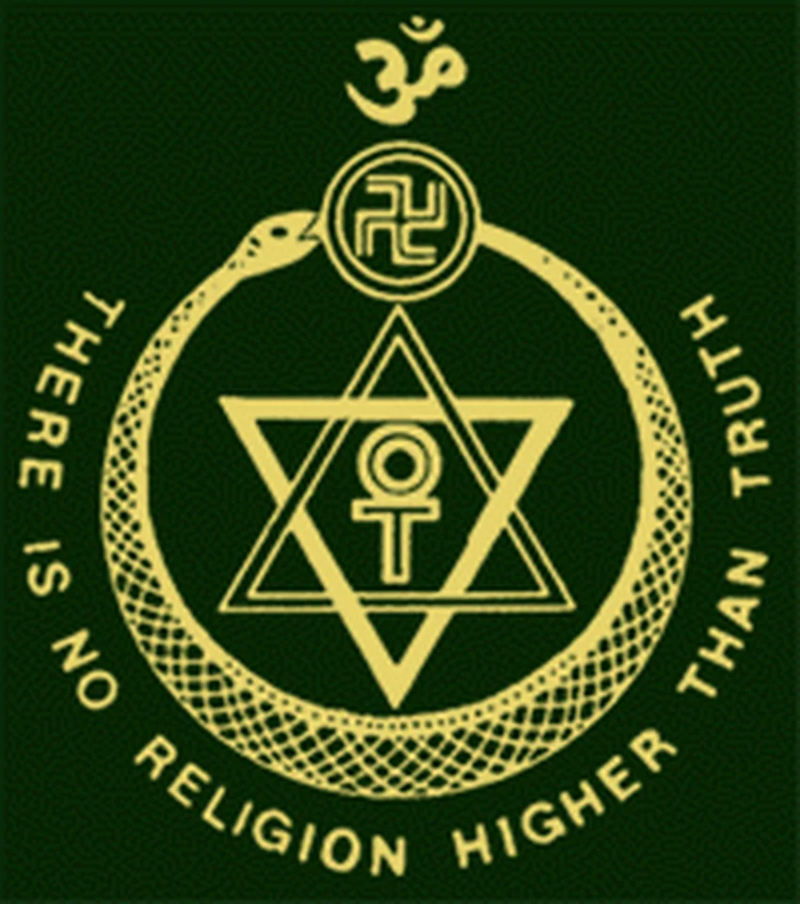
Sign in to savethumb|right|The logo for the Theosophical Society brought together various ancient symbols.
I cannot write an accurate overview based solely on this context, as it only describes a logo and doesn't explain what Theosophy is, its beliefs, history, or significance. To provide a reliable 2-sentence overview, I would need substantive information about Theosophy's actual teachings and importance.
AI-generated from the Wikipedia summary — may contain errors.
Wikidata facts
- Subclass of
- religion
- Part of
- Western esotericism
- Founded by
- Helena Blavatsky
- Country of origin
- United States
- Image
- Emb logo.png
- Represented by
- Church Universal and Triumphant
Show 4 more facts
- described by source
- Encyclopædia Britannica 11th edition
- Commons category
- Theosophy
- different from
- Christian theosophy
- topic's main category
- Category:Theosophy
Sources (1)
via Wikidata · CC0
~45 min read
Encyclopedic overview
24 sectionsContents
- Definition
- Etymology
- Beliefs and teachings
- The Masters
- The ancient wisdom religion
- Theology and cosmology
- Maitreya and messianism
- Personal development and reincarnation
- Reincarnation and karma
- Morality and ethics
- Ritual
- Historical development
- Post-Blavatsky
- Demographics
- Reception and legacy
- Influence on the arts and culture
- Influence on other religious and esoteric groups
- Scholarly research
- See also
- Sources
- Footnotes
- Bibliography
- Further reading
- External links
thumb|right|The logo for the Theosophical Society brought together various ancient symbols.
Theosophy is a religious movement established in the United States in the late 19th century. Founded primarily by the Russian Helena Blavatsky and based largely on her writings, it draws heavily from both older European philosophies such as Neoplatonism and Indian religions such as Hinduism and Buddhism. Although many adherents maintain that Theosophy is not a religion, it is variably categorized by religious scholars as both a new religious movement and a form of occultism from within Western esotericism.
Excerpted from Wikipedia’s “Theosophy” article, available under the CC BY-SA 4.0 licence.
Gallery (23)
Available in 64 languages
- Español
- Français
- Deutsch
- 中文
- 日本語
- Русский
- Português
- Italiano
- العربية
- हिन्दी
- Albanian
- Armenian
- Azerbaijani
- Bahasa Indonesia
- Bangla
- Basque
- Belarusian
- Bulgarian
Show 45 more
- Catalan
- Croatian
- Czech
- Danish
- Esperanto
- Estonian
- Finnish
- Galician
- Georgian
- Greek
- Hungarian
- Icelandic
- Ido
- Interlingua
- Kazakh
- Kyrgyz
- Latin
- Latvian
- Lithuanian
- Macedonian
- Malagasy
- Mongolian
- Nederlands
- Norwegian
- Polski
- Romanian
- Saterland Frisian
- Serbian
- Serbian (Latin)
- simple
- Sinhala
- Slovak
- Slovenian
- Svenska
- Tajik
- Tamil
- Tiếng Việt
- Türkçe
- Ukrainian
- Urdu
- Uzbek
- Welsh
- فارسی
- ไทย
- 한국어
via Wikidata sitelinks · CC0