File:Roman_Baths_in_Bath_Spa,_England_-_July_2006.jpg · Wikimedia Commons · See Wikimedia Commons
thermae
Sign in to saveAlso known as Roman baths, Roman bath
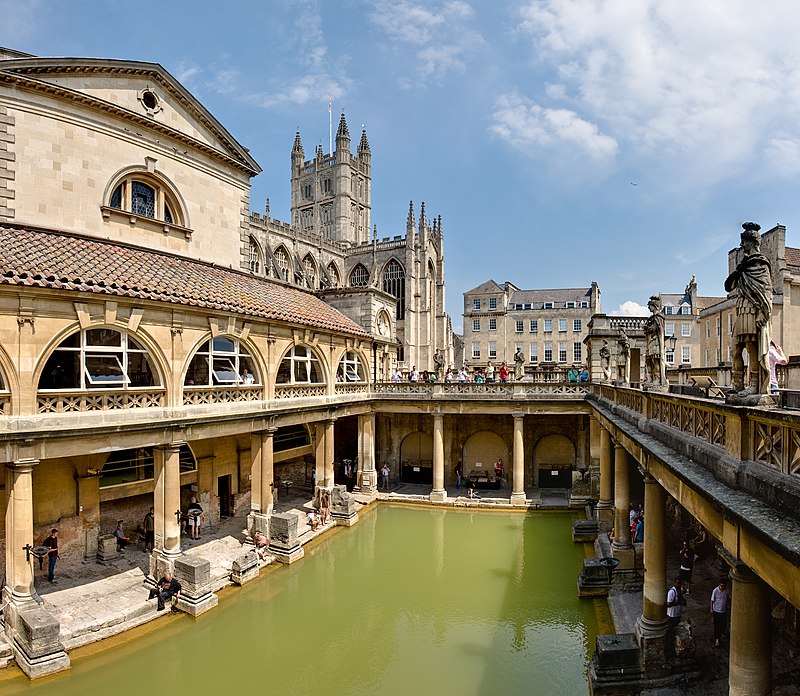
alt=Photograph of the Baths showing a rectangular area of greenish water surrounded by yellow stone buildings with pillars. In the background is the tower of the abbey.|thumb|upright=1.35|Roman Baths (Bath)|Roman public baths in Bath, England. The entire structure above the level of the pillar bases is a later reconstruction. thumb|Bulla Regia, inside the thermal baths
Wikidata facts
- Has part
- Laconicum
- Country
- Ancient Rome
Show 5 more facts
- Commons category
- Ancient Roman thermae
- topic's main category
- Category:Ancient Roman baths
- described by source
- Granat Encyclopedic Dictionary
- time period
- classical antiquity
- different from
- terma
via Wikidata · CC0
~20 min read
Encyclopedic overview
20 sectionsContents
- Terminology
- Building layout
- Palaestra
- Use of the palaestra
- Apodyterium and frigidarium
- Tepidarium
- Caldarium
- Laconicum
- Service areas
- Women's bath
- Purpose
- Cultural significance
- Location
- Remains of Roman public baths
- See also
- References
- Citations
- Sources
- Further reading
- External links
alt=Photograph of the Baths showing a rectangular area of greenish water surrounded by yellow stone buildings with pillars. In the background is the tower of the abbey.|thumb|upright=1.35|Roman Baths (Bath)|Roman public baths in Bath, England. The entire structure above the level of the pillar bases is a later reconstruction. thumb|Bulla Regia, inside the thermal baths
In ancient Rome, ' (from Greek , "hot") and ' (from Greek ) were facilities for bathing. usually refers to the large imperial bath complexes, while were smaller-scale facilities, public or private, that existed in great numbers throughout Rome.
Excerpted from Wikipedia’s “thermae” article, available under the CC BY-SA 4.0 licence.