Encyclopedia of Life · EOL (see source)
Thripophaga
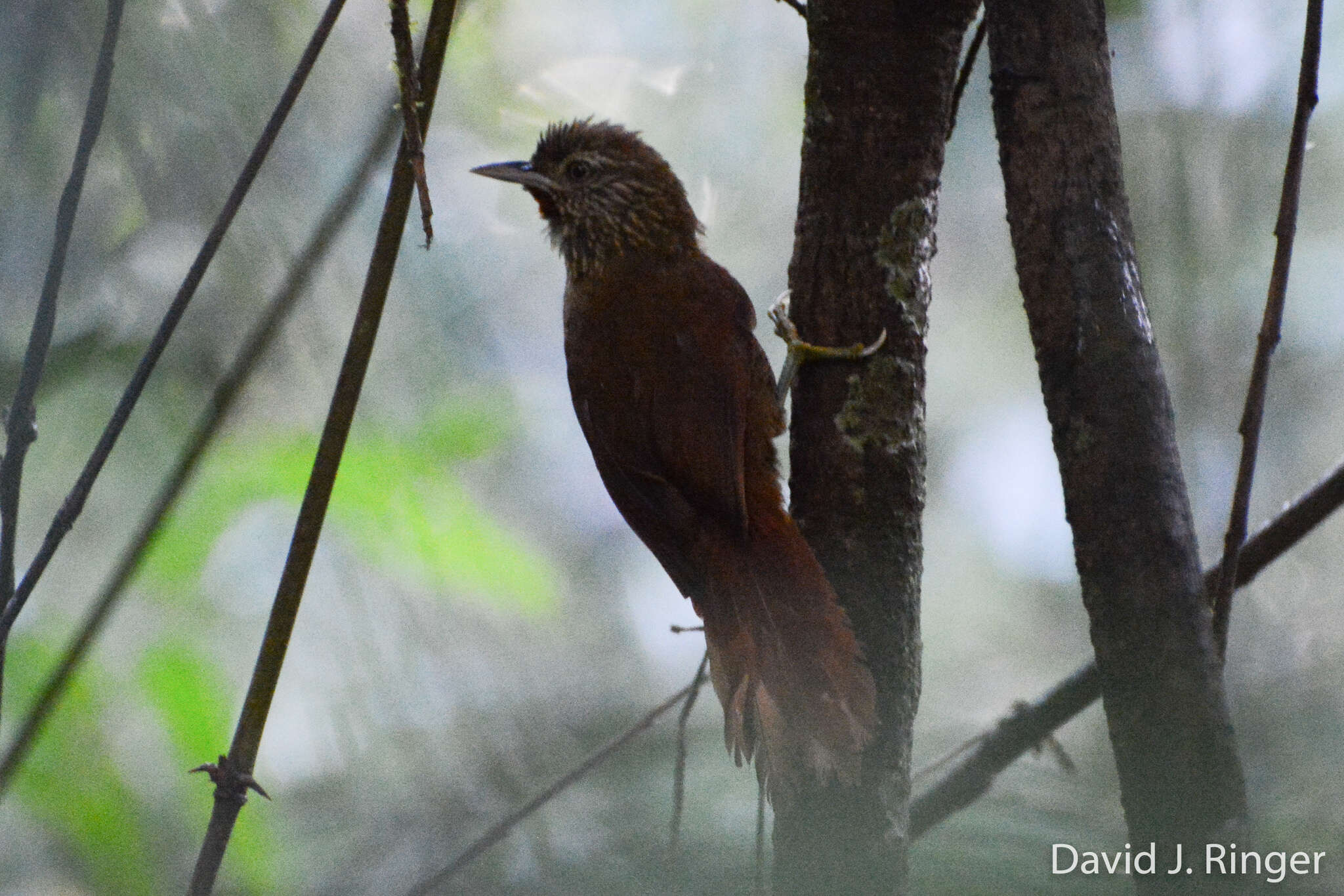
Sign in to saveThripophaga is a genus of birds that popularly are known as softtails. They are members of the ovenbird family, Furnariidae. They are found in wooded and shrubby habitats, sometimes near water, in South America.
Species
GENUS
- KingdomAnimalia
- PhylumChordata
- ClassAves
- OrderPasseriformes
- FamilyFurnariidae
Vogels Thripophaga is een geslacht van vogels uit de familie van de ovenvogels (Furnariidae). De wetenschappelijke naam van het geslacht is voor het eerst geldig gepubliceerd in 1847 door Jean Cabanis. Soorten De volgende soorten zijn bij het geslacht ingedeeld:[1] Thripophaga amacurensis Hilty et al 2013 – amacurocanastero Thripophaga berlepschi Hellmayr, 1905 – Berlepsch' stekelkruin Thripophaga cherriei Berlepsch & Hartert, 1902 – orinococanastero Thripophaga fusciceps Sclater, PL, 1889 – bruinkopstekelkruin Thripophaga macroura (Wied-Neuwied, 1821) – gestreepte canastero Bronnen, noten en/of referenties ↑ (en) F. Gill, M. Wright D. & Donsker (2018)
via GBIF
Museum specimens
- Specimen records
- 153
- With media
- 1
- Family
- Furnariidae
- Collections
- WFVZ, UCLA, CLO
- Recorded in
- Chile, Argentina, Peru
Wikidata facts
- Instance of
- taxon
- Parent taxon
- Furnariidae
- Image
- Thripophaga macroura - Striated Softail; Sooretama, Espirito Santo, Brazil.jpg
Show 4 more facts
- taxon rank
- genus
- topic's main category
- Category:Thripophaga
- taxon name
- Thripophaga
- Commons category
- Thripophaga
Sources (1)
via Wikidata · CC0
~1 min read
Encyclopedic overview
3 sectionsContents
- Taxonomy and systematics
- Extant species
- References
Thripophaga is a genus of birds that popularly are known as softtails. They are members of the ovenbird family, Furnariidae. They are found in wooded and shrubby habitats, sometimes near water, in South America.
==Taxonomy and systematics== Softtails are closely related to Cranioleuca spinetails and the generic limits between these two genera were not clear in the past. For example, the Russet-mantled Softtail, despite its English name, is a true Cranioleuca spinetail, and the speckled spinetail turned out to be part of Thripophaga. Previous speculations suggesting a close relationship between Thripophaga and Phacellodomus were disproved.
Excerpted from Wikipedia’s “Thripophaga” article, available under the CC BY-SA 4.0 licence.