Hrycyna, Gabriela;Graciolli, Gustavo
Thyroptera
Sign in to saveAlso known as Disk-winged bats
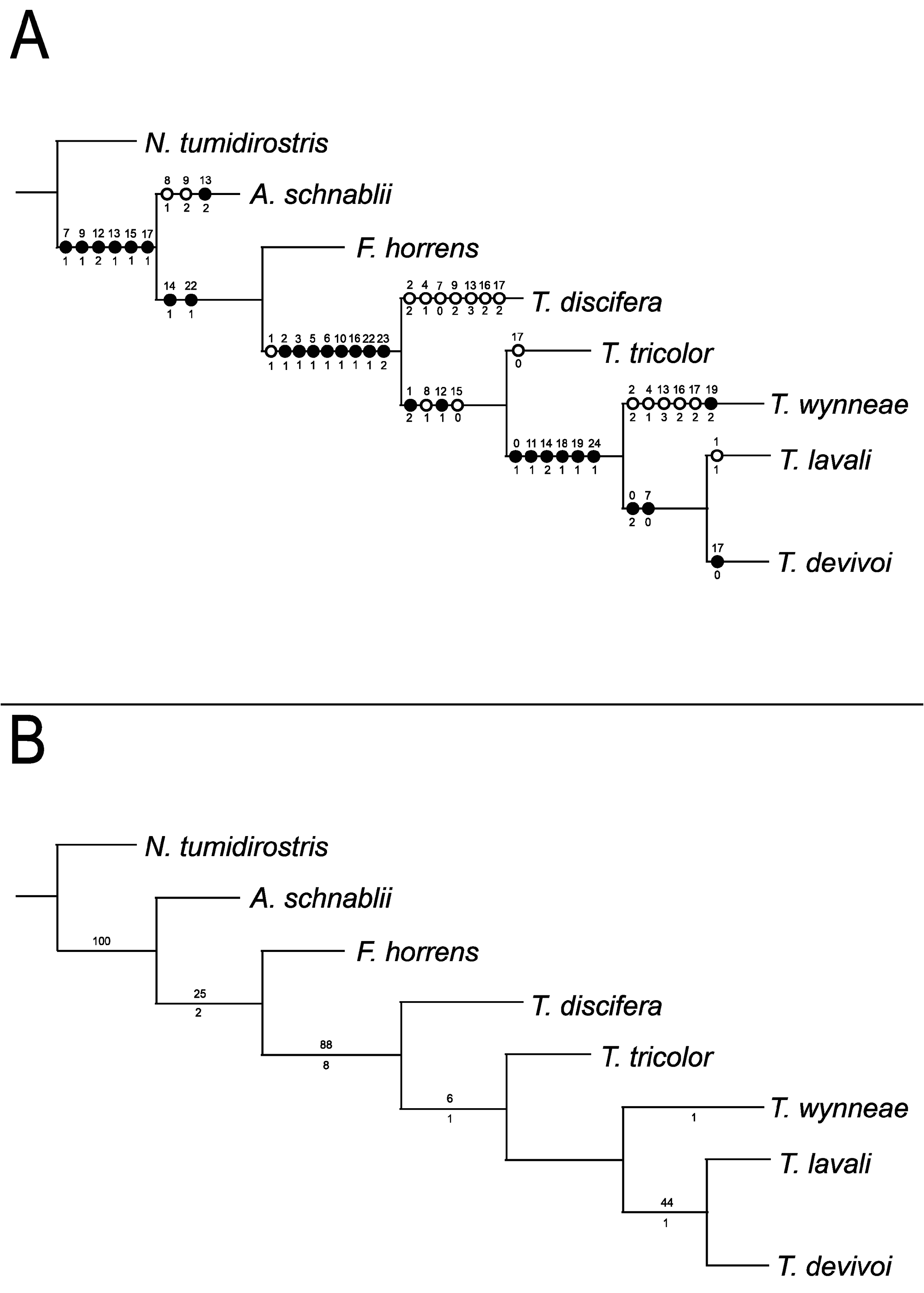
Disk-winged bats are a small group of bats of the family Thyropteridae and genus Thyroptera. They are found in Central and South America, usually in moist tropical rain forests. It is a very small family, consisting of a single genus with five extant and one fossil species.
Species
Spix's Disk-winged Bat
GENUS
- KingdomAnimalia
- PhylumChordata
- ClassMammalia
- OrderChiroptera
- FamilyThyropteridae
スイツキコウモリ科 分類 界 : 動物界 Animalia 門 : 脊索動物門 Chordata 亜門 : 脊椎動物亜門 Vertebrata 綱 : 哺乳綱 Mammalia 目 : コウモリ目(翼手目) Chiroptera 亜目 : 小翼手亜目 Yangochiroptera 科 : スイツキコウモリ科 Thyropteridae 学名 Thyropteridae Miller, 1907 スイツキコウモリはスイツキコウモリ科 Thyropteridae に属するコウモリ目の小群である[1] 。通常中央アメリカと南アメリカの湿潤熱帯雨林で見いだされる。 非常に小さい科であり、1属5種のみで構成されている。 和名のスイツキコウモリや英名の Disc-winged bat は前肢の親指の付け根と後肢の踵の下にある吸盤に由来しており、この点でマダガスカルに分布するサラモチコウモリ科に似ている。この吸盤は平滑な表面、例えばバショウ科やオウムバナ科の植物の、若くまだ巻いた葉の内側のような休息場所にしがみつき留まるのに用いられる。 スイツキコウモリ科は親指が退化して飛膜に包まれている点と漏斗状の耳介でも見分けることができる。毛色は褐色から黒色で小群か単独で休む[2] 。昆虫食性で多様な環境に生息することができる。 分類[編集] スイツキコウモリ科 Thyropteridae スイツキコウモリ属 Thyroptera Thyroptera devivoi[3] ホンジュラススイツキコウモリ Thyroptera discifera Thyroptera lavali スピックススイツキコウモリ Thyroptera tricolor Thyroptera wynneae[4] 出典[編集] ^ Simmons, N.B. (2005). "Order Chiroptera". In Wilson, D.E.; Reeder, D.M. Mammal Species of the World: A Taxonomic and Geographic Reference (3rd ed.). Johns Hopkins University Press. ISBN 978-0-8018-8221-0. OCLC 62265494. ^ Macdonald, D., ed (1984). The Encyclopedia of Mammals. New York: Facts on File. p. 807. ISBN 0-87196-871-1. ^ GREGORIN, R.; GONÇALVES, E.; LIM, B.K.; ENGSTROM, M.D. (2006). ^ VELAZCO, P.M.; GREGORIN, R.; VOSS, R.S.; SIMMON
via GBIF
Museum specimens
- Specimen records
- 9
- Family
- Thyropteridae
- Collections
- AMNH, TTU, NHMUK
- Recorded in
- Colombia, Ecuador, Peru, Brazil, Guyana
Wikidata facts
- Instance of
- taxon
- Parent taxon
- Thyropteridae
- Image
- Thyroptera discifera.jpg
Show 4 more facts
- taxon name
- Thyroptera
- Commons category
- Thyroptera
- taxon rank
- genus
- topic's main category
- Category:Thyroptera
Sources (1)
via Wikidata · CC0
~1 min read
Encyclopedic overview
2 sectionsContents
- Taxonomy
- References
Disk-winged bats are a small group of bats of the family Thyropteridae and genus Thyroptera. They are found in Central and South America, usually in moist tropical rain forests. It is a very small family, consisting of a single genus with five extant and one fossil species.
The name comes from the suction cups found at the base of the thumb and under the heel of these animals, similar to those found in sucker-footed bats. These structures help them to cling smooth surfaces, and to remain, for example, inside young coiled banana, Heliconia, and prayer plant leaves, where they roost.
Excerpted from Wikipedia’s “Thyroptera” article, available under the CC BY-SA 4.0 licence.
Gallery (3)
Available in 24 languages
- Français
- Deutsch
- 中文
- 日本語
- Русский
- Italiano
- العربية
- Bahasa Indonesia
- Catalan
- Cebuano
- Czech
- Egyptian Arabic
- Hebrew
- Hungarian
- Lithuanian
- Nederlands
- Polski
- Svenska
Show 5 more
via Wikidata sitelinks · CC0