Tibouchina · Kew POWO · Kew Plants of the World Online
Tibouchina
Sign in to saveTibouchina is a neotropical flowering plant genus in the family Melastomataceae. Species of this genus are subshrubs, shrubs or small trees and typically have purple flowers. They are native to Mexico, the Caribbean, and South America where they are found as far south as northern Argentina. Members of this genus are known as glory bushes, glory trees or princess flowers. The name Tibouchina is adapted from a Guianan indigenous name for a member of this genus. A systematic study in 2013 showed that as then circumscribed the genus was paraphyletic, and in 2019 the genus was split into a more nar
Species
GENUS
- KingdomPlantae
- PhylumTracheophyta
- ClassMagnoliopsida
- OrderMyrtales
- FamilyMelastomataceae
via GBIF · Kew POWO
Museum specimens
- Specimen records
- 5,548
- With media
- 1,238
- Family
- Melastomataceae
- Collections
- ECOSUR, FCB-BUAP, INECOL, UACH, UNICACH, CICY
- Recorded in
- Mexico, Brazil, Peru
~8 min read
Encyclopedic overview
9 sectionsContents
- Description
- Ploidy
- Taxonomy
- Phylogeny
- Species
- Selected former species
- Distribution and invasive potential
- References
- External links
Tibouchina is a neotropical flowering plant genus in the family Melastomataceae. Species of this genus are subshrubs, shrubs or small trees and typically have purple flowers. They are native to Mexico, the Caribbean, and South America where they are found as far south as northern Argentina. Members of this genus are known as glory bushes, glory trees or princess flowers. The name Tibouchina is adapted from a Guianan indigenous name for a member of this genus. A systematic study in 2013 showed that as then circumscribed the genus was paraphyletic, and in 2019 the genus was split into a more narrowly circumscribed Tibouchina, two re-established genera Pleroma and Chaetogastra, and a new genus, Andesanthus.
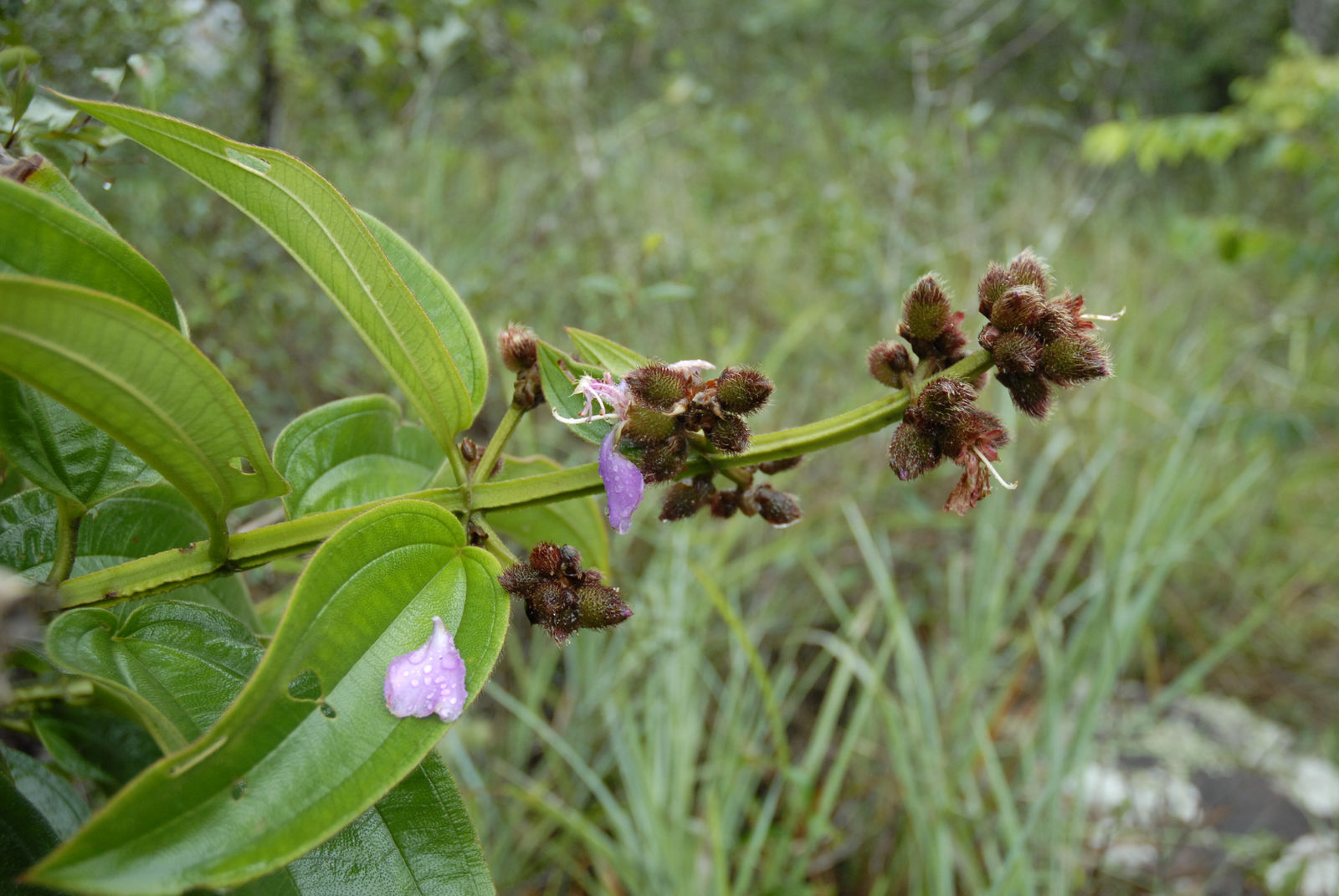
== Description == Tibouchina species are subshrubs, shrubs or small trees. Their leaves are opposite, usually with petioles, and often covered with scales. The inflorescence is a panicle or some modification of a panicle with reduced branching. The individual flowers have five free petals, purple or lilac in color; the color does not change as the flowers age. There are ten stamens, either all the same or dimorphic, with five larger and five smaller ones. The connective tissue below the anthers of the stamens is prolonged and modified at the base of the stamens into ventrally bilobed appendages. When mature, the seeds are contained in a dry, semiwoody capsule and are cochleate (spiralled).
Excerpted from Wikipedia’s “Tibouchina” article, available under the CC BY-SA 4.0 licence.
Gallery (2)
Available in 14 languages
- Español
- Français
- Português
- Bahasa Indonesia
- Cebuano
- Croatian
- Egyptian Arabic
- Esperanto
- Hungarian
- Iloko
- Svenska
- Tiếng Việt
- Waray
via Wikidata sitelinks · CC0