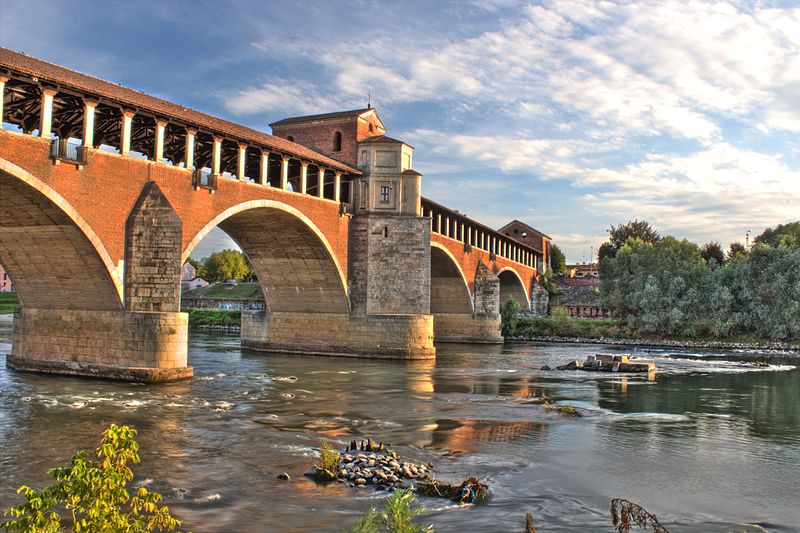
File:Twilight_of_the_old_ways.jpg · Wikimedia Commons · See Wikimedia Commons
Ticino is a river that flows through both Switzerland and Italy, forming an important waterway in the region. It matters as a significant geographic feature that connects these two countries and has shaped the areas through which it passes.
AI-generated from the Wikipedia summary — may contain errors.
Wikidata facts
- Instance of
- river
- Country
- Italy
- Located in
- Piedmont
- Continent
- Europe
- Official website
- www.ticino.ch/it
- Image
- Ticino.JPG
- Length
- 248
Show 9 more facts
- Commons gallery
- Ticino river
- Commons category
- Ticino river
- mouth of the watercourse
- Po
- topic's main category
- Category:Ticino (river)
- lake on watercourse
- Lake Maggiore
- waterbody number
- CH/56
- watershed area
- 7228
- basin country
- Switzerland
- described by source
- Encyclopædia Britannica 11th edition
Sources (2)
via Wikidata · CC0
~8 min read
Encyclopedic overview
The river Ticino (/tɪˈtʃiːnoʊ/ tih-CHEE-noh, Italian: [tiˈtʃiːno]; Lombard: Tesin; French and German: Tessin; Latin: Ticīnus) is the most important perennial left-bank tributary of the Po. It has given its name to the Swiss canton through which its upper portion flows.
It is one of the four major rivers taking their source in the Gotthard region, along with the Rhône, Reuss and Rhine. The river rises in the Val Bedretto in Switzerland at the frontier between the cantons of Valais and Ticino right below the Nufenen Pass, is fed by the glaciers of the Alps and later flows through Lake Maggiore, which traverses the border to Italy. The Ticino joins the Po a few kilometres downstream (along the Ticino) from Pavia. It is about 248 kilometres (154 mi) long. The stretch of river between Lake Maggiore and the confluence in the Po is included in the Parco naturale lombardo della Valle del Ticino, a Nature reserve included by UNESCO in the World Network of Biosphere Reserves.
Excerpted from Wikipedia’s “Ticino” article, available under the CC BY-SA 4.0 licence.
Gallery (4)
On the map
Available in 61 languages
- Español
- Français
- Deutsch
- 中文
- 日本語
- Русский
- Português
- Italiano
- العربية
- Albanian
- Armenian
- Arpitan
- azb
- Basque
- Belarusian
- Breton
- Bulgarian
- Catalan
Show 42 more
- Cebuano
- Croatian
- Czech
- Danish
- Egyptian Arabic
- eml
- Esperanto
- Estonian
- Finnish
- Georgian
- Greek
- Hebrew
- Hungarian
- Latin
- Lithuanian
- lld
- Lombard
- Macedonian
- Malayalam
- Nederlands
- Norwegian
- Norwegian Nynorsk
- Ossetic
- Piedmontese
- Polski
- Romanian
- Romansh
- Serbian
- Serbian (Latin)
- Sicilian
- simple
- Slovenian
- Svenska
- Swahili
- Türkçe
- Ukrainian
- Urdu
- Venetian
- Welsh
- فارسی
- ไทย
- 한국어
via Wikidata sitelinks · CC0