
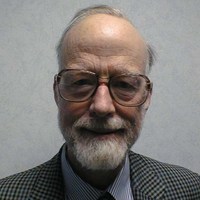
File:Sir_Tony_Hoare_IMG_5125.jpg · Wikimedia Commons · See Wikimedia Commons
Tony Hoare
Sign in to saveAlso known as C. A. R. Hoare, Charles Antony Richard Hoare, Sir Charles Antony Richard Hoare, C.A.R. Hoare
British computer scientist
OverviewAI-generated
Tony Hoare, born Charles Antony Richard Hoare on January 11, 1934, in Colombo, was a British computer scientist, engineer, programmer, and writer. He was educated at the Dragon School, Merton College, University of Oxford, and Lomonosov Moscow State University. His doctoral advisor was Andrey Kolmogorov. Hoare held positions at Microsoft, the University of Oxford, and Queen's University Belfast. He spoke English, Russian, Latin, and Ancient Greek.
He is known for notable works including quicksort, Hoare logic, communicating sequential processes, and null. Hoare received the Turing Award, the IEEE John von Neumann Medal, and the Faraday Medal. He was a Fellow of the Royal Society and a member of the Accademia Nazionale dei Lincei, Academia Europaea, and the Bavarian Academy of Sciences and Humanities. He died on March 5, 2026.
Synthesized by Vinony from 32 facts across 4 sources: Wikidata, Open Library, Firecrawl, Vinony collections. Generated from structured data (not the Wikipedia text) and checked against those facts — may still contain errors.
Person · Open Library
- Works
- 7
Top works
- SAS : the Ambush
- Edsger Wybe Dijkstra
- Engineering Theories of Software Intensive Systems
- Born for War
- Successful Clay Pigeon Shooting
via Open Library + Wikidata
Key facts
- Born
- Charles Antony Richard Hoare , ( 1934-01-11 ) 11 January 1934, Colombo , British Ceylon
- Died
- 5 March 2026 (2026-03-05) (aged 92), Cambridge , England
- Education
- Dragon School , The King's School, Canterbury
- Alma mater
- University of Oxford (BA, PgDip)
- Known for
- Quicksort Quickselect Hoare logic Null reference Communicating sequential processes Structured programming ALGOL
- Spouse
- Jill Pym
- Awards
- Turing Award (1980) Harry H. Goode Memorial Award (1981) Faraday Medal (1985) Computer Pioneer Award (1990) Kyoto Prize (2000) IEEE John von Neumann Medal (2011) Royal Medal (2023)
- Fields
- Computer science
- Institutions
- Elliott Brothers Queen's University Belfast University of Oxford Moscow State University Microsoft Research
- Doctoral students
- Cliff Jones Bill Roscoe Augusto Sampaio
- Website
- www .cs .ox .ac .uk /people /tony .hoare /
via Wikipedia infobox
Official website
Tony Hoare | Department of Computer Science
Tony Hoare at the Department of Computer Science
cs.ox.ac.uk →Link to the official site · 11,197 chars · not written by Vinony
Wikidata facts
- Instance of
- human
- Given name
- Richard
- Gender
- male
- Citizenship
- United Kingdom
- Place of birth
- Colombo
- Place of death
- Cambridge
- Occupation
- university teacher
- Educated at
- The King's School Canterbury
- Employer
- Queen's University Belfast
- Languages spoken
- Ancient Greek
- Award
- ACM Fellow
- Notable work
- null
- Doctoral advisor
- Andrey Kolmogorov
- Field of work
- computer science
- Official website
- www.cs.ox.ac.uk/people/tony.hoare
- Image
- Hoare.jpg
- Number of children
- 3
Show 12 more facts
- Commons category
- C. A. R. Hoare
- member of
- Association for Computing Machinery
- date of birth
- 1934-01-11
- Erdős number
- 4
- name in native language
- Tony Hoare
- ACM Classification Code (2012)
- 10011377
- honorific prefix
- Sir
- nickname
- Τόνι
- maintained by WikiProject
- WikiProject Mathematics
- date of death
- 2026-03-05
- birth name
- Charles Antony Richard Hoare
- writing language
- English language
Sources (7)
via Wikidata · CC0
~10 min read
Encyclopedic overview
Sir Charles Antony Richard Hoare (/hɔːr/ HOR; 11 January 1934 – 5 March 2026), known as Sir Tony Hoare or C. A. R. Hoare, was a British computer scientist who made foundational contributions to programming languages, algorithms, operating systems, formal verification, and concurrent computing. His work earned him the 1980 ACM Turing Award, usually regarded as the highest distinction in computer science.
Hoare developed the sorting algorithm quicksort in 1959–1960. He developed Hoare logic, an axiomatic basis for verifying program correctness. In the semantics of concurrency, he introduced the formal language communicating sequential processes (CSP) to specify the interactions of concurrent processes, and along with Edsger Dijkstra, formulated the dining philosophers problem. From 1977 on, he held positions at the University of Oxford as well as at Microsoft Research in Cambridge.
Excerpted from Wikipedia’s “Tony Hoare” article, available under the CC BY-SA 4.0 licence.