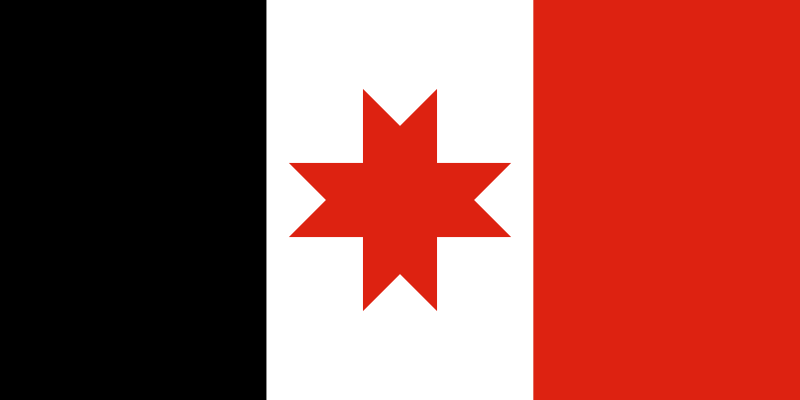
File:Flag_of_Udmurtia.svg · Wikimedia Commons · See Wikimedia Commons
Udmurts
Sign in to saveAlso known as Udmurt people
The Udmurts (, ) are a Permian (Finno-Ugric) ethnic group in Eastern Europe, who speak the Udmurt language. They mainly live in the republic of Udmurtia in Russia. They form 24.1% of Udmurtia's population.
The Udmurts are an ethnic group from Eastern Europe who speak their own distinct language and primarily live in the Russian republic of Udmurtia. They make up about a quarter of Udmurtia's population and are part of a larger Finno-Ugric language family that connects them to other peoples across northern Europe and Russia.
AI-generated from the Wikipedia summary — may contain errors.
Key facts
- Ethnic group.group
- Udmurts
- Ethnic group.image
- File:Udmurts 1907.jpg
- Ethnic group.caption
- Udmurts in 1907
- Ethnic group.flag
- File:Flag of Udmurtia.svg
- Ethnic group.flag_caption
- Flag of Udmurtia
- Ethnic group.pop
- 396,000 (2021)
- Ethnic group.popplace
- Udmurtia
- Ethnic group.pop1
- 386,465 (2021)
- Ethnic group.pop2
- 5,824 (2009)
- Ethnic group.pop3
- 4,712 (2001)
- Ethnic group.pop4
- 193 (2011)
- Ethnic group.pop5
- 179–197 (2023)
- Ethnic group.rels
- Majority: Russian Orthodoxy Minority: Udmurt Vos Protestantism Pentecostalism Islam
- Ethnic group.langs
- Udmurt, Russian
- Ethnic group.related
- Other Permians, especially Besermyan
via Wikipedia infobox
Wikidata facts
- Instance of
- ethnic group
- Part of
- Finno-Ugric peoples
- Has part
- Besermyan
- Country
- Russia
- Population
- 570000
- Image
- Кика.jpg
Show 5 more facts
- Commons category
- Udmurt people
- topic's main category
- Category:Udmurt people
- described by source
- Granat Encyclopedic Dictionary
- on focus list of Wikimedia project
- WikiProject Ukraine
- language used
- Russian
Sources (3)
via Wikidata · CC0
~2 min read
Encyclopedic overview
10 sectionsContents
- Etymology
- Distribution
- Culture
- Genetics
- Notable people
- Gallery
- See also
- References
- Further reading
- External links
The Udmurts (, ) are a Permian (Finno-Ugric) ethnic group in Eastern Europe, who speak the Udmurt language. They mainly live in the republic of Udmurtia in Russia. They form 24.1% of Udmurtia's population.
==Etymology== The name Udmurt comes from * 'meadow people', from the Permic root * 'meadow, glade, turf, greenery' and murt 'person' (cf. Komi , Mari , Mordvin mirď-), probably an early borrowing from an Iranian language (such as Scythian): * or * meaning 'person, man' (cf. Persian ). This, in turn, is thought to have been borrowed from the Indo-Aryan term * 'man', literally 'mortal, one who is bound to die' ( File:021 Description of all the Russian state-dwelling peoples.jpg| Wotiak woman (Georgi, 1776) File:Vladimir Medeyko congratulates Udmurt language (2018-11-21).ogv|Wikimedia Russia director Vladimir Medeyko congratulates Udmurt language File:Удмурты.jpg|Udmurt women in traditional clothing File:Закамские удмурты.jpg File:Zakama Udmurt mens costume.png|An Udmurt man wearing traditional clothing File:Sep, Italmas Nuk - 48012046556.jpg|Udmurt girls at the Italmas Nuk flower festival in Igrinsky District
Excerpted from Wikipedia’s “Udmurts” article, available under the CC BY-SA 4.0 licence.
Gallery (14)
Available in 67 languages
- Español
- Français
- Deutsch
- 中文
- 日本語
- Русский
- Português
- Italiano
- العربية
- Aragonese
- Armenian
- Avaric
- azb
- Azerbaijani
- Bahasa Indonesia
- Bashkir
- Basque
- Belarusian
Show 48 more
- Bulgarian
- Catalan
- Chechen
- Chuvash
- Croatian
- Czech
- Danish
- Egyptian Arabic
- Erzya
- Esperanto
- Estonian
- Finnish
- fiu_vro
- Gagauz
- Georgian
- Greek
- Hebrew
- Hungarian
- Kazakh
- kge
- Komi
- Komi-Permyak
- Latvian
- lbe
- Lithuanian
- Macedonian
- Malayalam
- Mongolian
- Nederlands
- Norwegian
- Norwegian Nynorsk
- Ossetic
- Polski
- Romanian
- Serbian
- Serbian (Latin)
- simple
- Svenska
- Tatar
- Tiếng Việt
- Türkçe
- Udmurt
- Ukrainian
- Uzbek
- Veps
- Wu Chinese
- فارسی
- 한국어
via Wikidata sitelinks · CC0