File:Ullr.jpg · Wikimedia Commons · See Wikimedia Commons
Also known as Ullr
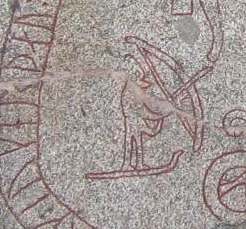
thumb|Figure on skis and with a bow, possibly Ullr, on the 11th-century Böksta Runestone thumb|upright|The coat of arms of Ullensaker displays Ullr as a charge.
~15 min read
Encyclopedic overview
19 sectionsContents
- Name and origin
- Literary tradition
- ''Gesta Danorum''
- Poetic Edda
- ''Prose Edda''
- Skaldic poetry
- Toponymy
- Norway
- Sweden
- Iceland
- Scholarly theories
- Modern reception
- See also
- Notes
- References
- Primary sources
- Secondary sources
- Further reading
- External links
thumb|Figure on skis and with a bow, possibly Ullr, on the 11th-century Böksta Runestone thumb|upright|The coat of arms of Ullensaker displays Ullr as a charge.
In Norse mythology, Ullr (Old Norse: ) is a god associated with skiing and archery. Although literary attestations of Ullr are sparse, evidence including relatively ancient place-name evidence from Scandinavia suggests that he was a major god in earlier Germanic paganism. Proto-Germanic *wulþuz ('glory') appears to have been an important concept of which his name is a reflex. The word appears as owlþu- on the 3rd-century Thorsberg chape.
Excerpted from Wikipedia’s “Ull” article, available under the CC BY-SA 4.0 licence.