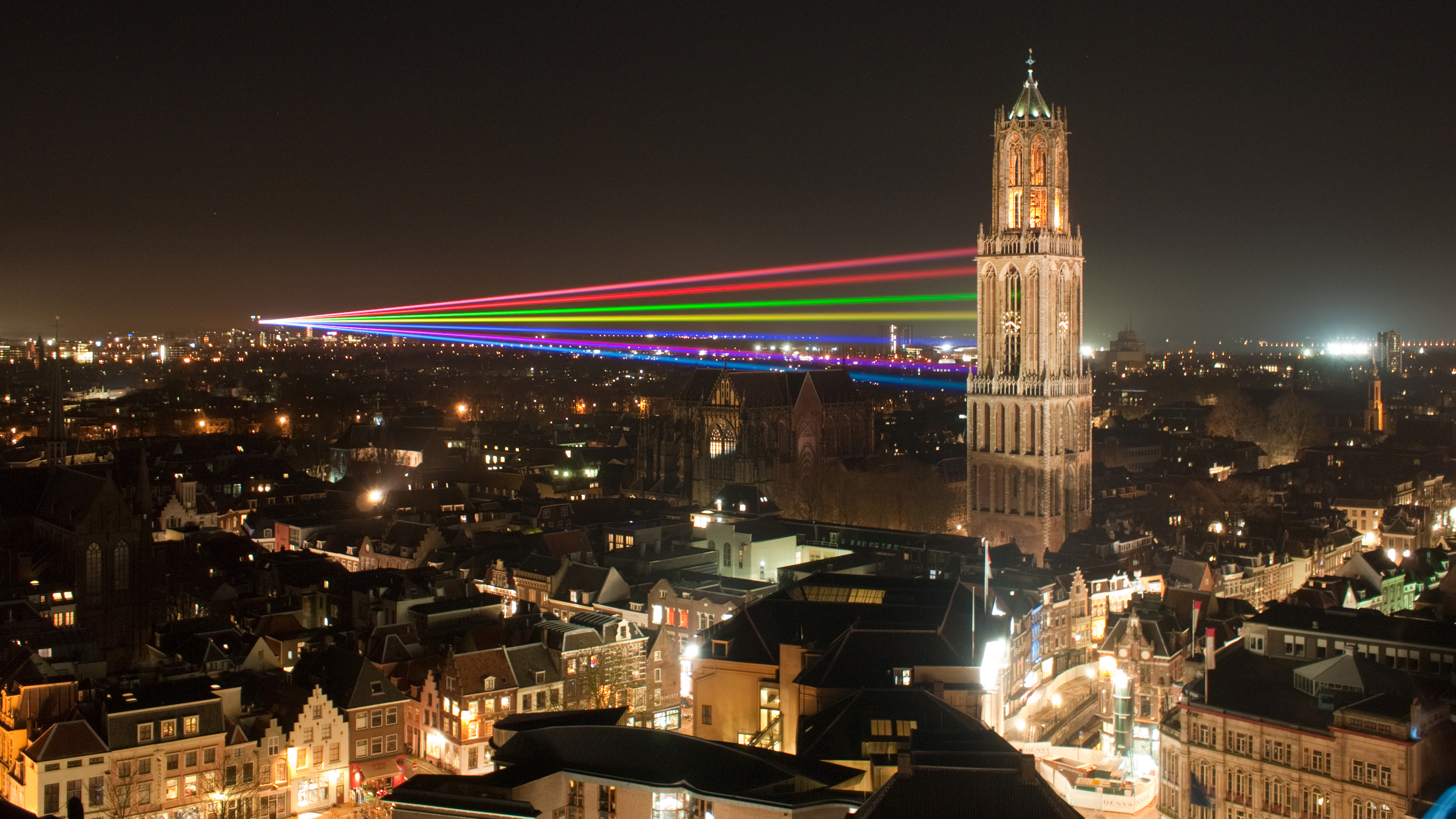
Utrecht
Sign in to saveAlso known as Utreg, Utrecht (city)
Utrecht ( ; ; ) is the fourth-largest city of the Netherlands, as well as the capital and the most populous city of the province of Utrecht. The municipality of Utrecht is located in the eastern part of the Randstad conurbation, in the very centre of mainland Netherlands, and includes Haarzuilens, Vleuten and De Meern. It has a population of 378,140 as of .
Utrecht is the fourth-largest city in the Netherlands and the capital of its province, located in the geographic center of the country within the greater Randstad urban area. With a population of 378,140, it serves as an important regional hub in the eastern part of this major conurbation.
AI-generated from the Wikipedia summary — may contain errors.
In the Vinony graph
Within Vinony's link graph, Utrecht is referenced by 5,378 other articles, and connects out to Dutch Water Line, Spoorwegmuseum and Catholic Church.
The entry is geolocated on the map in NL, across 3 mapped points.
It is catalogued under topics including 40s establishments in the Roman Empire, Cities in the Netherlands and Germania Inferior.
Its subject is documented across 122 Wikipedia language editions.
Wikipedia views (30d)
29,948 totalvia Wikimedia Pageviews API
Key facts
- Settlement.image_map
- Map - NL - Municipality code 0344 (2009).svg
- Settlement.map_alt
- Highlighted position of Utrecht in a municipal map of Utrecht
- Settlement.map_caption
- Location of Utrecht municipality
- Settlement.pushpin_map
- Netherlands#Europe
- Settlement.pushpin_map_caption
- Location within the Netherlands##Location within Europe
- Settlement.pushpin_relief
- 1
- Settlement.subdivision_type
- Country
- Settlement.subdivision_name
- Netherlands
- Settlement.subdivision_type1
- Province
- Settlement.subdivision_name1
- Utrecht
- Settlement.name
- Utrecht
- Settlement.native_name
- Ut(e)reg (Utrechts)
- Settlement.settlement_type
- City and municipality
- Settlement.image_flag
- Flag of Utrecht city.svg
- Settlement.flag_size
- 100x67px
- Settlement.image_shield
- Utrecht gemeente wapen.svg
- Settlement.shield_size
- 100x80px
- Settlement.nickname
- Domstad (Cathedral City)
via Wikipedia infobox
Wikidata facts
- Official name
- Utrecht
- Demonym
- utreĥtano
- Country
- Netherlands
- Located in
- Lordship of Utrecht
- Population
- 359370
- Area
- 99.32
- Elevation
- 5
- Time zone
- Central European Time
- Body of water
- Vecht
- Head of government
- Sharon Dijksma
- Capital of
- Utrecht
- Shares border with
- Houten
- Official website
- www.utrecht.nl/city-of-utrecht
- Image
- Nachtegaalstraat Utrecht.jpg
- Households
- 161026
- Dialing code
- 030
- Flag
- flag of Utrecht
Show 15 more facts
- twinned administrative body
- Juanjuí
- Commons category
- Utrecht (city)
- postal code
- 3500–3585
- topic's main category
- Category:Utrecht (city)
- Commons gallery
- Utrecht (city)
- category for people born here
- Category:Births in Utrecht (city)
- category for people who died here
- Category:Deaths in Utrecht (city)
- contains settlement
- Utrecht
- category of associated people
- Category:People from Utrecht (city)
- P8168
- Przywory Małe
- member of
- Creative Cities Network
- native label
- Utrecht
- P11012
- Aapravasi Ghat
- number of viewers/listeners
- 2120788
Sources (14)
via Wikidata · CC0
~38 min read
Encyclopedic overview
42 sectionsContents
- History
- Origins (before 650 CE)
- Centre of Christianity in the Netherlands (650–1579)
- Prince-bishops
- Religious buildings
- City of Utrecht
- The end of independence
- Republic of the Netherlands (1579–1806)
- Modern history (1815–present)
- Geography
- Climate
- Population
- Demographics
- Inhabitants by origin
- Religion
- Population centres and agglomeration
- Politics
- Cityscape
- Transport
- Public transport
- Heavy rail
- Light rail
- Bus transport
- Cycling
- Road transport
- Shipping
- Economy
- Education
- Culture
- Sports
- Museums
- Music and events
- Theatre
- Notable people from Utrecht
- International relations
- Twin towns
- Other relations
- See also
- Notes
- References
- Bibliography
- External links
Utrecht (/ˈjuːtrɛkt/ YOO-trekt; Dutch: [ˈytrɛxt] ; Utrecht dialect: Ut(e)reg [ˈyt(ə)ʁɛχ]) is the fourth-largest city of the Netherlands, as well as the capital and the most populous city of the province of Utrecht. The municipality of Utrecht is located in the eastern part of the Randstad conurbation, in the very centre of mainland Netherlands, and includes Haarzuilens, Vleuten and De Meern. It has a population of 378,140 as of January 2026.
Utrecht's ancient city centre features many buildings and structures, several dating as far back as the High Middle Ages. It has been the religious centre of the Netherlands since the 8th century. In 1579, the Union of Utrecht was signed in the city to lay the foundations for the Dutch Republic. Utrecht was the most important city in the Netherlands until the Dutch Golden Age, when it was surpassed by Amsterdam as the country's cultural centre and most populous city.
Excerpted from Wikipedia’s “Utrecht” article, available under the CC BY-SA 4.0 licence.
Gallery (53)
On the map
3 mapped locations
Available in 122 languages
- Español
- Français
- Deutsch
- 中文
- 日本語
- Русский
- Português
- Italiano
- العربية
- हिन्दी
- Afrikaans
- Albanian
- Amharic
- Aragonese
- Aramaic
- Armenian
- Arpitan
- Asturian
Show 103 more
- Azerbaijani
- Bahasa Indonesia
- Balinese
- Bangla
- Basque
- be_x_old
- Belarusian
- Breton
- Bulgarian
- Burmese
- Catalan
- cbk_zam
- Cebuano
- Central Kurdish
- Croatian
- Czech
- Danish
- Egyptian Arabic
- eml
- Esperanto
- Estonian
- Faroese
- Filipino
- Finnish
- Galician
- Georgian
- Greek
- Haitian Creole
- Hebrew
- Hungarian
- Icelandic
- Ido
- Interlingua
- Interlingue
- Irish
- Javanese
- Kazakh
- Kurdish
- Kyrgyz
- Latin
- Latvian
- Limburgish
- Lithuanian
- lld
- Low German
- Luxembourgish
- Macedonian
- Malagasy
- Malay
- Manx
- Marathi
- Mongolian
- nds_nl
- Nederlands
- Northern Frisian
- Norwegian
- Norwegian Nynorsk
- Occitan
- Old English
- Ossetic
- Papiamento
- Pashto
- Picard
- Piedmontese
- Polski
- Quechua
- Romanian
- Saterland Frisian
- Scots
- Scottish Gaelic
- Serbian
- Serbian (Latin)
- Sicilian
- Silesian
- simple
- Slovak
- Slovenian
- Somali
- Sranan Tongo
- Svenska
- Swahili
- Tamil
- Tatar
- Tiếng Việt
- Türkçe
- Ukrainian
- Urdu
- Uzbek
- Venetian
- Veps
- Volapük
- Walloon
- Waray
- Welsh
- West Flemish
- Western Frisian
- Western Panjabi
- Wu Chinese
- Zeelandic
- zh_yue
- فارسی
- ไทย
- 한국어
via Wikidata sitelinks · CC0