File:The_Sandow_Trocadero_Vaudevilles,_performing_arts_poster,_1894.jpg · Wikimedia Commons · See Wikimedia Commons
vaudeville
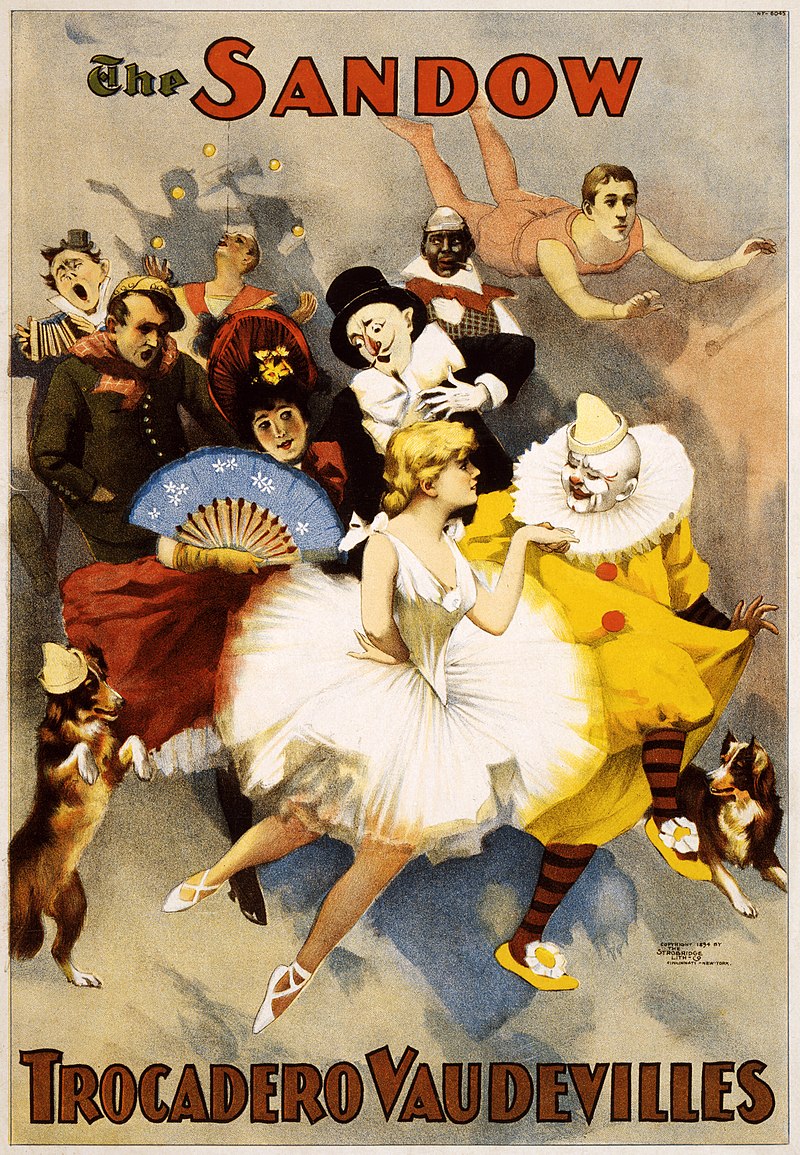
Sign in to savethumb|A promotional poster for the Sandow Trocadero Vaudevilles (1894), showing dancers, clowns, trapeze artists, costumed dogs, singers and costumed actors
Vaudeville was a form of live entertainment featuring a variety of short acts such as dancers, clowns, acrobats, singers, and comedians performing on the same stage. It was a popular and accessible form of theater that brought diverse entertainment to audiences in the late 19th and early 20th centuries.
AI-generated from the Wikipedia summary — may contain errors.
Wikidata facts
- Instance of
- theatrical genre
- Subclass of
- variety
- Followed by
- burlesque
- Image
- Threekeatons.jpg
Show 6 more facts
- topic's main category
- Category:Vaudeville
- described by source
- Encyclopædia Britannica 11th edition
- P8168
- North Omotic
- Commons category
- Vaudeville
- native label
- vaudeville
- replaced by
- burlesque
Sources (2)
via Wikidata · CC0
~39 min read
Encyclopedic overview
15 sectionsContents
- Etymology
- Beginnings
- Popularity
- Women
- Black vaudeville
- Immigrant America
- Selected vaudeville artists
- Decline
- Architecture
- Vaudeville's cultural influence and legacy
- Archives
- See also
- References
- Sources
- External links
thumb|A promotional poster for the Sandow Trocadero Vaudevilles (1894), showing dancers, clowns, trapeze artists, costumed dogs, singers and costumed actors
Vaudeville (; ) is a theatrical genre of variety entertainment which became popular in the United States and Canada from the early 1870s until the early 1930s.
Excerpted from Wikipedia’s “vaudeville” article, available under the CC BY-SA 4.0 licence.