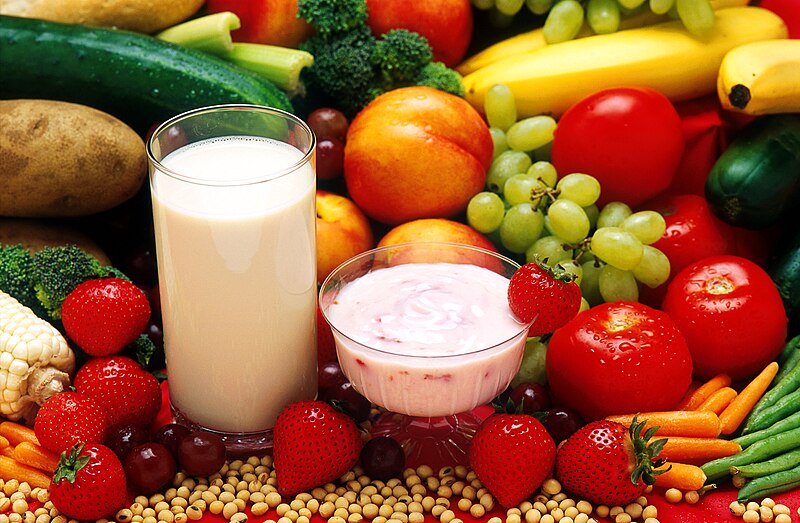
File:Soy-whey-protein-diet.jpg · Wikimedia Commons · See Wikimedia Commons
vegetarianism
Sign in to saveAlso known as vegetable diet, vegetable regimen, Pythagorean diet
Vegetarianism is the practice of abstaining from the consumption of meat (red meat, poultry, seafood, freshwater fish, insects, and the flesh of any other animal). It may also include abstaining from eating all by-products of animal slaughter. A person who practices vegetarianism is known as a vegetarian.
Vegetarianism is the practice of not eating meat, including red meat, poultry, fish, and other animal flesh, and sometimes avoiding other animal products as well. People choose this diet for various personal, ethical, environmental, or health reasons.
AI-generated from the Wikipedia summary — may contain errors.
Wikidata facts
- Subclass of
- social movement
- Image
- Soy-whey-protein-diet.jpg
Show 8 more facts
- different from
- vegan nutrition
- described by source
- New International Encyclopedia
- Commons category
- Vegetarianism
- topic's main category
- Category:Vegetarianism
- cuisine
- vegetarian cuisine
- practiced by
- vegetarian
- Stack Exchange site URL
- vegetarianism.stackexchange.com
- on focus list of Wikimedia project
- Wikipedia:Vital articles/Level/4
via Wikidata · CC0
~65 min read
Encyclopedic overview
53 sectionsContents
- Etymology
- ''Vegetarian'' etymology
- History
- Vegetarian locations
- Former all-vegetarian locations
- Heavily-vegetarian locations
- Varieties
- Health research
- Bones
- Diabetes
- Cardiovascular system
- Mental health
- Eating disorders
- Mortality risk
- Diet composition and nutrition
- Protein
- Iron
- Vitamin B<sub>12</sub>
- Fatty acids
- Calcium
- Vitamin D
- Vitamin D<sub>2</sub>
- Choline
- Ethics and diet
- General
- Ethics of killing for food
- Dairy and eggs
- Treatment of animals
- Religion and diet
- Baháʼí Faith
- Buddhism
- Christianity
- Seventh-day Adventist
- Hinduism
- Islam
- Jainism
- Judaism
- Rastafari
- Sikhism
- Environment and diet
- Labor conditions and diet
- Economics and diet
- Economic vegetarianism
- Demographics
- Turnover
- Country-specific information
- Media
- Literature
- Television
- Film
- See also
- References
- External links
Vegetarianism is the practice of abstaining from the consumption of meat (red meat, poultry, seafood, freshwater fish, insects, and the flesh of any other animal). It may also include abstaining from eating all by-products of animal slaughter. A person who practices vegetarianism is known as a vegetarian.
Vegetarianism may be adopted for various reasons. Many people object to eating meat out of respect for sentient animal life. Such ethical motivations have been codified under various religious beliefs as well as animal rights advocacy. Other motivations for vegetarianism are health-related, political, environmental, cultural, aesthetic, economic, taste-related, or relate to other personal preferences.
Excerpted from Wikipedia’s “vegetarianism” article, available under the CC BY-SA 4.0 licence.
Gallery (38)
Available in 100 languages
- Español
- Français
- Deutsch
- 中文
- 日本語
- Русский
- Português
- Italiano
- العربية
- हिन्दी
- Afrikaans
- Albanian
- Armenian
- Asturian
- Azerbaijani
- Bahasa Indonesia
- Bangla
- Basque
Show 81 more
- be_x_old
- Belarusian
- Bulgarian
- Catalan
- cdo
- Croatian
- Czech
- Danish
- Esperanto
- Estonian
- Filipino
- Finnish
- fiu_vro
- Galician
- Georgian
- Greek
- Gujarati
- Hausa
- Hebrew
- Hungarian
- Icelandic
- Irish
- Javanese
- Kannada
- Kazakh
- Kurdish
- Latin
- Latvian
- Lithuanian
- Lojban
- Macedonian
- Maithili
- Malay
- Malayalam
- Marathi
- Mirandese
- nds_nl
- Nederlands
- Nepali
- Newari
- Norwegian
- Norwegian Nynorsk
- Occitan
- Odia
- Old English
- olo
- Polski
- Punjabi
- Romanian
- Scots
- Scottish Gaelic
- Serbian
- Serbian (Latin)
- simple
- Slovak
- Slovenian
- Svenska
- Swahili
- Tajik
- Tamil
- Telugu
- Tiếng Việt
- Tulu
- Türkçe
- Ukrainian
- Urdu
- Uyghur
- Uzbek
- Waray
- Welsh
- Western Frisian
- Western Panjabi
- Wu Chinese
- Yiddish
- Zaza
- zh_classical
- zh_min_nan
- zh_yue
- فارسی
- ไทย
- 한국어
via Wikidata sitelinks · CC0