File:Chief_Vestal.jpg · Wikimedia Commons · See Wikimedia Commons
veil
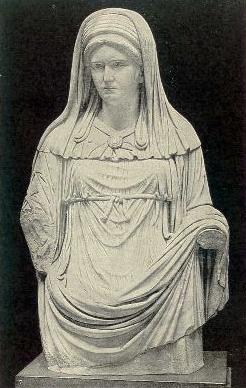
Sign in to savethumb|right|upright|Roman statue of a veiled Vestal Virgin
I don't have sufficient context from just an image caption to write an accurate overview of "veil" as requested. The caption only shows that veils were worn by Roman Vestal Virgins, which is too limited to explain what a veil is and why it matters broadly.
AI-generated from the Wikipedia summary — may contain errors.
Wikidata facts
- Image
- The Veiled Woman (32025149886).jpg
Show 4 more facts
- described by source
- National Encyclopedia of Uzbekistan
- topic's main category
- Category:Veils
- Commons category
- Veils (clothing)
- used by
- woman
Sources (2)
via Wikidata · CC0
~42 min read
Encyclopedic overview
25 sectionsContents
- History
- Antiquity
- Later history
- Veils for men
- Veiling and religion
- Biblical references
- Judaism
- Christianity
- Veiling of women
- Veiling of nuns and consecrated virgins
- Veiling of objects
- Islam
- Restrictions
- Indian religions
- Bridal veils
- Judaism
- Christianity
- Church of Jesus Christ of Latter-day Saints
- Mourning veils
- Interpretations
- Tradition of veil use in China
- See also
- References
- Further reading
- External links
thumb|right|upright|Roman statue of a veiled Vestal Virgin
A veil is an article of clothing or hanging cloth that is intended to cover some part of the head or face, or an object of some significance. Veiling has a long history in European, Asian, and African societies. The practice has been prominent in different forms in Judaism, Christianity, and Islam. The practice of veiling is especially associated with women and sacred objects, though in some cultures, it is men, rather than women, who are expected to wear a veil. Besides its enduring religious significance, veiling continues to play a role in some modern secular contexts, such as wedding customs.
Excerpted from Wikipedia’s “veil” article, available under the CC BY-SA 4.0 licence.