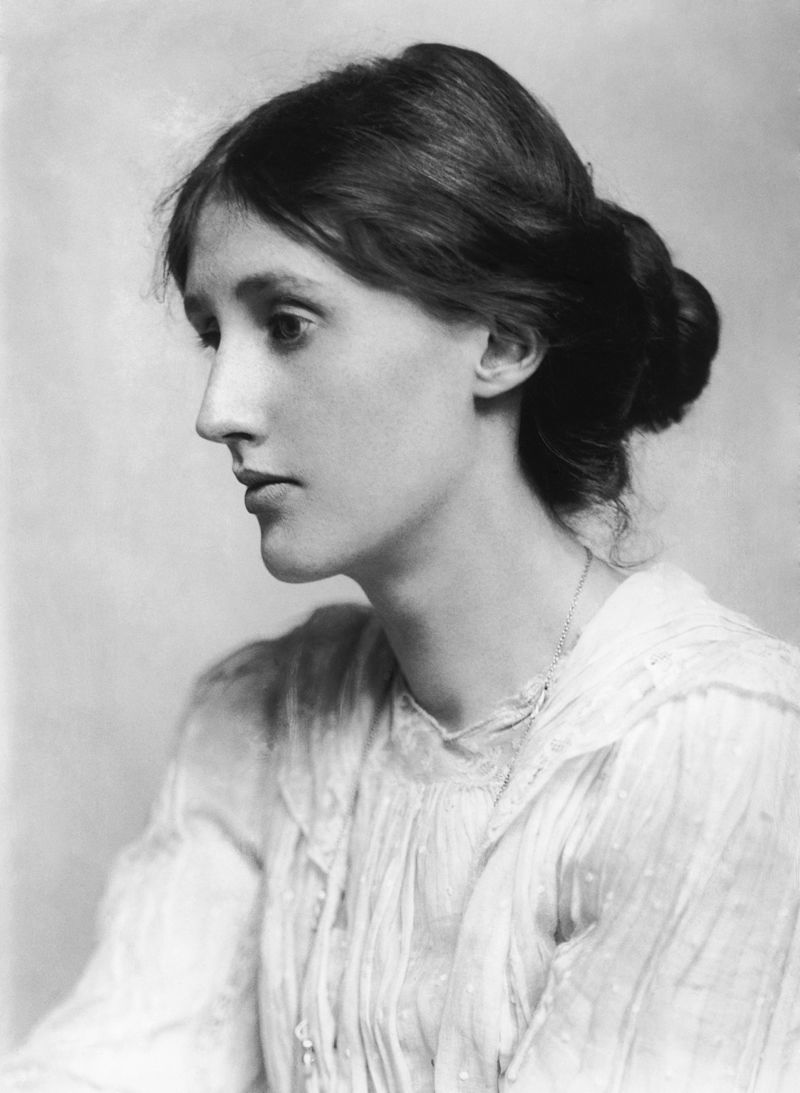
File:George_Charles_Beresford_-_Virginia_Woolf_in_1902_-_Restoration.jpg · Wikimedia Commons · See Wikimedia Commons
Virginia Woolf
Sign in to saveAlso known as Virginia Stephen, Adeline Virginia Stephen, Adeline Virginia Woolf, Virginia Adeline Woolf, Adeline Virginia Stephen Woolf, Virginia Stephen Woolf
English modernist writer (1882–1941)
Virginia Woolf was an influential English writer (1882–1941) who pioneered modernist literary techniques that challenged traditional storytelling. Her innovative works, which explored consciousness and shifted narrative perspectives in new ways, fundamentally changed how literature could be written and continue to be widely read and studied today.
AI-generated from the Wikipedia summary — may contain errors.
Described at
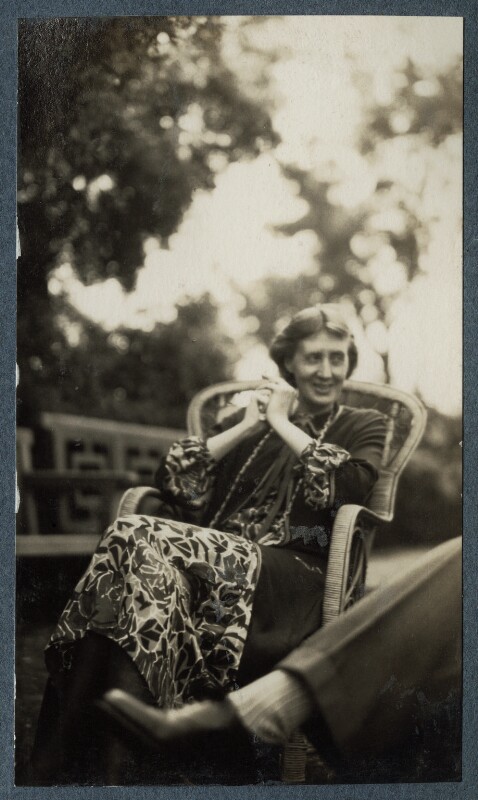
Virginia Woolf (1882-1941) | Humanist Heritage - Exploring the rich history and influence of humanism in the UK
Exploring the rich history and influence of humanism in the UK
heritage.humanists.uk →Virginia Woolf was an innovative and empathic writer, who gave new expression to the experience of being alive and helped to shape the modern novel. As the daughter of two forthright non-believers, she was also a second generation humanist: her father Leslie Stephen being a founding figure in the Union of Ethical Societies (now Humanists UK), and her mother Julia Stephen the author of a powerful defence of the agnostic woman. A novelist, essayist, critic, diarist, and biographer, Woolf was a tireless writer, whose works explored ordinary life’s ‘moments of being’, and celebrated the beauty of the everyday. I dig out beautiful caves behind my characters; I think that gives exactly what I want; humanity, humour, depth. Adeline Virginia Stephen was born at 22 Hyde Park Gate, London into the social and intellectual elite of Victorian England or, as she herself wrote, ‘a very communicative, literate, letter writing, visiting, articulate, late nineteenth century world’. Her parents were Julia (née Jackson) and Leslie Stephen, both of whom had been widowed. Virginia was educated at home by her father, as well as by herself, with a rigorous devotion to reading which continued throughout her life. Leslie Stephen, the first editor of the Dictionary of National Biography , emphasised precision and discrimination in writing, this ideal of conveying what was most important in as few words as possible becoming central to his daughter’s own work. Julia Stephen was a model, writer, and freethinker, who had been initially drawn to her husband on account of his writings on agnosticism; a position she shared. As Sybil Oldfield has written: It is strange but true that had not Leslie Stephen and Julia Duckworth found a bond in atheism, there would have been no Virginia Woolf. Virginia Woolf inherited the humanism of her parents and, believing in neither God nor afterlife, emphasised instead the primacy of the present moment. Like Mrs Dalloway (from Woolf’s novel of 1925), hers was an ‘atheist’s religion of doing good for the sake of goodness.’ Accepting that with death she would ‘cease completely’, Clarissa Dalloway anticipated her afterlife as being in the memories of others: laid out like a mist between the people she knew best, who lifted her on their branches as she had seen the trees lift the mist. A sense of life’s fragility – and the ongoing resonances of those who have died – was emphasised by the deaths of Virginia’s mother, half-sister Stella, father, and elder brother Thoby between 1895-1906. In 1912, aged 30, Virginia Stephen married Leonard Woolf, and the pair continued to cultivate the tight-knit circle known as the Bloomsbury Group. Bloomsbury was an LGBT-inclusive network of friends and lovers that celebrated sexual equality and freedom, feeling that every person had the right to live and love in the way they chose. This original set included Vanessa and Clive Bell, biographer Lytton Strachey, artists Roger Fry and Duncan Grant, novelist E.M. Forster , and economist John Maynard Keynes. The group consciously eschewed the rigid strictures of the Victorian world into which they had been born, adopting a humanist worldview which emphasised freedom of thought and intellectual discovery. In 1917, the Woolfs established the Hogarth Press, through which they published the works of some of the era’s most influential writers. Among them were Forster and Keynes, T.S. Eliot, Katherine Mansfield, and Sigmund Freud. Virginia Woolf’s own first novel, The Voyage Out , was published in 1915, and her second, Night and Day , in 1919. She also wrote essays and stories, embodying her belief in the significance of the everyday, and the possibilities of presenting human consciousness anew. Woolf argued for the momentousness of ‘moments of being’; those brief sparks of introspection and discovery inherent in even the most ordinary existence. As Lyndall Gordon has written, modernist writers (among whom Woolf was a leading figure), dispensed with V
Excerpt from a page describing this subject · 12,312 chars · not written by Vinony
Wikidata facts
- Instance of
- human
- Given name
- Alexandra
- Gender
- female
- Citizenship
- United Kingdom
- Place of birth
- London
- Place of death
- Lewes
- Spouse
- Leonard Woolf
- Father
- Leslie Stephen
- Mother
- Julia Stephen
- Occupation
- author
- Educated at
- King's College London
- Languages spoken
- English language
- Native language
- English language
- Religion
- atheism
- Notable work
- The Waves
- Field of work
- essay
- Genre
- prose
- Movement
- Bloomsbury Group
- Image
- Virginia Woolf 1927.jpg
- Residence
- Monk's House
Show 20 more facts
- birth name
- Adeline Virginia Alexandra Stephen
- Commons category
- Virginia Woolf
- date of birth
- 1882-01-25
- topic's main category
- Category:Virginia Woolf
- Commons Creator page
- Virginia Woolf
- Commons gallery
- Virginia Woolf
- archives at
- King's College London
- influenced by
- Thomas De Quincey
- manner of death
- Suicide
- start of work period
- 1904-00-00
- name in native language
- Virginia Woolf
- sexual orientation
- bisexuality
- writing language
- British English
- unmarried partner
- Vita Sackville-West
- end of work period
- 1941-00-00
- place of burial
- Monk's House
- described at URL
- heritage.humanists.uk/virginia-woolf
- P12674
- 6064 Holašovice
- P12749
- Magliaso
- date of death
- 1941-03-28
Sources (15)
via Wikidata · CC0
~40 min read
Encyclopedic overview
Adeline Virginia Woolf (/wʊlf/; née Stephen; 25 January 1882 – 28 March 1941) was an English writer and one of the most influential 20th-century modernist authors. She helped to pioneer the use of stream of consciousness narration as a literary device.
Virginia Woolf was born in South Kensington, London, into an affluent and intellectual family as the seventh child of Julia Prinsep Jackson and Leslie Stephen. She grew up in a blended household of eight children, including her sister, the painter Vanessa Bell. Educated at home in English classics and Victorian literature, Woolf later attended King's College London, where she studied classics and history and encountered early advocates for women's rights and education.
Excerpted from Wikipedia’s “Virginia Woolf” article, available under the CC BY-SA 4.0 licence.
Gallery (12)
Available in 121 languages
- Español
- Français
- Deutsch
- 中文
- 日本語
- Русский
- Português
- Italiano
- العربية
- हिन्दी
- Afrikaans
- Albanian
- Aragonese
- Armenian
- Arpitan
- Assamese
- Asturian
- Aymara
Show 102 more
- azb
- Azerbaijani
- Bahasa Indonesia
- Bangla
- Basque
- be_x_old
- Belarusian
- Bhojpuri
- Bikol
- Bosnian
- Breton
- Bulgarian
- Catalan
- Central Kurdish
- Croatian
- Czech
- Danish
- Egyptian Arabic
- Esperanto
- Estonian
- Extremaduran
- Fiji Hindi
- Finnish
- Galician
- Gan Chinese
- Georgian
- Greek
- Haitian Creole
- Hausa
- Hebrew
- Hungarian
- hyw
- Icelandic
- Ido
- Irish
- Kannada
- Kanuri
- Kashmiri
- Kazakh
- Kotava
- Kurdish
- Kyrgyz
- Latin
- Latvian
- Limburgish
- Lithuanian
- Luxembourgish
- Macedonian
- Maithili
- Malagasy
- Malay
- Malayalam
- Maltese
- Marathi
- Mazanderani
- Mingrelian
- Nederlands
- Nepali
- Newari
- Northern Frisian
- Norwegian
- Norwegian Nynorsk
- Occitan
- olo
- Pashto
- Piedmontese
- Polski
- ppl
- Punjabi
- pwn
- Quechua
- Romanian
- Serbian
- Serbian (Latin)
- simple
- Sinhala
- Slovak
- Slovenian
- Svenska
- Swahili
- Tajik
- Tamil
- Telugu
- Tiếng Việt
- Tulu
- Türkçe
- Ukrainian
- Urdu
- Uzbek
- Volapük
- Waray
- Welsh
- Western Frisian
- Western Panjabi
- Wu Chinese
- Yoruba
- Zaza
- zh_min_nan
- zh_yue
- فارسی
- ไทย
- 한국어
via Wikidata sitelinks · CC0