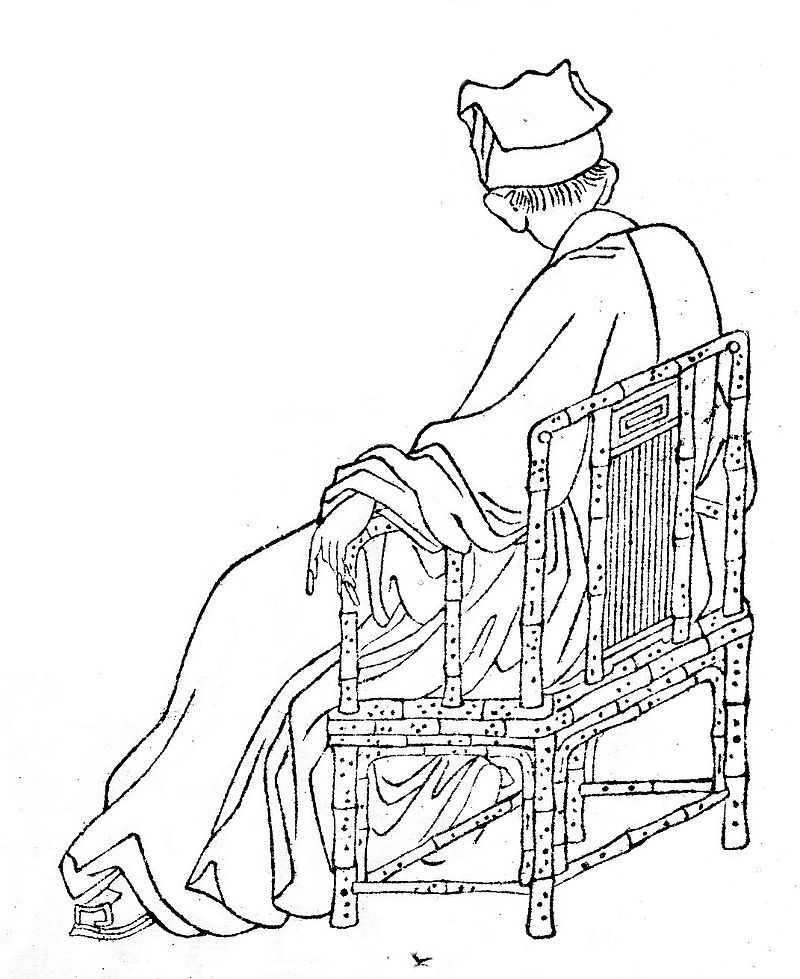
File:Wang_Wei.jpg · Wikimedia Commons · See Wikimedia Commons
Wang Wei
Sign in to saveAlso known as Mo-chieh Wang, Yu-chʻeng Wang, Mojie Wang, Youcheng Wang, Wei Wang, Duy Vương, Makitsu Ō, Yu Wang
Chinese poet, musician, painter, and statesman
OverviewAI-generated
Wang Wei (699–?) was a male Chinese painter, poet, writer, and politician of the Tang dynasty. A member of the Wang clan of Taiyuan and the Han Chinese ethnic group, he was born in Yongji and died in Chang’an. He held the position of minister and possessed the academic degree of jinshi. His courtesy name was Moji. He spoke and wrote in Classical Chinese and Chinese.
His works are held in the collections of the Rhode Island School of Design Museum, the Seattle Art Museum, and the Princeton Art Museum. He is described in sources including the Old Book of Tang, the New Book of Tang, the Svensk uppslagsbok, and the Armenian Soviet Encyclopedia. He had a sibling named Wang Jin.
Synthesized by Vinony from 29 facts across 4 sources: Wikidata, Open Library, MusicBrainz, Last.fm. Generated from structured data (not the Wikipedia text) and checked against those facts — may still contain errors.
Person · Open Library
- Works
- 29
Top works
- 42 zhao xue hui liu Ying wen =
- Bai ke quan shu shi de xue zhe
- Bu tong zi ran guan xia de jian zhu chang suo yi shu
- Di qiu di xing zhuang
- Hai wai ping zong
via Open Library + Wikidata
Listeners · Last.fm
- Listeners
- 1,022
- Total plays
- 26,276
Tags
<a href="https://www.last.fm/music/Wang+Wei">Read more on Last.fm</a>
Key facts
- Born
- 699, Qi County, Jinzhong , Shanxi , Wu Zhou dynasty
- Died
- 761 (aged 61 – 62), Chang'an , Tang dynasty (modern-day Xi'an , Shaanxi )
- Occupation
- Musician, painter, poet, politician
- Period
- Tang dynasty
- Relatives
- Wang Jin (brother)
via Wikipedia infobox
Wikidata facts
- Instance of
- human
- Family name
- Wang
- Gender
- male
- Citizenship
- Tang dynasty
- Place of birth
- Yongji
- Place of death
- Chang'an
- Sibling
- Wang Jin
- Occupation
- calligrapher
- Position held
- minister
- Languages spoken
- Classical Chinese
- Family
- Wang clan of Taiyuan
- Academic degree
- jinshi
- Genre
- portrait
- Image
- Wang Wei.jpg
Show 13 more facts
- Commons category
- Wang Wei
- date of birth
- 0699-00-00
- date of death
- 0761-08-01
- Commons Creator page
- Wang Wei
- described by source
- Old Book of Tang
- different from
- Wang Wei
- ethnic group
- Han Chinese people
- courtesy name
- 摩詰
- has works in the collection
- Princeton Art Museum
- name in kana
- おう い
- writing language
- Chinese
- time period
- Tang dynasty
Sources (2)
via Wikidata · CC0
~21 min read
Encyclopedic overview
(courtesy name) Traditional Chinese摩詰 Simplified Chinese摩诘
Wang Wei (simplified Chinese: 王维; traditional Chinese: 王維; pinyin: Wáng Wéi; 699–761), courtesy name Mojie, was a Chinese musician, painter, poet, and politician of the middle Tang dynasty. He is regarded as one of the most distinguished men of arts and letters of his era. About 400 of his poems survived and 29 of them are included in the 18th-century anthology Three Hundred Tang Poems. A large portion of his finest poems drew inspirations from the local landscape.
Excerpted from Wikipedia’s “Wang Wei” article, available under the CC BY-SA 4.0 licence.