
Image by WikiImages on Pixabay · Pixabay License
William Boyce
Sign in to saveEnglish composer and organist (1711-1779)
OverviewAI-generated
William Boyce was born in London and died on 7 February 1779 in Kensington, where he was buried at St Paul's Cathedral. A British composer, he held a Doctor of Music degree, studied under Maurice Greene, and played the organ. His career began in 1734, working in symphony and ode within the Baroque music movement, and he held the position of Master of the King's Music. He spoke English, and has been described by sources including the Encyclopædia Britannica 11th edition. Last.fm tags his work as Classical, baroque, english, early music and symphony.
Synthesized by Vinony from 26 facts across 4 sources: Wikidata, MusicBrainz, Last.fm, Europeana Sparql. Generated from structured data (not the Wikipedia text) and checked against those facts — may still contain errors.
Listeners · Last.fm
- Listeners
- 48,607
- Total plays
- 317,172
Tags
William Boyce (September 11, 1711 – February 7, 1779) is widely regarded as one of the most important English-born composers of the 18th century. Born in London, Boyce was a choirboy at St Paul's Cathedral before studying music with Maurice Greene after his voice broke. His first professional appointment came in 1734 when he got a job as an organist at the Oxford Chapel. He went on to take a number of similar posts before being appointed Master of the King's Musick in 1755 and becoming organist
Wikidata facts
- Instance of
- human
- Given name
- William
- Gender
- male
- Citizenship
- Kingdom of Great Britain
- Place of birth
- London
- Place of death
- Kensington
- Occupation
- composer
- Position held
- Master of the King's Music
- Languages spoken
- English language
- Academic degree
- Doctor of Music
- Student of
- Maurice Greene
- Genre
- ode
- Movement
- Baroque music
- Instrument
- organ
- Image
- William Boyce.jpg
Show 8 more facts
- date of death
- 1779-02-07
- date of birth
- 1710-00-00
- Commons category
- William Boyce
- Commons Creator page
- William Boyce
- start of work period
- 1734-00-00
- P8168
- Los TNT
- P12749
- Valyncy
- place of burial
- St Paul's Cathedral
Sources (2)
via Wikidata · CC0
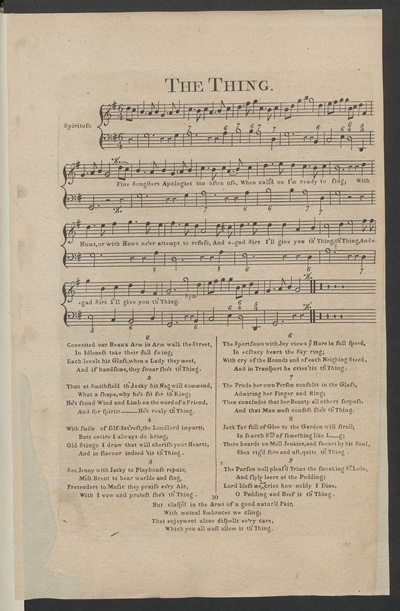
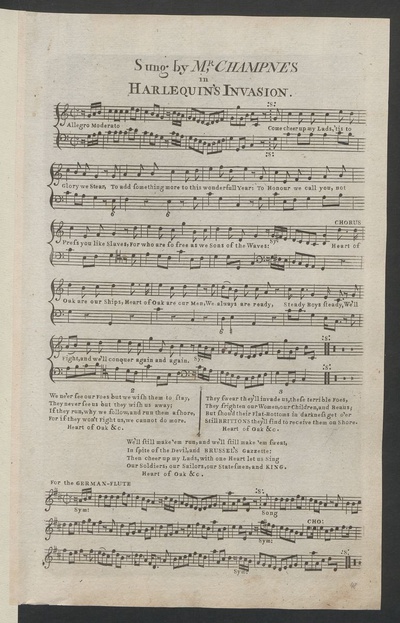
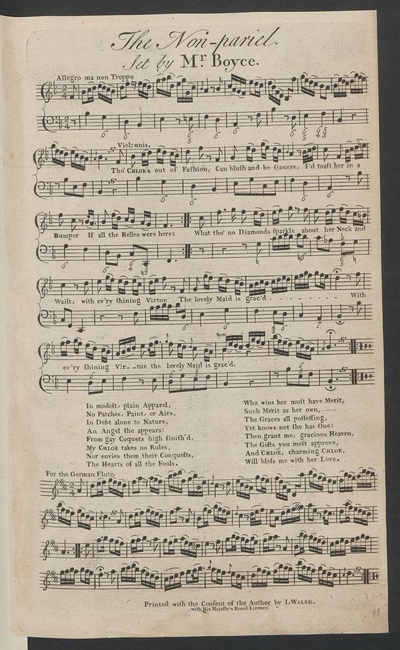
Works in European collections
5 objects attributed to William Boyce, held across European museums, libraries & archives · via Europeana
~7 min read
Encyclopedic overview
William Boyce by John Russell, 1776 William Boyce (baptised 11 September 1711 – 7 February 1779) was an English composer and organist. Like Beethoven later on, he became deaf but continued to compose. He knew Handel, Arne, Gluck, J. C. Bach, Abel, and a very young Mozart, all of whom respected his work.
Life
Excerpted from Wikipedia’s “William Boyce” article, available under the CC BY-SA 4.0 licence.