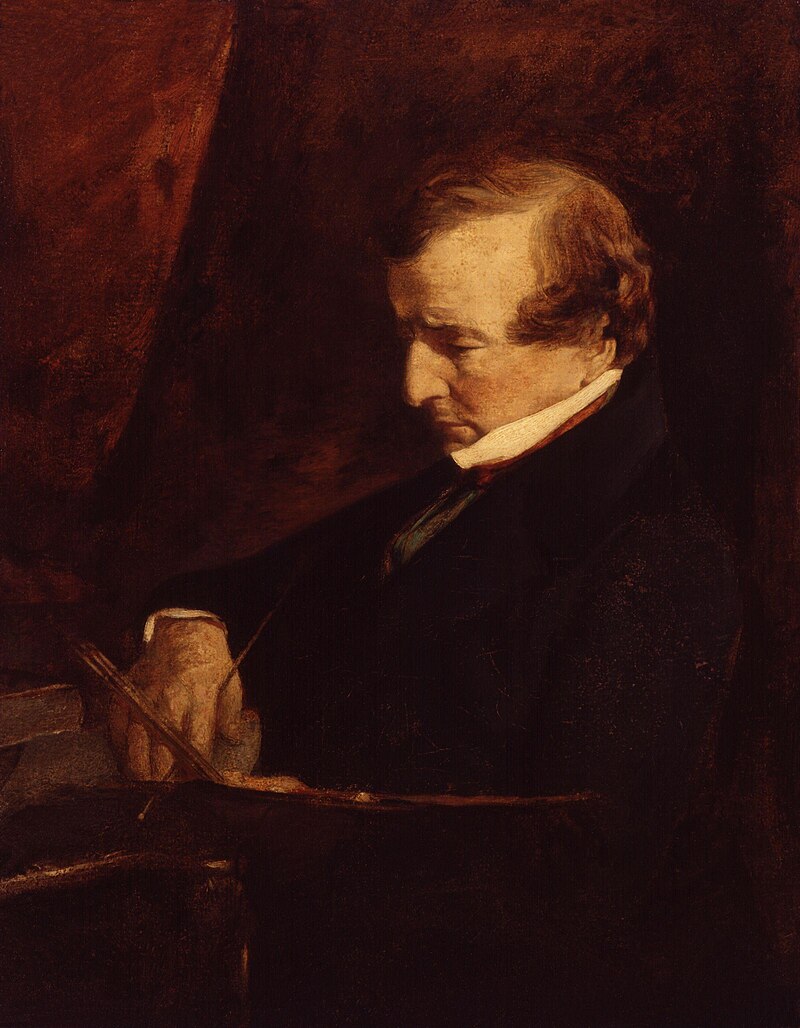
File:William_Etty_self-portrait.jpg · Wikimedia Commons · See Wikimedia Commons
William Etty
Sign in to saveAlso known as w. etty R.A., sir william etty, w. etty, W. Etty, William, R.A. Etty, w. etty r. a., R.A. Etty, Etty
British painter (1787-1849)
OverviewAI-generated
William Etty (10 March 1787 – 13 November 1849) was a British painter and artist. Born in York, he was educated at the Royal Academy of Arts, of which he was also a member. His professional work period spanned from 1802 to 1849, with London serving as his primary work location. He was a citizen of the United Kingdom of Great Britain and Ireland and the Kingdom of Great Britain.
Etty’s works are held in the collections of the Minneapolis Institute of Art, Art Institute of Chicago, Auckland Art Gallery Toi o Tāmaki, and Tate. He is described in the Brockhaus and Efron Encyclopedic Dictionary and The Nuttall Encyclopædia. Etty died in York and was buried in North Yorkshire.
Synthesized by Vinony from 32 facts across 6 sources: Wikidata, Open Library, Crossref, MusicBrainz, Europeana Sparql, Vinony graph. Generated from structured data (not the Wikipedia text) and checked against those facts — may still contain errors.
Key facts
- Born
- ( 1787-03-10 ) 10 March 1787, York , England
- Died
- 13 November 1849 (1849-11-13) (aged 62), York, England
- Resting place
- St Olave's Church, York , England
- Education
- Thomas Lawrence
- Alma mater
- Royal Academy Schools
- Known for
- Painting
- Notable work
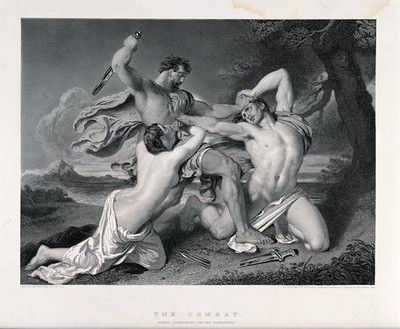
- The Triumph of Cleopatra (1821) The Combat: Woman Pleading for the Vanquished (1825) Youth on the Prow, and Pleasure at the Helm (1832) The Sirens and Ulysses (1837) Musidora: The Bather 'At the Doubtful Breeze Alarmed' (1843)
- Style
- English school of painting
- Elected
- Royal Academician
via Wikipedia infobox
Wikidata facts
- Instance of
- human
- Given name
- William
- Gender
- male
- Citizenship
- Kingdom of Great Britain
- Place of birth
- York
- Place of death
- York
- Occupation
- artist
- Educated at
- Royal Academy of Arts
- Languages spoken
- English language
- Field of work
- painting
- Image
- William Etty - Self-Portrait - Google Art Project.jpg
- Work location
- London
Show 13 more facts
- Commons category
- William Etty
- date of birth
- 1787-03-10
- date of death
- 1849-11-13
- Commons Creator page
- William Etty
- described by source
- Brockhaus and Efron Encyclopedic Dictionary
- Commons gallery
- William Etty
- member of
- Royal Academy of Arts
- place of burial
- North Yorkshire
- has works in the collection
- Brooklyn Museum
- start of work period
- 1802-01-01
- end of work period
- 1849-01-01
- name in native language
- William Etty
- topic has template
- Template:William Etty
via Wikidata · CC0
Works in European collections
5 objects attributed to William Etty, held across European museums, libraries & archives · via Europeana

~40 min read
Encyclopedic overview
William Etty RA (10 March 1787 – 13 November 1849) was an English artist best known for his historical paintings containing nude figures. He was the first significant British painter of nudes and still lifes. Born in York, he left school at the age of 12 to become an apprentice printer in Hull. He completed his apprenticeship seven years later and moved to London, where in 1807 he joined the Royal Academy Schools. There he studied under Thomas Lawrence and trained by copying works by other artists. Etty earned respect at the Royal Academy of Arts for his ability to paint realistic flesh tones, but had little commercial or critical success in his first few years in London.
Etty's Cleopatra's Arrival in Cilicia, painted in 1821, featured numerous nudes and was exhibited to great acclaim. Its success prompted several further depictions of historical scenes with nudes. All but one of the works he exhibited at the Royal Academy in the 1820s contained at least one nude figure, and he acquired a reputation for indecency. Despite this, he was commercially successful and critically acclaimed, and in 1828 was elected a Royal Academician, at the time the highest honour available to an artist. Although he was one of the most respected artists in the country he continued to study at life classes throughout his life, a practice considered inappropriate by his fellow artists. In the 1830s Etty began to branch out into the more lucrative but less respected field of portraiture, and later became the first English painter to paint significant still lifes. He continued to paint both male and female nudes, which caused severe criticism and condemnation from some elements of the press.
Excerpted from Wikipedia’s “William Etty” article, available under the CC BY-SA 4.0 licence.
Gallery (12)
Available in 36 languages
- Español
- Français
- Deutsch
- 中文
- 日本語
- Русский
- Português
- Italiano
- العربية
- Armenian
- Bahasa Indonesia
- Basque
- Belarusian
- Catalan
- Central Kurdish
- Czech
- Danish
- Egyptian Arabic
Show 17 more
via Wikidata sitelinks · CC0