
Image by zhangliams on Pixabay · Pixabay License
Described at
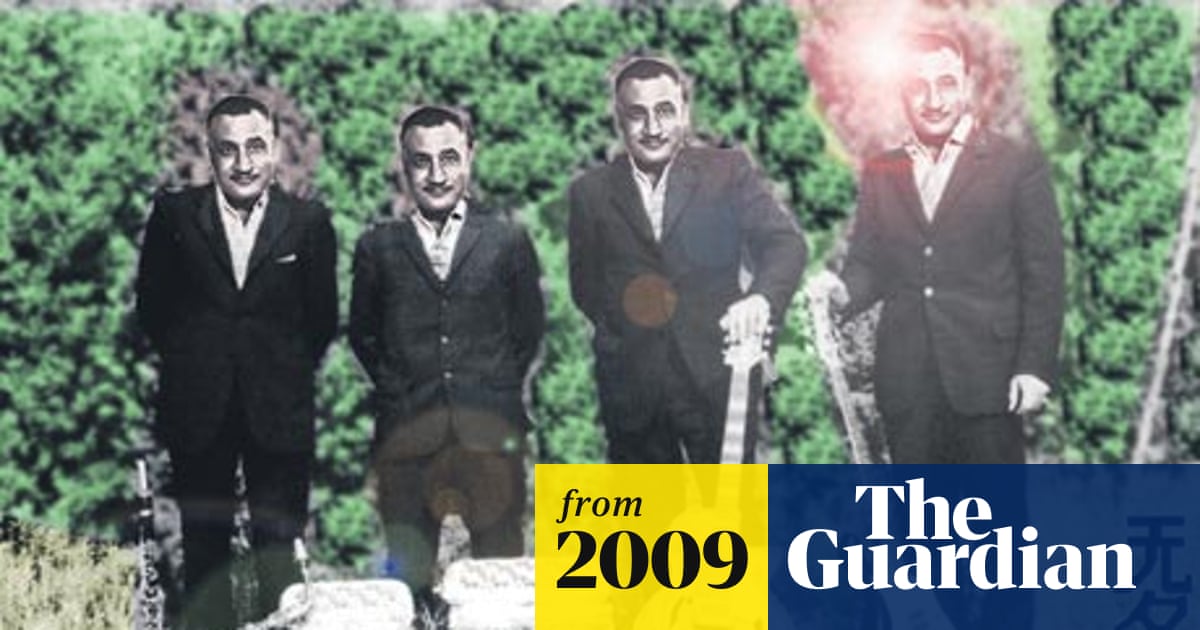
A life in writing: Wu Ming | Books | The Guardian
'People think each author has his or her own voice, one voice. We think that each author has many voices.' Christopher Tayler talks to Wu Ming
theguardian.com →'People think each author has his or her own voice, one voice. We think that each author has many voices' 'L'onda non si arresta" ("The wave doesn't stop", or hasn't broken), it says in spraypaint on Via Stalingrado, and again on one of the pillars lining Via dell'Indipendenza, when I visit the Wu Ming collective in Bologna. The slogan refers to the local student movement, whose continued existence helps to uphold the city's status as the unofficial capital of the Italian left. That status is less of a boast than it once was: Italy's left is much diminished these days. But Bologna plainly isn't Silvio Berlusconi's town. It has a Viale Lenin as well a Via Stalingrado and a centre-left city administration, albeit one derided by Bolognese radicals. Copies of the latest Berlusconi exposé, the jeeringly titled Papi , are piled high in a bookshop window in the square where I meet up with Roberto Bui and Federico Guglielmi, aka Wu Ming 1 and Wu Ming 4, who pause briefly to check out its cover. They've already absorbed its key allegations; their favourite concerns Berlusconi doling out greasy jewellery to showgirls, his hands slippery with fake tan. Wu Ming – the group behind the collaboratively written novels Q , '54 and, most recently, Manituana – draws a lot of its energy from its roots in Bologna's radical counterculture. Guglielmi, Bui, Giovanni Cattabriga and Luca Di Meo, the founder members, first got together in 1994 as participants in the Luther Blissett Project, an exercise in "cultural guerrilla warfare" in which each activist operated under that name, borrowed from a black British footballer of the 80s. There were, the Wu Mings say, nearly 50 Luther Blissetts in Bologna alone, with hundreds more around Europe, and the group pulled off some notable hoaxes aimed at exposing the Italian media's chauvinism and less-than-diligent fact-checking. One featured an artistically gifted chimpanzee, another a fabricated struggle between witchhunters and devil-worshippers in Viterbo. The group also persuaded a famous investigative show to look into the case of one Harry Kipper, a non-existent English artist who was said to have vanished in Italy while tracing the word "art" on the continent by bike. Published by Einaudi in 1999 under a modified "copyleft" notice, and signed "Luther Blissett", Q took cultural commentators by surprise. By then, the Italian press had decided that Blissett was synonymous with raves, cyberterrorism and other puzzling new phenomena. The expectation, the group surmised, was that they would publish "a slim, hyper-contemporary novel, perhaps sci-fi stuff about the usual 'new technologies', and the usual hackers". Instead, their book turned out to be a 650-page historical spy novel that used the Reformation as a multivalent allegory for the ups and downs of 20th-century anticapitalism. (The material was suggested partly by Guglielmi's discovery of the sects associated with the English civil war.) Q became a bestseller in Italy and, in translation, in other continental countries. It also made some headway in the English-speaking world, being longlisted for the Guardian First Book Award and getting a lot of press, thanks to its unlikely attribution to a former Watford striker. Not long after the book was published, the group jettisoned the Luther Blissett identity and relaunched as Wu Ming. The name, they say, means "anonymous" in Mandarin and is a commonly used tag among Chinese dissidents. With a different pronunciation it means "five names", which helped to accommodate Riccardo Pedrini, who joined the group as Wu Ming 5 in January 2000; alphabetical order turned Cattabriga and Di Meo into Wu Mings 2 and 3. In addition to '54 – a spy novel starring Cary Grant, published in 2002, that also scrutinises the fate of the Italian resistance and the dawn of consumer culture – the reconstituted group has turned out several non-fiction books and a number of "solo" novels, none of which has yet been translated into Eng
Excerpt from a page describing this subject · 15,848 chars · not written by Vinony
Wikidata facts
- Instance of
- group of authors
- Official name
- Wu Ming Foundation
- Languages spoken
- Italian
- Country of origin
- Italy
- Official website
- www.wumingfoundation.com
- Image
- Wu Ming Contingent.jpg
Show 4 more facts
- described at URL
- www.theguardian.com/culture/2009/nov/14/wu-ming-interview
- Commons category
- Wu Ming
- location of formation
- Bologna
- social media followers
- 81776
Sources (1)
via Wikidata · CC0