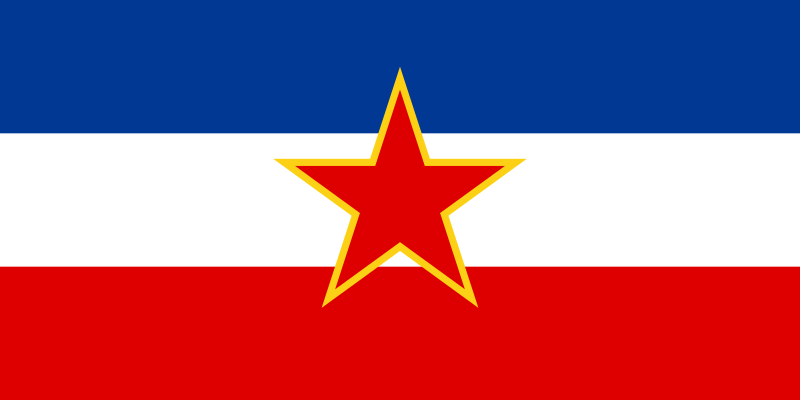
File:Flag_of_Yugoslavia_(1946-1992).svg · Wikimedia Commons · See Wikimedia Commons
Yugoslavs
Sign in to saveAlso known as Yugoslav
Yugoslavs or Yugoslavians is an identity that was originally conceived to refer to a united South Slavic people. It has been used in two connotations: the first in a sense of common shared ethnic descent, i.e. panethnic or supraethnic connotation for ethnic South Slavs, and the second as a term for all citizens of former Yugoslavia regardless of ethnicity. Cultural and political advocates of Yugoslav identity have historically purported the identity to be applicable to all people of South Slav heritage, including those of modern Bosnia and Herzegovina, Croatia, Montenegro, North Macedonia, Ser
Key facts
- Ethnic group.group
- Yugoslavs
- Ethnic group.regions
- In countries that record ethnicity in censuses:
- Ethnic group.region1
- United States
- Ethnic group.pop1
- 210,395 (2021)
- Ethnic group.region2
- Canada
- Ethnic group.pop2
- 30,565 (2021)
- Ethnic group.region3
- Serbia
- Ethnic group.pop3
- 27,143 (2022)
- Ethnic group.region4
- Australia
- Ethnic group.pop4
- 26,883 (2011)
- Ethnic group.region5
- Bosnia and Herzegovina
- Ethnic group.pop5
- 2,570 (2013)
- Ethnic group.region6
- Montenegro
- Ethnic group.pop6
- 1,632 (2023)
- Ethnic group.region7
- Croatia
- Ethnic group.pop7
- 942 (2021)
- Ethnic group.region8
- Slovenia
- Ethnic group.pop8
- 527 (2002)
via Wikipedia infobox
Wikidata facts
- Country
- United States
- Population
- 1219000
Show 2 more facts
- Commons category
- Yugoslavs
- topic's main category
- Category:Yugoslav people
Sources (1)
via Wikidata · CC0
~18 min read
Encyclopedic overview
15 sectionsContents
- History
- Yugoslavism and Yugoslavia
- Self-identification in Yugoslavia
- Successor states
- Self-identification following dissolution
- Organizations
- Notable people
- Symbols
- Historiography
- See also
- Notes
- References
- Sources
- Further reading
- External links
Yugoslavs or Yugoslavians is an identity that was originally conceived to refer to a united South Slavic people. It has been used in two connotations: the first in a sense of common shared ethnic descent, i.e. panethnic or supraethnic connotation for ethnic South Slavs, and the second as a term for all citizens of former Yugoslavia regardless of ethnicity. Cultural and political advocates of Yugoslav identity have historically purported the identity to be applicable to all people of South Slav heritage, including those of modern Bosnia and Herzegovina, Croatia, Montenegro, North Macedonia, Serbia, and Slovenia. Although Bulgarians are a South Slavic group as well, attempts at uniting Bulgaria with Yugoslavia were unsuccessful, and therefore Bulgarians were not included in the panethnic identification. Since the dissolution of Yugoslavia and establishment of South Slavic nation states, the term ethnic Yugoslavs has been used to refer to those who exclusively view themselves as Yugoslavs with no other ethnic self-identification, many of these being of mixed ancestry.
In the former Yugoslavia, the official designation for those who declared themselves simply as Yugoslav was with quotation marks, "Yugoslavs" (introduced in census 1971). The quotation marks were originally meant to distinguish Yugoslav ethnicity from Yugoslav citizenship, which was written without quotation marks. The majority of those who had once identified as ethnic "Yugoslavs" reverted to or adopted traditional ethnic and national identities, sometimes due to social pressure, intimidation, detrimental consequences, or prevention from continuing to identify as Yugoslav by new political authorities. Some also decided to turn to sub-national regional identifications, especially in multi-ethnic historical regions like Istria, Vojvodina, or Bosnia (hence Bosnians). The Yugoslav designation, however, continues to be used by many, especially in the United States, Canada, and Australia by the descendants of Yugoslav migrants who emigrated while the country still existed.
Excerpted from Wikipedia’s “Yugoslavs” article, available under the CC BY-SA 4.0 licence.