Category
page 1Amphibians of Central America

Cane toad
Species of amphibian

green and black poison dart frog
species of amphibian
.jpg)
Dendrobates
Dendrobates is a genus of poison dart frogs native to Central and South America. It once contained numerous species, but most originally placed in this genus have been split off into other genera such as Adelphobates, Ameerega, Andinobates, Epipedobates, Excidobates, Oophaga, Phyllobates and Ranitomeya (essentially all the brightly marked poison dart frogs; i.e. excluding the duller genera in the family like Colostethus and Hyloxalus), leaving only five large to medium-sized species in the genus Dendrobates. All the other genera used to be grouped in with Dendrobates because it was previously

Atelopus
Atelopus is a large genus of Bufonidae, commonly known as harlequin frogs or toads, from Central and South America, ranging as far north as Costa Rica and as far south as Bolivia. Atelopus species are small, generally brightly colored, and diurnal. Most species are associated with mid-to-high elevation streams.

Phyllobates
Phyllobates is a genus of poison dart frogs native to Central and South America. The genus contains seven known species, which are distributed from eastern Nicaragua to the Pacific coast of Colombia.

Pipa
genus of amphibians

Oophaga
Oophaga is a genus of poison-dart frogs containing twelve species, many of which were formerly placed in the genus Dendrobates. The frogs are distributed in Central and South America, from Nicaragua south through the El Chocó to northern Ecuador (at elevations below ). Their habitats vary with some species being arboreal while other being terrestrial, but the common feature is that their tadpoles are obligate egg feeders. Most species in this genus are seriously threatened and O. speciosa is already extinct.

Gastrotheca
Gastrotheca is a genus of frogs in the family Hemiphractidae. They are found in Central America south of Costa Rica and in South America. Most species occur in the American Cordillera from southern Costa Rica to north-western Argentina. This genus makes up the bulk of marsupial frog diversity; formerly it was placed in the "Leptodactylidae" assemblage.
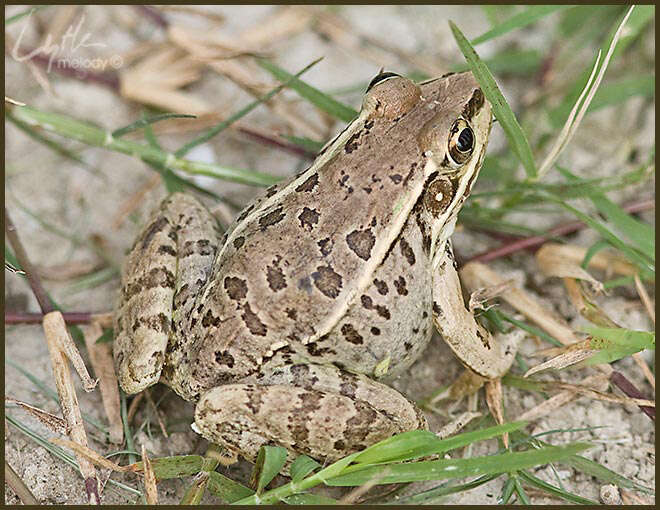
Lithobates
Lithobates is a genus of frogs belonging to the family Ranidae, native to the Americas. The name is derived from '' (stone) and : '' (one that treads), meaning one that treads on rock, or rock climber. As presently defined, it includes many of eastern North America's most familiar aquatic frog species, including the American bullfrog, green frog, and the leopard frogs.

Leptodactylus
Leptodactylus is a genus of leptodactylid frogs. It includes the species commonly called ditch frogs or white-lipped frogs. It is very similar to Physalaemus, a close relative, and indeed the 2005 described Leptodactylus lauramiriamae is in some aspects intermediate between them.

Rhinella
Rhinella, commonly known as South American toads, beaked toads or Rio Viejo toads, is a genus of true toads native to Neotropical parts of Mexico, Central and South America. Additionally, the cane toad has been Introduced to Australia, the Caribbean, the Philippines and elsewhere.
.png)
Ranitomeya
Ranitomeya is a genus of dart poison frogs found in Panama and South America south to Peru and Brazil, possibly into Bolivia.

Pristimantis
Pristimantis is a very speciose genus of frogs distributed in the southern Caribbean islands (Lesser Antilles) and in Central and South America from Honduras to northern Argentina and southern Brazil. With 626 described species (as of February 2026), the genus has more species than any other vertebrate genus. Many of these species are endemic to the Northwestern Andean montane forests ecoregion in north-western South America.
Colostethus
Colostethus is a genus of poison dart frogs native to Central and South America, from Panama south to Colombia, Ecuador, and northern Peru. Their common name is rocket frogs, but this name may refer to frogs in other genera and families, following the taxonomic revision of the genus in 2006.
Siphonopidae
The Siphonopidae are the family of common caecilians. They are found in Central and South America. Like other caecilians, they superficially resemble worms or snakes.
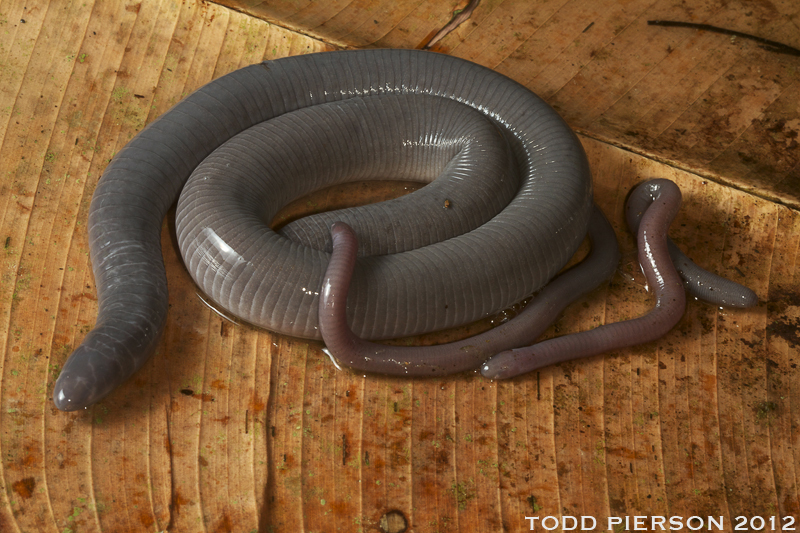
Dermophiidae
The Dermophiidae are a family of neotropical caecilians. They are found in Central and South America, and Africa. Like other caecilians, they superficially resemble worms or snakes.
%20Figure%203%20(cropped).png)
Dendropsophus
Dendropsophus is a genus of frogs in the family Hylidae. They are distributed in Central and South America, from southern Mexico to northern Argentina and Uruguay. They are sometimes known under the common name Fitzinger neotropical treefrogs or yellow treefrogs

Gastrophryne
Gastrophryne, the narrowmouth toads (also American narrowmouth toads, North American narrow-mouthed toads), is a genus of microhylid frogs found in the Americas between Honduras and southern United States.
Its name means ‘belly-toad’, referring to its large belly, from the Ancient Greek ' (, ‘belly, stomach’) and ' (, ‘toad’).

Mountain Brook Frogs
Duellmanohyla is a genus of frogs (mountain brook frogs) in the family Hylidae found in Oaxaca, Mexico, as well as Central America. These are small stream-breeding frogs have bright red, bronze or yellow irises. Their dorsa are uniform pale green, olive, red-brown or lichenose, with green or olive spots on a black background. Several species have pale upper labial and lateral stripes. Some fingers or toes have moderate webbing.

Trachycephalus typhonius
species of amphibian
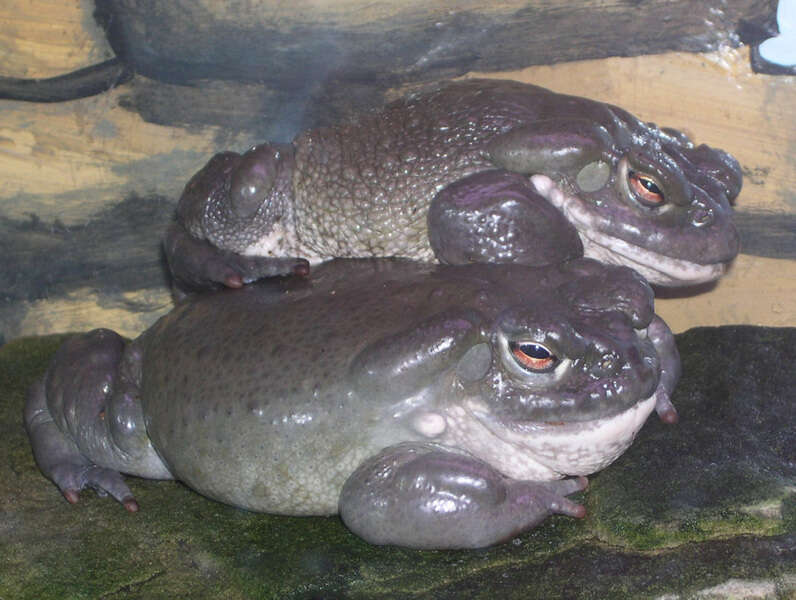
Incilius
Incilius is a genus of toads in the true toad family, Bufonidae. They are sometimes known as the Central American toads or Middle American toads and are found in southern USA, Mexico, Central America, and northern Pacific South America (Colombia and Ecuador). They are an ecologically and biogeographically diverse group of toads, including micro-endemic species such as Incilius spiculatus that are restricted to undisturbed cloud forests, and widespread lowland species such as Incilius valliceps that predominantly occur in disturbed habitats.
Hyalinobatrachium
Hyalinobatrachium is a genus of glass frogs, family Centrolenidae. They are widely distributed in the Americas, from tropical Mexico to southeastern Brazil and Argentina.
.jpg)
Hyloxalus
Hyloxalus is a genus of poison dart frogs, family Dendrobatidae. The genus is distributed in Central and South America, from Panama south to Peru (along the Pacific coast), along with Venezuela, Colombia, and Ecuador. They also inhabit the eastern foothills of the Andes in Bolivia to Venezuela, east to the upper Amazon Basin.

Allobates
Allobates is a genus of frogs in the family Aromobatidae. They are native to the Central and South Americas, from Nicaragua to Bolivia and Brazil, with one species on Martinique.

Ameerega
Ameerega is a genus of poison dart frogs in the family Dendrobatidae. These frogs live around rocks that are nearby streams. They are found in central South America north to Panama. It contains many former species of the genus Epipedobates.

Morelet's tree frog
species of amphibian

Tungara Frog
species of amphibian

Mexican Treefrogs
genus of amphibians

Ecnomiohyla
Ecnomiohyla, commonly known as fringe-limbed treefrogs or marvelous frogs, is a genus of frogs in the family Hylidae. This genus was erected in 2005 following a major revision of Hylidae. The ten original species in this genus (E. rabborum and E. sukia are later discoveries) were previously placed in the genus Hyla. The generic name Ecnomiohyla comes from Greek ecnomios ("marvelous" or "unusual") and Hylas, the companion of Hercules.
.jpg)
Hemiphractus
Hemiphractus is a genus of frogs, the horned treefrogs, in the family Hemiphractidae. These overall brownish frogs have a pointed snout and a casque on the head. They are nocturnal, relatively rare and native to humid lowland and highland forests in northern South America (Amazon east as far as Tapajós, Chocó-Magdalena and northern Andes) and Panama, where typically found on the ground or at relatively low levels in vegetation.
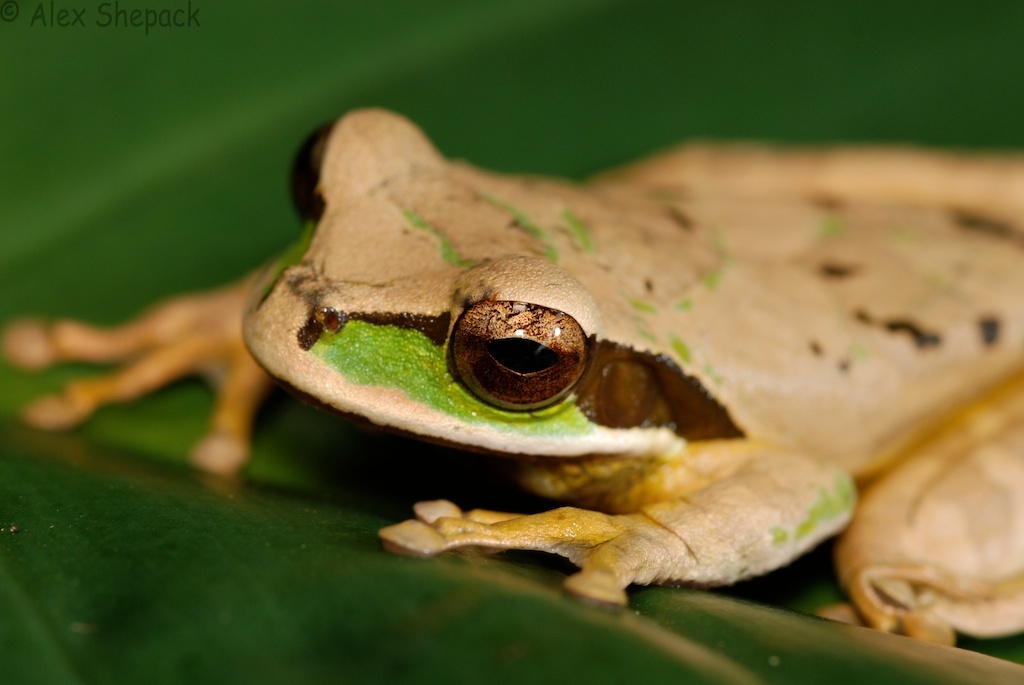
Smilisca phaeota
species of amphibian
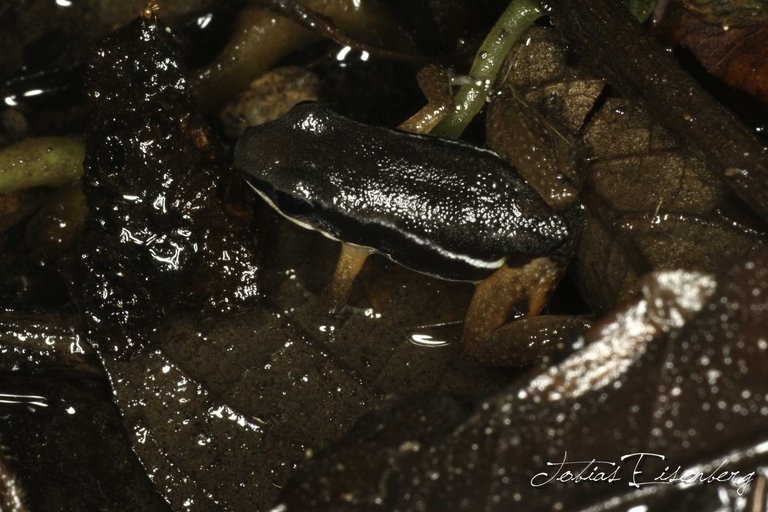
Silverstoneia
Silverstoneia is a genus of poison dart frogs (family Dendrobatidae) from southern Central America and northern South America, between southwestern Costa Rica and southwestern Colombia. It is named in honour of Phillip A. Silverstone, an expert on dendrobatoid frogs.
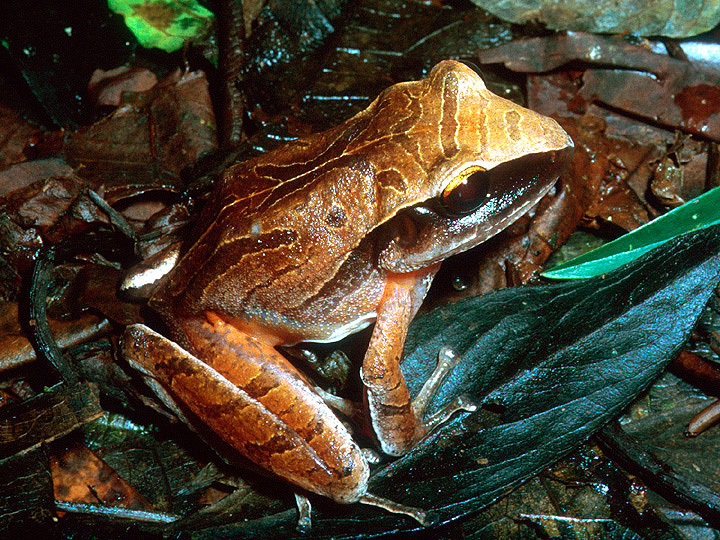
Craugastor
Craugastor is a large genus of frogs in the family Craugastoridae with 126 species.
Its scientific names means brittle-belly, from the Ancient Greek ' (, brittle, dry) and ' (, belly, stomach).
Isthmohyla
Isthmohyla is a genus of frogs in the family Hylidae. This genus was erected in 2005 following a major revision of the Hylidae. The 15 species in this genus were previously placed in the genus Hyla. They are endemic to Central America in Honduras, Costa Rica, and Panama.
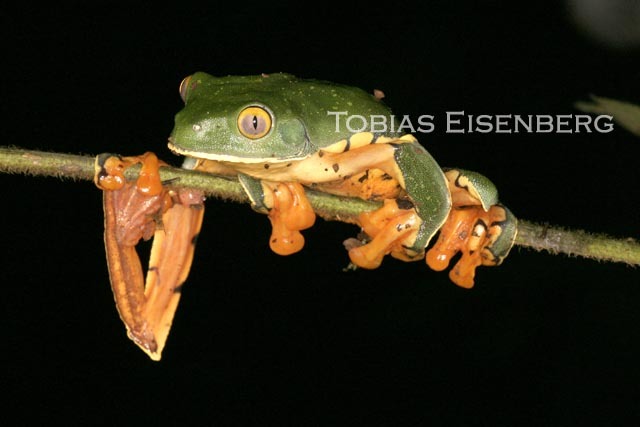
Cruziohyla
Cruziohyla is a genus of frogs in the subfamily Phyllomedusinae. They occur from Honduras in Central America south to the Amazon Basin in South America. This genus was erected in 2005 following a major revision of the Hylidae and fully reviewed in 2018. Species in this genus were previously placed in the genera Agalychnis or Phyllomedusa.
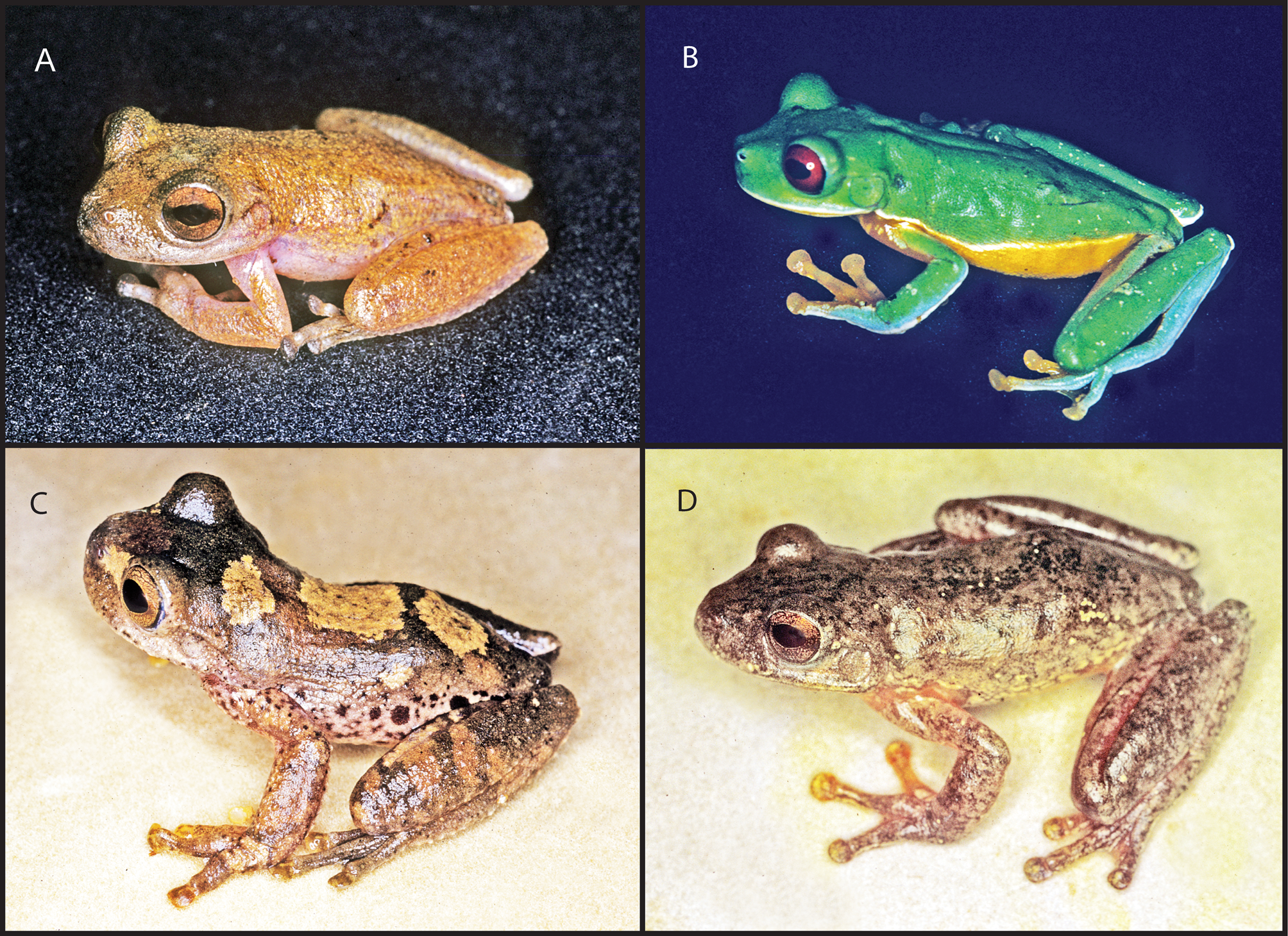
Bromeliohyla
Bromeliohyla, sometimes known as the bromeliad treefrogs, is a genus of frogs in the family Hylidae. This genus was erected in 2022 following a major revision of the Hylidae. The two species originally assigned to this genus were previously placed in the genus Hyla. Bromeliohyla corresponds to the former Hyla bromeliacea species group identified in a genetic study by Duellman (1970). Species in this genus are found in tropical southern Mexico, Belize, Guatemala, and northern Honduras.

Rio Grande Leopard Frog
species of amphibian
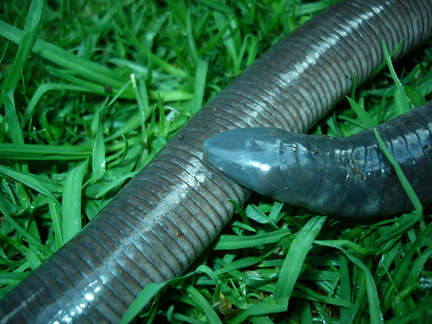
Dermophis
Dermophis is a genus of worm-like amphibians in the family Dermophiidae, the Neotropical and Tropical African caecilians. They are found in the Middle America between southern Mexico and northwestern Colombia. Common names Mexican caecilians or Neotropical caecilians are sometimes used for them.
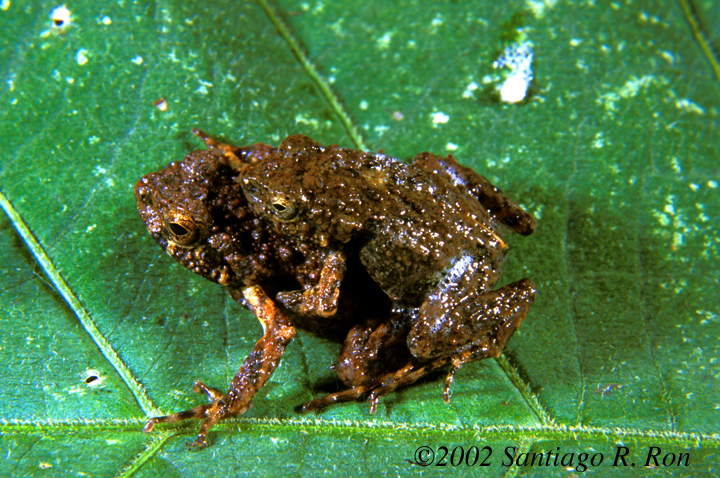
Engystomops
Engystomops is a genus of frogs in the family Leptodactylidae. They are commonly known as foam frogs or túngara frogs, though the latter name most commonly refers to Engystomops pustulosus. They are native to the Americas from southern Mexico south to the Amazon Basin.
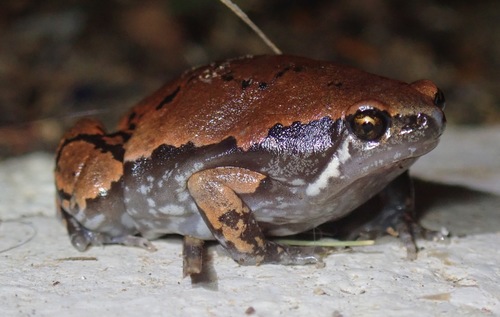
Hypopachus
Hypopachus is a genus of microhylid frogs (common name: sheep frogs) found in the Americas between Costa Rica and the southern United States. They can bury themselves under the ground or moss. Its name means ‘somewhat thick’, referring to its tough skin.

Rhaebo
Rhaebo is a genus of true toads, family Bufonidae, from Central and South America. They are distributed from Honduras to northern South America including the Amazonian lowlands. Common name Cope toads has been suggested for them.

Strabomantis
Strabomantis is a genus of frogs in the family Strabomantidae. At times these frogs have been included in the large genus Eleutherodactylus. They are distributed from Costa Rica southwards to northern South America.
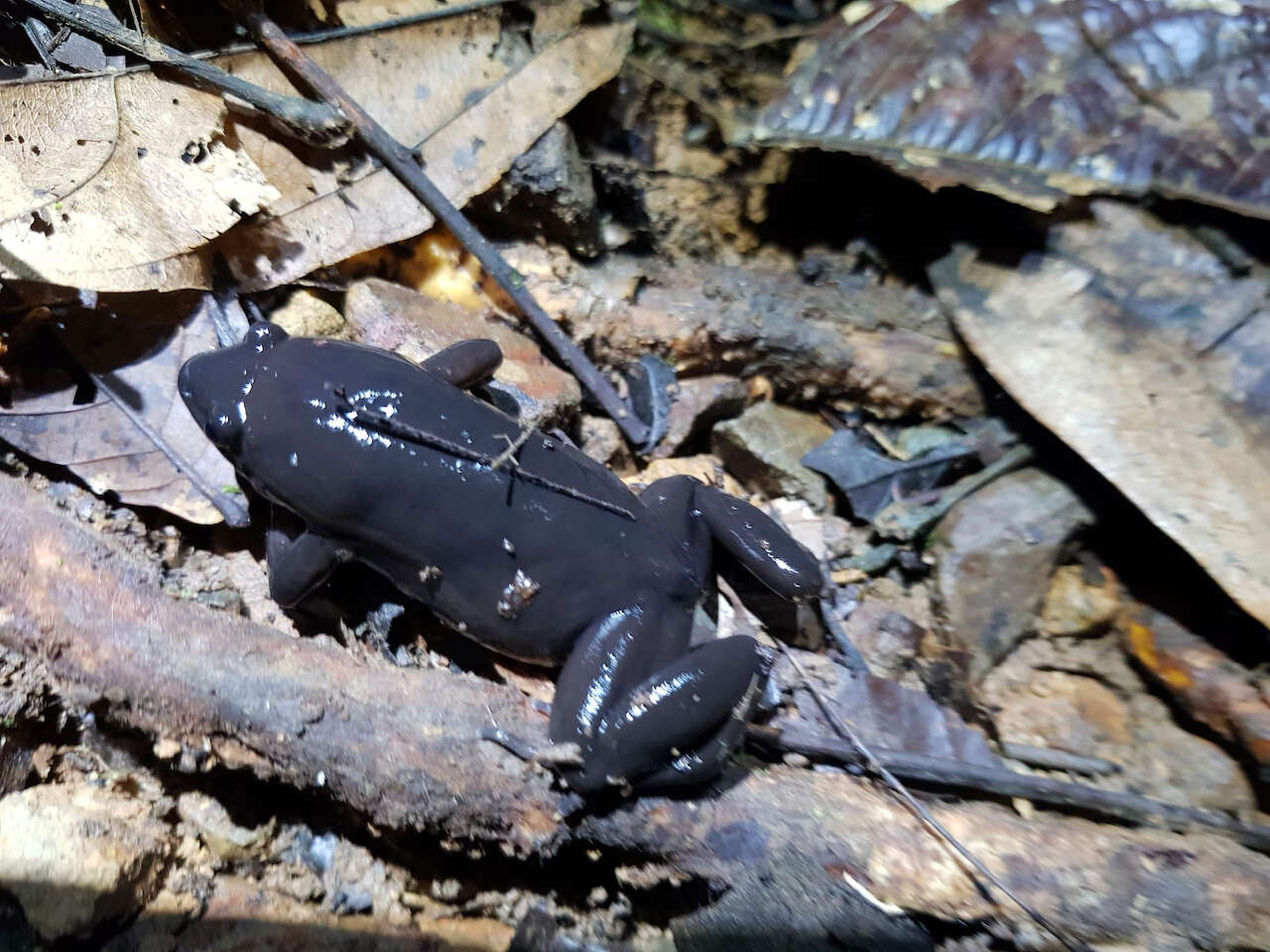
Ctenophryne
Ctenophryne is a genus of microhylid frogs. They occur in southern Central America (Costa Rica, Panama) and South America. Their common names are egg frogs and Nelson frogs, the latter applying to species in the formerly recognized Nelsonophryne.
.jpg)
Dryophytes
Dryophytes is a genus of Ameroasian tree frogs in the family Hylidae. Species of the genus are found mostly in North America, but the genus also includes five species found in eastern Asia.

Elachistocleis
Elachistocleis is a genus of microhylid frogs found in southern America from Panama southwards. Their common name is oval frogs, although for historic reasons not all species are named so.

Ptychohyla
Ptychohyla is a genus of frogs (common names: stream frogs, mountain stream frogs) in the family Hylidae. These frogs are found in the southern Mexican states of Chiapas, Guerrero, and Oaxaca, and Central America to western Panama.
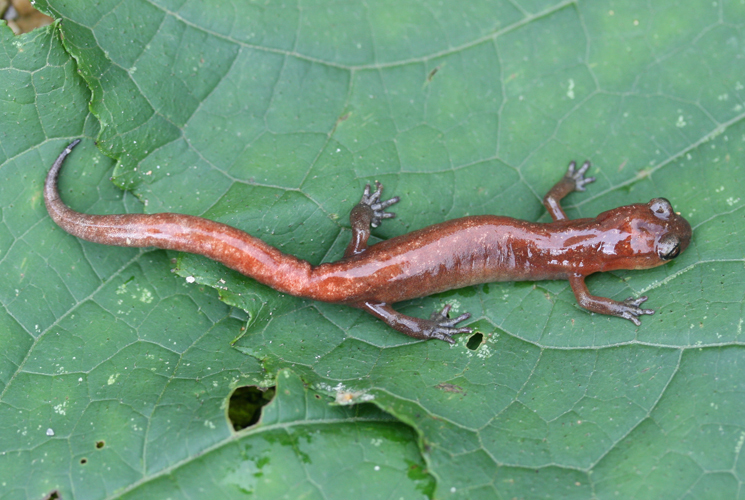
Pseudoeurycea
Pseudoeurycea is a genus of salamander in the family Plethodontidae. The members of this genus are commonly known as the false brook salamanders. They are found in Mexico and Guatemala.

Smilisca sordida
species of amphibian

Cochranella
Cochranella is a genus of glass frogs, family Centrolenidae. They are found in Central America from Honduras southward to the Amazonian and Andean cloud forests of Colombia, Ecuador, Peru, and Bolivia.

Mahogany tree frog
species of amphibian

Andinobates
Andinobates is a genus of poison dart frogs from Ecuador, Colombia and Panama. It contains species formerly classified in the genus Dendrobates and in 2006 transferred to the genus Ranitomeya. In 2011 Twomey, Brown, and their colleagues erected the genus Andinobates for a group of 12 species of Ranitomeya. Andinobates frogs can be distinguished from their sister taxon Ranitomeya anatomically in that their 2nd and 3rd vertebrae are fused. They show no limb reticulation, which is present in most species of Ranitomeya.

Dendrotriton
Dendrotriton or bromeliad salamanders is a genus of salamanders in the family Plethodontidae, endemic to South and Central America: from Southwestern Chiapas, Mexico, to Honduras. These are lungless species possessing a slender body, long tail and prominent eyes. They inhabit high-elevation forests with high humidity.

Leptodactylus fragilis
species of amphibian
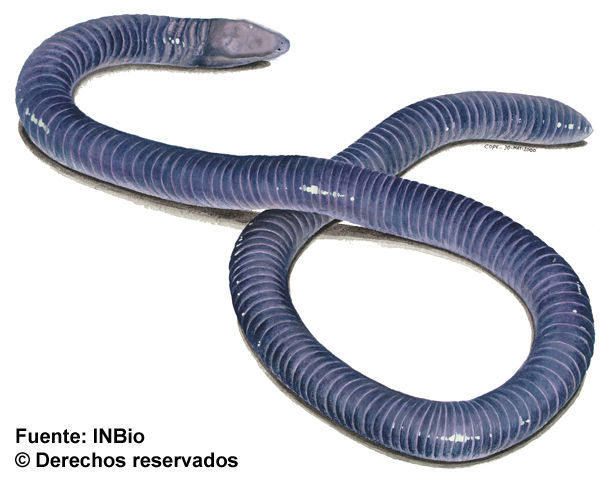
Oscaecilia
Oscaecilia is a genus of caecilians in the family Caeciliidae. The genus is distributed in southeastern Central America (Costa Rica, Panama) and northern South America, possibly extending into southern Brazil. They are sometimes known as the South American caecilians.

Tlalocohyla picta
species of amphibian
Diasporus
Diasporus is a genus of frogs in the family Eleutherodactylidae. The genus was first described in 2008. They are found in Central and northern South America. They are sometimes referred to as dink frogs, in reference to the "tink" sound that males make during the mating season.

highland frog
species of amphibian
Craugastor crassidigitus
species of amphibian
Teratohyla
Teratohyla is a small genus of glassfrogs in the subfamily Centroleninae. The genus was for a while included in Centrolenella and then Cochranella, but it was resurrected in 2009. These frogs are distributed from lowlands of Central America from Honduras southwards to Pacific and Amazonian wet tropical lowlands of South America.
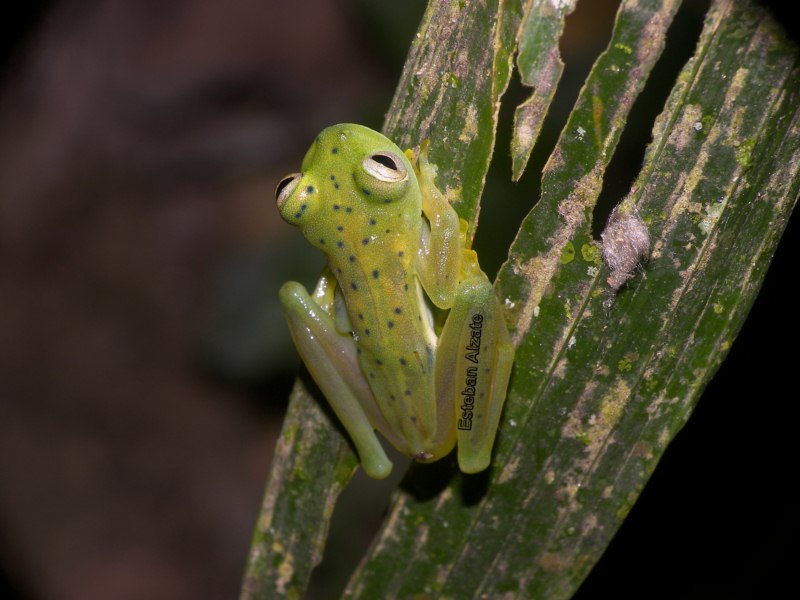
Espadarana
Espadarana is a genus of glass frogs. They are found in Central America (Honduras, Nicaragua, Costa Rica, Panama) and northern South America (Venezuela, Colombia, and Ecuador).