Category
page 1History of computing in the United Kingdom

Alan Turing
English computer scientist (1912–1954)

Tony Hoare
British computer scientist
Maurice Wilkes
British computer scientist (1913–2010)
BCPL
BCPL (Basic Combined Programming Language) is a procedural, imperative, and structured programming language. Originally intended for writing compilers for other languages, BCPL is no longer in common use. However, its influence is still felt because a stripped down and syntactically changed version of BCPL, called B, was the language on which the C programming language was based. BCPL introduced several features of many modern programming languages, including using curly braces to delimit code blocks. BCPL was first implemented by Martin Richards of the University of Cambridge in 1967.
Xen
Xen (pronounced ) is a free and open-source type-1 hypervisor, providing services that allow multiple computer operating systems to execute on the same computer hardware concurrently. It was
originally developed by the University of Cambridge Computer Laboratory and is now being developed by the Linux Foundation with support from Intel, Citrix, Arm Ltd, Huawei, AWS, Alibaba Cloud, AMD, Bitdefender and EPAM Systems.
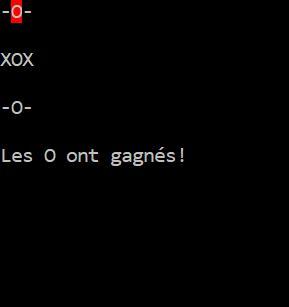
OXO
1952 video game: naughts and crosses simulator
Douglas Hartree
British mathematician and physicist (1897-1958)
Manchester code
line code in which the encoding of each data bit has at least one transition and occupies the same time
iris recognition
method of biometric identification
Tommy Flowers
British engineer, helped to design Colossus during World War II (1905–1998)
Williams tube
W. T. Tutte
British-Canadian codebreaker and mathematician (1917-2002)
Kathleen Booth
British computer scientist (1922–2022)
Tom Kilburn
British electrical engineer (1921–2001)
Miranda
programming language
CPL
multi-paradigm programming language
Nimrod
special purpose computer that played the game of Nim
Glasgow Haskell Compiler
compiler for the Haskell programming language
MISRA C
software development standard for the C programming language

Inform
Inform is a programming language and design system for interactive fiction originally created in 1993 by Graham Nelson. Inform can generate programs designed for the Z-code or Glulx virtual machines. Versions 1 through 5 were released between 1993 and 1996. Around 1996, Nelson rewrote Inform from first principles to create version 6 (or Inform 6). Over the following decade, version 6 became reasonably stable and a popular language for writing interactive fiction. In 2006, Nelson released Inform 7 (briefly known as Natural Inform), a completely new language based on principles of natural langua
Tiny Encryption Algorithm
block cipher
Christopher Strachey
British computer scientist (1916–1975)

David Wheeler
British computer scientist (1927–2004)
Donald Davies
British computer scientist (1924-2000)
Steve Furber
British computer scientist (born 1953)
Dollis Hill
area in the London Borough of Brent
Andrew Donald Booth
British computer scientist (1918-2009)

Frederic Calland Williams
English engineer
TRIPOS
TRIPOS (Trivial Portable Operating System) is a computer operating system. Development started in 1976 at the Computer Laboratory of Cambridge University and it was headed by Dr. Martin Richards. The first version appeared in January 1978 and it originally ran on a PDP-11. Later it was ported to the Computer Automation LSI4 and the Data General Nova. Work on a Motorola 68000 version started in 1981 at the University of Bath. MetaComCo acquired the rights to the 68000 version and continued development until TRIPOS was chosen by Commodore in March 1985 to form part of an operating system for the

XTEA
In cryptography, XTEA (eXtended TEA) is a block cipher designed to correct weaknesses in TEA. The cipher's designers were David Wheeler and Roger Needham of the Cambridge Computer Laboratory, and the algorithm was presented in an unpublished technical report in 1997 (Needham and Wheeler, 1997). It is not subject to any patents.
Martin Richards
British computer scientist
autocode
Autocode is the name of a family of "simplified coding systems", later called programming languages, devised in the 1950s and 1960s for a series of digital computers at the Universities of Manchester, Cambridge and London. Autocode was a generic term; the autocodes for different machines were not necessarily closely related as are, for example, the different versions of the single language Fortran.
ISWIM
ISWIM (If you See What I Mean) is an abstract computer programming language (or a family of languages) devised by Peter Landin and first described in his article "The Next 700 Programming Languages", published in the Communications of the ACM in 1966.
Whetstone
synthetic benchmark for evaluating the performance of computers
Plant Design Management System
CAD software
Web Science Trust
UK Charitable Trust
James H. Ellis
British cryptographer (1924-1997)
Smallworld
Smallworld is the brand name of a portfolio of GIS software provided by GE Digital, a division of General Electric. The software was originally created by the Smallworld company founded in Cambridge, England, in 1989 by Dick Newell and others. Smallworld grew to become the global market leader for GIS in 2010 focused on utilities and communications and remains strong in this sector today. Smallworld was acquired by GE Energy in September 2000.
Lighthill report
report by James Lighthill et al. that evaluated the state of artificial intelligence research in the 1970s
NPL network
historical network in England pioneering packet switching
SPARK
programming language
Cambridge Ring
experimental local area network
Standard Telephones and Cables
British manufacturer of telecommunications equipment
David May
British computer scientist (born 1951)
XXTEA
In cryptography, Corrected Block TEA (often referred to as XXTEA) is a block cipher designed to correct weaknesses in the original Block TEA.
Parasolid
Parasolid is a geometric modeling kernel originally developed by Shape Data Limited, now owned and developed by Siemens Digital Industries Software. It can be licensed by other companies for use in their 3D computer graphics software products.
Hugh McGregor Ross
British computer scientist (1917-2014)
Hope
functional programming language
Nominet UK
Domain name registry for the UK
Coral 66
CORAL, short for Computer On-line Real-time Applications Language is a programming language originally developed in 1964 at the Royal Radar Establishment (RRE), Malvern, Worcestershire, in the United Kingdom. The R was originally for "radar", not "real-time". It was influenced primarily by JOVIAL, and thus ALGOL, but is not a subset of either.
Kent Recursive Calculator
programming language
Mary Coombs
British computer programmer, first female commercial programmer