Category
page 1History of neuroscience

Ivan Pavlov
Russian physiologist (1849-1936)

Alessandro Volta
Italian physicist, chemist, and pioneer of electricity and power (1745-1827)

Santiago Ramón y Cajal
Spanish scientist (1852-1934)
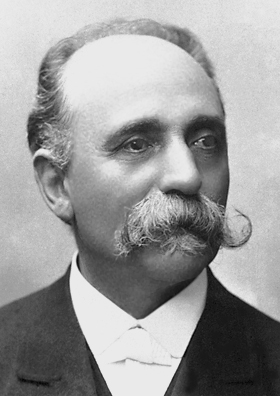
Camillo Golgi
Italian physician, pathologist, scientist, and Nobel laureate (1843-1926)

Luigi Galvani
Italian physician, physicist, and philosopher
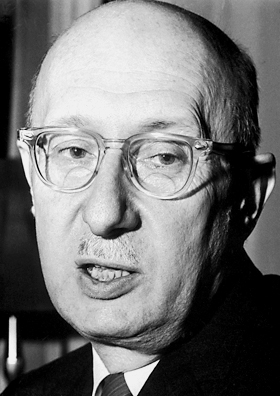
Georg von Békésy
Hungarian physicist (1899–1972)

phrenology
thumb|Phrenological skull, European, 19th century. Wellcome Collection, London

Roger Sperry
American neuroscientist

Torsten Nils Wiesel
Swedish neuroscientist

limbic system
structures of the brain

David H. Hubel
Canadian neurophysiologist

Jan Evangelista Purkyně
Czech biologist, physiologist, doctor, inventor and politician (1787–1869)

trepanning
Trepanning, also known as trepanation, trephination, trephining or making a burr hole (the verb trepan derives from Old French from Medieval Latin from Greek , literally "borer, auger"), is a surgical intervention in which a hole is drilled or scraped into the human skull. The intentional perforation of the cranium exposes the dura mater to treat health problems related to intracranial diseases or release pressured blood buildup from an injury. It may also refer to any "burr" hole created through other body surfaces, including nail beds. A trephine is an instrument used for cutting out a round

Paul Broca
French physician, anatomist and anthropologist (1824-1880)

Johannes Peter Müller
German physiologist, comparative anatomist, ichthyologist, and herpetologist (1801-1858)

Phineas Gage
19th century American railway worker who survived a large brain trauma
%20-%20Veloso%20Salgado.png)
Herophilos
Herophilos (; ; 335–280 BC), sometimes Latinised Herophilus, was a Greek physician regarded as one of the earliest anatomists. Born in Chalcedon, he spent the majority of his life in Alexandria. He was the first scientist to systematically perform scientific dissections of human cadavers. He recorded his findings in over nine works, which are now all lost. The early Christian author Tertullian states that Herophilos vivisected at least 600 prisoners; however, this account has been disputed by many historians. He is often seen as the father of anatomy.

Franz Joseph Gall
neuroanatomist, physiologist, and pioneer in the study of the localization of mental functions in the brain (1758-1828)

Donald O. Hebb
Canadian neuroscientist (1904–1985)

Joseph Babinski
French neurologist (1857-1932)

Erasistratus
Erasistratus (; ; c. 304 – c. 250 BC) was a Greek anatomist and royal physician under Seleucus I Nicator of Syria. Along with fellow physician Herophilus, he founded a school of anatomy in Alexandria, where they carried out anatomical research. As well, he is credited with helping to found the methodic school of teachings of medicine in Alexandria whilst opposing traditional humoral theories of Hippocratic ideologies. Together with Herophilus, he is credited by historians as the potential founder of neuroscience due to his acknowledgements of nerves and their roles in motor control through the

Albert von Kölliker
Swiss anatomist, physiologist (1817–1905)

Carl Wernicke
German physician and neuropathologist (1848–1905)
Hans Berger
German neurologist (1873–1941)
Korbinian Brodmann
German neurologist (1868–1918)
Charles Whitman
American mass murderer and spree killer; perpetrator of the University of Texas Tower shooting (1941–1966)
Albert Einstein's brain
preserved brain of scientist Albert Einstein
Nikolai Burdenko
Russian and Soviet surgeon, founder of Russian neurosurgery (1876-1946)
Jean Pierre Flourens
Marie-Jean-Pierre Flourens was a french physiologist, the first to demonstrate the function of most of the vertebrates central nervous system. (1794-1867)
Charles-Édouard Brown-Séquard
Mauritian physiologist and neurologist (1817–1894)
Franz Nissl
German neuroscientist (1860-1919)

craniometry
right|200px|thumb|A human skull and measurement device from 1902
Guillaume Duchenne de Boulogne
French neurologist (1806–1875)
David Ferrier
British neurologist and psychologist (1843–1928)
Heinrich Wilhelm Gottfried von Waldeyer-Hartz
German neuroscientist (1836-1921)
Ugo Cerletti
Italian neurologist (1877–1963)
William Benjamin Carpenter
English biologist (1813–1885)
Johann Spurzheim
German physician and phrenologist (1776-1832)
Jean Lhermitte
French neurologist (1877–1959)
Golgi's method
silver staining technique for visualizing nervous tissue under light microscopy
Julius Caesar Aranzi
Italian anatomist
History of neuroscience
Alim-Louis Benabid
French neurosurgeon
Rodolfo Llinás
Colombian neuroscientifico
Edward Flatau
Polish neurologist (1868–1932)
neuron doctrine
concept that the nervous system is made up of discrete individual cells
James Olds
American psychologist (1922–1976)
Descartes' error : emotion, reason, and the human brain
1994 book by Antonio Damasio
Stone of madness
hypothetical stone in medieval folklore
Marshall Hall
British neuroscientist (1790–1857)
Jakob Klaesi
psychiatrist (1883-1980)
Silver Spring Monkeys
17 macaques kept (1981–1991) in the Institute for Behavioral Research, Silver Spring, Md., US, whose afferent ganglia were cut and whose arms were restrained to study neuroplasticity; caused a criminal prosecution for animal cruelty with a $3000 fine
Pasko Rakic
Yugoslavian-American neuroscientist
Bereitschaftspotential
In neurology, the Bereitschaftspotential or BP (German for "readiness potential"), also called the pre-motor potential or readiness potential (RP), is a measure of activity in the motor cortex and supplementary motor area of the brain leading up to voluntary muscle movement. The BP is a manifestation of cortical contribution to the pre-motor planning of volitional movement. It was first recorded and reported in 1964 by Hans Helmut Kornhuber and Lüder Deecke at the University of Freiburg in Germany. In 1965 the full publication appeared after many control experiments.
A Clinical Lesson at the Salpêtrière
painting by André Brouillet
Samuel Goldflam
Polish neurologist (1852–1932)
Jordi Cervós i Navarro
Spanish physician
Ralph W. Gerard
US neuroscientist and author (1900–1974)