Category
page 1Marxism–Leninism

Vladimir Lenin
founding leader of the Soviet Union (1870–1924)

Joseph Stalin
Joseph Vissarionovich Stalin was a Soviet revolutionary and politician who led the Soviet Union from 1924 until his death in 1953. He held office as general secretary of the Communist Party from 1922 to 1952 and as premier from 1941 until his death. Despite initially governing the country as part of a collective leadership, he eventually consolidated power to become a dictator by the 1930s. Stalin codified the Communist Party's official interpretation of Marxism as Marxism–Leninism, and his version of it is referred to as Stalinism.

communism
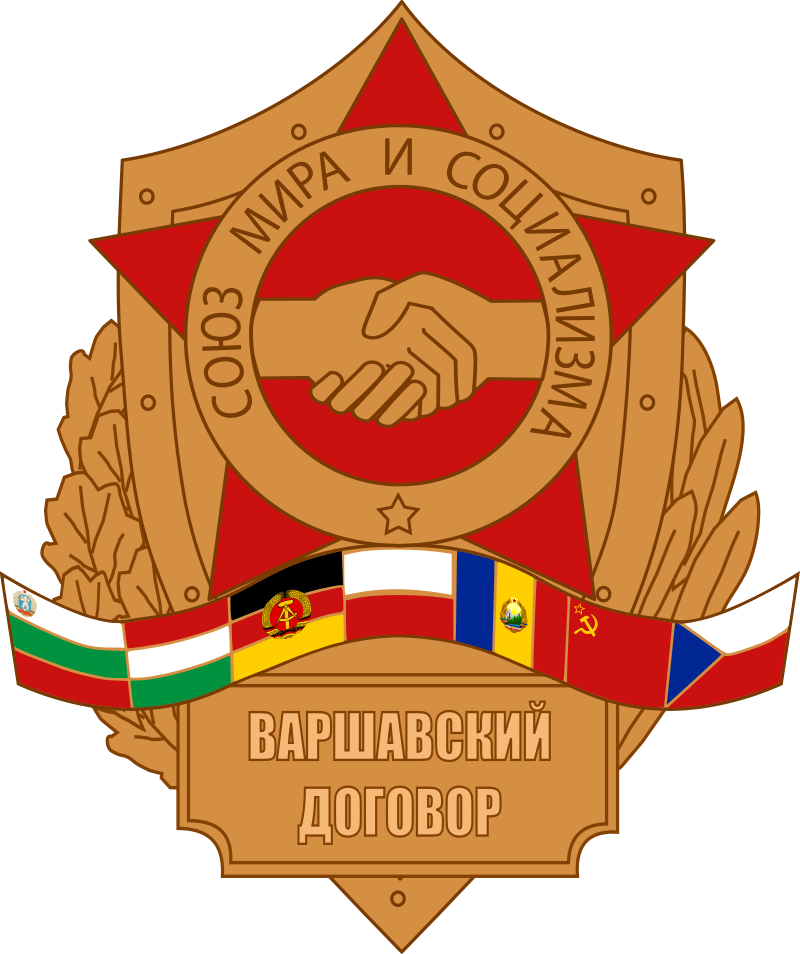
Warsaw Pact
European Eastern Military Alliance (1954 – 1991)

Stalinism
thumb|Official portrait of Joseph Stalin from 1945

Marxism–Leninism
thumb|300px|Soviet poster with the slogan "Raise the banner of Marx, [[Engels, Lenin and Stalin!", 1936. In the 1950s Stalin's official significance to Soviet Marxism-Leninism was reduced with de-Stalinization.]]

Maoism
thumb|Chinese propaganda portraying Mao Zedong, 1968

planned economy
type of economic system
satellite state

communist state
state that is administered and governed by a single communist party
democratic centralism
leadership method among socialist parties

Titoism
thumb|260px|Josip Broz Tito meeting with [[Bolesław Bierut and Michał Żymierski from the Polish People's Republic in 1946.]]

bolshevism
Bolshevism (derived from Bolshevik) is a revolutionary socialist current of Soviet Leninist and later Marxist–Leninist political thought and political regime associated with the formation of a rigidly centralized, cohesive and disciplined party of social revolution, focused on overthrowing the existing capitalist state system, seizing power and establishing the "dictatorship of the proletariat".
Socialism in One Country
political theory by Joseph Stalin
.jpg)
anti-revisionism
thumb|Supporters of the anti-revisionist Chilean Communist Party (Proletarian Action) march during the May Day 2007 manifestations in [[Santiago, Chile, carrying a banner with the portraits of Karl Marx, Friedrich Engels, Vladimir Lenin and Joseph Stalin]]
Xi Jinping Thought on Socialism with Chinese Characteristics for a New Era
a political theory attributed to Xi Jinping, the General Secretary of the Chinese Communist Party
people's democracy (theoretical concept within Marxism–Leninism)
multi-party, popular front-influenced rule by the people for the transition to socialism

Guevarism
thumb|Che Guevara, after whom Guevarism is named.
Marxist‒Leninist atheism
irreligious and anti-clerical element of Marxism–Leninism
post-communism
Post-communism is the period of political and economic transformation or transition in post-Soviet states and other formerly communist states located in Central-Eastern Europe and parts of Latin America, Africa, and Asia, in which new governments aimed to create free market-oriented capitalist economies. In 1989–1992, communist party governance collapsed in most communist party-governed states. After severe hardships communist parties retained control in China, Cuba, Laos, North Korea, and Vietnam. SFR Yugoslavia began to disintegrate, which plunged the country into a long complex series of wa
social fascism
communist term for social democracy
socialist heraldry
coat of arms with communist symbolism

Marxism–Leninism–Maoism
thumb|right|Poster produced by the Revolutionary Communist Party, USA showing Marx, Lenin, and Mao

foco
thumb|310px|Raul Castro|Raúl Castro (left) and [[Che Guevara (right) in their Sierra de Cristal Mountain stronghold south of Havana, in 1958. It was during this time as a guerrilla commander in the Cuban Revolution, that Guevara would base his theory of a foco-centered revolution.]]
Ho Chi Minh Thought
political philosophy that builds upon Marxism–Leninism and the ideology of Ho Chi Minh
socialist patriotism
form of patriotism promoted by Marxist–Leninist movements
communism and LGBT rights
Irish Republican Socialist Party
socialist party active in Ireland
shortage economy
centrally-planned economies with chronic shortages of various goods
red scarf
primary symbol of youth communist organizations
authoritarian socialism
type of socialism
%20utca%20fel%C5%91l%20a%20Honv%C3%A9d%20utca%20fel%C3%A9%20n%C3%A9zve.%20A%20szovjet%20csapatok%20ideiglenes%20kivonul%C3%A1sa%201956.%20okt%C3%B3ber%2031-%C3%A9n.%20Fortepan%2024787.jpg)
tankie
thumb|T-54/T-55|T-54 tanks of the [[Soviet Army deployed in response to the Hungarian Revolution of 1956, from which the term "tankie" originated|265x265px]]
red tourism
historical tourism involving visits to former or current communist locations
list of communist states
Wikimedia list article
2nd World Congress of the Comintern
1920 general election to the Communist International
Soviet-type economic planning
centralized investment and economic input decision-making model under Leninist states
Socialist-leaning countries
Third World countries which the USSR recognized as adhering to the ideas of socialism
3rd World Congress of the Comintern
self-criticism
in Marxism-Leninism, the method of criticising ones shortcomings as opposed to concealing them
Pyongyang Declaration
a statement signed by a number of parties on April 20, 1992 on the occasion of Kim Il-sung's 80th birthday
criticisms of communist party rule
overview of criticism of communist states
6th World Congress of the Comintern
Hammer & Tickle
2006 film
Developed socialism
Marxist-Leninist development stage
Menshevizing idealism