Category
page 1World War II infantry weapons of Germany
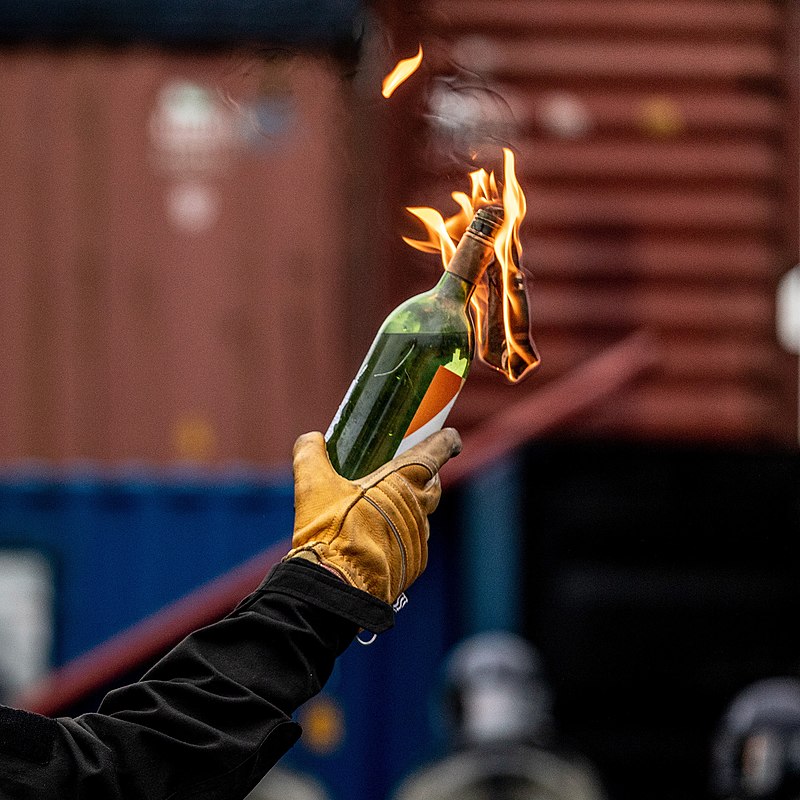
Molotov cocktail
incendiary weapon using flammable liquid in a bottle

MP40
German submachine gun with cal. 9 mm, built from 1938 to 1945 for German troops in WWII, due to the high number produced used in many later conflicts

Luger pistol
semi-automatic pistol of German origin

StG 44
1943 assault rifle series by Hugo Schmeisser

MG 42
general-purpose machine gun

Karabiner 98k
bolt action rifle
MG 34
general-purpose machine gun
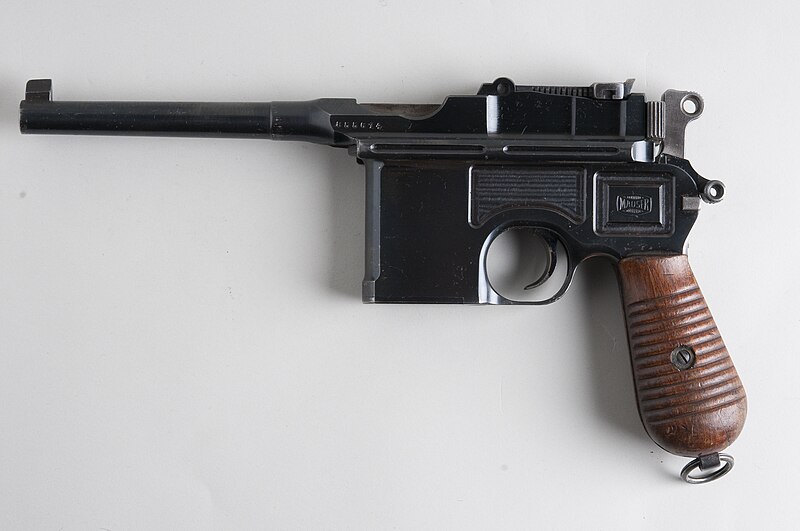
Mauser C96
semi-automatic pistol
Walther P38
semi-automatic pistol

Panzerfaust
The '''''' (, or , plural: ) was a development family of single-shot man-portable anti-tank systems developed by Nazi Germany during World War II. The weapons were the first single-use light anti-tank weapons based on a pre-loaded disposable launch tube, a weapon configuration which is still used today (a contemporary example being the 84 mm AT4).
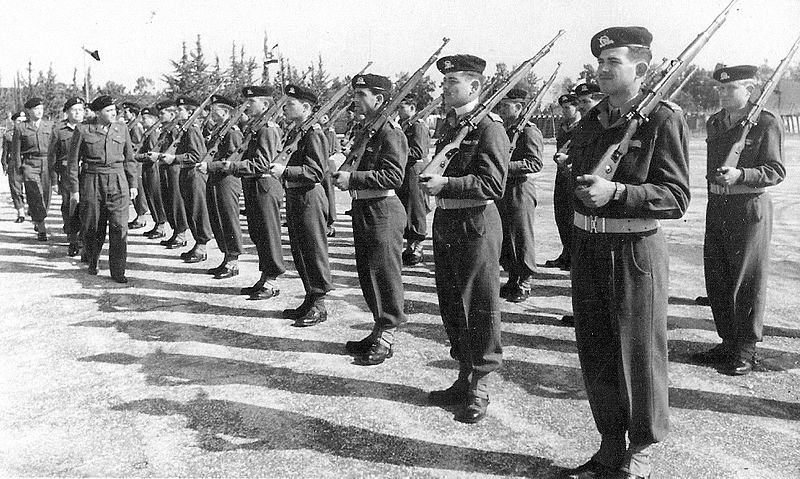
Gewehr 98
rifle

Panzerschreck
Panzerschreck ( "tank's dread" or "tank's bane") was the popular name for the '''Raketenpanzerbüchse 54' ("Rocket Anti-armor Rifle Model 54", abbreviated to RPzB 54), an 88 mm reusable anti-tank rocket launcher developed by Nazi Germany in World War II. Another earlier, official name was Ofenrohr'' ("stove pipe").
MP 18
submachine gun
Walther PP
semi-automatic pistol
FG 42
German Mauser automatic rifle
MG 08
7.9 mm heavy machine gun
Gewehr 43
rifle
ZB vz. 26
Czechoslovak light machine gun
Goliath tracked mine
German demolition vehicle

MAS-38
The MAS-38 is a French submachine gun designed in the 1930s and used by French and German forces during the Second World War. It was derived from a small arms development program that took place between 1918 and 1922 under the control of the Service Technique de l'Armement. A submachine gun, a light machine gun and a semiautomatic rifle were developed to replace all the existing small arms. Budgetary pressures resulting from the building of the Maginot Line led to the delay of adoption of these new arms except for the LMG 1924.
Schwarzlose machine gun
8 mm medium machine gun
Flammenwerfer 35
1935 German portable flame-thrower
MG 13
machine gun
MP 3008
submachine gun
Panzerbüchse 39
German anti-tank rifle
Sauer 38H
semi-automatic pistol
MP 34
submachine gun
Steyr M1912
semi-automatic pistol
Mauser HSc
German handgun used in World War II
MG 30
machine gun
StG 45(M)
German prototype of a assault rifle in WW2
Vis 35
Polish semi-automatic pistol
MG 17
7.92 mm machine gun aircraft armament by Rheinmetall-Borsig
Gewehr 41
semi-automatic German rifle
Rheinmetall-Borsig MG 15
7.9 mm machine gun aircraft defensive armament
MP35
The MP35 () was a submachine gun used by the Wehrmacht, Waffen-SS and German police both before and during World War II. It was developed in the early 1930s by Emil Bergmann (son of Theodor Bergmann) and manufactured at the Bergmann company in Suhl (that also built one of the first submachine guns, the MP 18).

S-mine
The German S-mine (Schrapnellmine, Springmine or Splittermine in German), known by enemy Allied Forces as the "Bouncing Betty" on the Western Front and "frog-mine" on the Eastern Front, is the best-known version of a class of mines known as bounding mines. When triggered, these mines are launched into the air and then detonated at about from the ground. The explosion projects a lethal spray of shrapnel in all directions. The S-mine was an anti-personnel mine developed by Germany in the 1930s and used extensively by German forces during World War II. It was designed to be used in open areas aga

ZB-53
The ZB-53 was a Czechoslovak machine gun. A versatile weapon, it was used both as a squad support weapon, as a mounted machine gun for tanks and other armoured vehicles, and on fixed positions inside Czechoslovak border fortifications. Adopted before World War II by the armies of Czechoslovakia (as Těžký kulomet vz. 37, heavy machine gun model 37) and Romania, it was also license-built in the United Kingdom as the Besa machine gun. Following the German invasion of Czechoslovakia, large quantities of the weapon were captured by the Wehrmacht and used during the war under the designation of MG 3
Hafthohlladung
The Hafthohlladung (German, lit. "adhesive hollow charge"), also known as the "Panzerknacker" ("tank breaker", an analogy to "safe cracker"), was a magnetically adhered, shaped charge anti-tank grenade used by German forces in World War II, and was sometimes described as a mine.
MG 81 machine gun
machine gun
Fliegerfaust
The Fliegerfaust (lit. "pilot fist","plane fist", or "aviator fist"), also known as the "Luftfaust" (lit. "air fist"), was a German prototype of a man-portable, multi-barreled, unguided rocket launcher, designed to destroy enemy ground attack planes.
8.8 cm Raketenwerfer 43
88 mm calibre reusable anti-tank rocket launcher developed by the Nazi Germany during World War II
Erma EMP
submachine gun
ZH-29
The ZH-29 was a semi-automatic rifle developed in Czechoslovakia during the late 1920s, and used by the Chinese National Revolutionary Army.
Model 39 grenade
grenade
ZB vz. 30
7.9 mm machine gun
ČZ vz. 27
semi-automatic pistol
Einstossflammenwerfer 46
German flamethrower
Stielhandgranate 24
German stick grenade
Bodeo Model 1889
type of service revolver

Panzerwurfmine
thumb|right|Drawings of a Panzerwurfmine
The Panzerwurfmine (abbreviated to PWM) was a shaped charge hand-thrown anti-tank grenade used by Luftwaffe ground troops in World War II.

Volkspistole
The Volkspistole ('People's Pistol') was a prototype pistol produced by Carl Walther GmbH, Mauser-Werke and Gustloff-Werke in 1945 for an emergency German pistol design to help mitigate the loss of pistols before the war's end in Europe.
Sturmpistole
The Sturmpistole ("assault-pistol") was an attempt by Germany during World War II to create a multi-purpose weapon which could be used by any infantryman. It consisted of a modified flare gun (Leuchtpistole) which could fire a variety of grenades, including a shaped charge Panzerwurfkörper 42 which could penetrate of rolled homogeneous armor. The idea was not pursued wholeheartedly, and took second stage to the then current anti-tank rifles and later weapon developments, such as the recoilless Panzerfaust and Panzerschreck rocket launchers.
Flammenwerfer 41
1941 German portable flamethrower
Astra 600
Spanish semi-automatic pistol

Stielhandgranate
' (lit. "Stick hand grenade") is a series of World War I and World War II–era German hand grenade designs, also known as the Potato masher (), Doorknocker (), or Jam-pot and stick grenade' (by the British in WWI), The first models were introduced by the Imperial German Army during World War I and the final design was introduced during World War II by the German Wehrmacht.
Tellermine 35
type of anti-tank mine
Dreyse M1907
semi-automatic pistol
FÉG 37M Pistol
semi-automatic pistol

Volkssturmgewehr
The Volkssturmgewehr ("People's Storm - Rifle") is the name of several rifle designs developed by Nazi Germany during the final months of World War II (February 1945-May 1945). They share the common characteristic of being greatly simplified as to adapt with the severe lack of resources and industrial capacity in Germany during the final stages of the war. The Volkspistole was a partner program, almost identical, but for pistols instead.