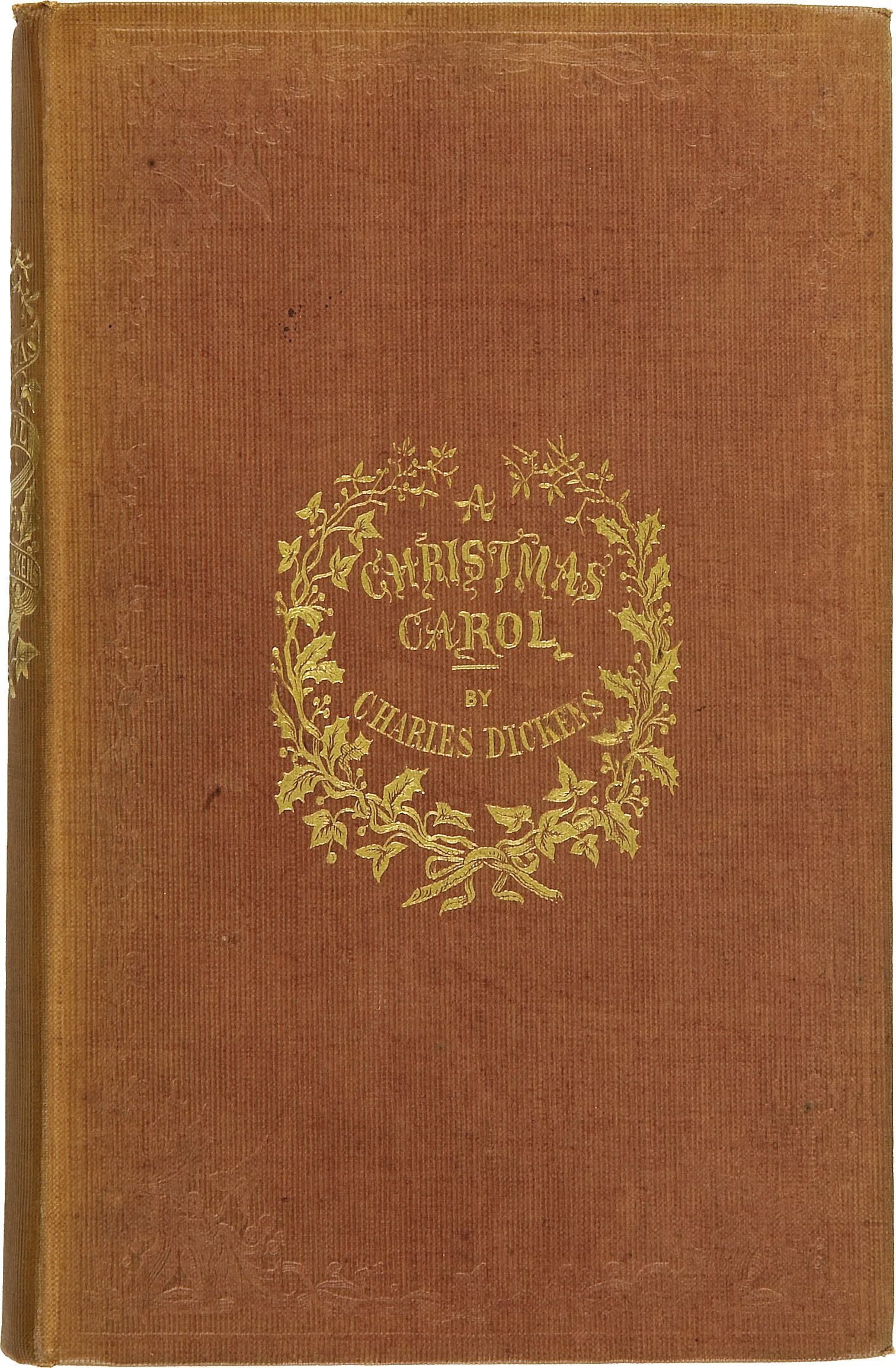
A Christmas Carol
Sign in to saveAlso known as A Christmas Carol in Prose, A Christmas Carol in Prose, Being a Ghost-Story of Christmas
A Christmas Carol. In Prose. Being a Ghost Story of Christmas, commonly known as A Christmas Carol, is a novella by Charles Dickens, first published in London by Chapman & Hall in 1843 and illustrated by John Leech. It recounts the story of Ebenezer Scrooge, an elderly miser who is visited by the ghost of his former business partner Jacob Marley and the spirits of Christmas Past, Present and Yet to Come. In the process, Scrooge is transformed into a kinder, gentler man.
"A Christmas Carol" is an 1843 novella by Charles Dickens that tells the story of a wealthy miser named Ebenezer Scrooge who is visited by ghosts on Christmas Eve and undergoes a dramatic transformation into a kinder person. The novella remains significant as a beloved classic work of English literature that has been widely adapted and continues to influence how Christmas is portrayed in popular culture.
AI-generated from the Wikipedia summary — may contain errors.
Wikipedia views (30d)
31,019 totalvia Wikimedia Pageviews API
Wikidata facts
- Read free · Project Gutenberg
- #46
- Instance of
- literary work
- Author
- Charles Dickens
- Country of origin
- United Kingdom
- Publisher
- Chapman and Hall
- Followed by
- The Chimes
- Main subject
- time travel
- Narrative location
- London
- Image
- Charles Dickens-A Christmas Carol-Cloth-First Edition 1843.jpg
Show 16 more facts
- publication date
- 1843-12-19
- Commons category
- A Christmas Carol
- topic's main category
- Category:A Christmas Carol
- Commons gallery
- A Christmas Carol
- characters
- Fred
- title
- A Christmas Carol
- first line
- Marley was dead, to begin with.
- language of work or name
- English language
- copyright status
- public domain
- last line
- And so, as Tiny Tim observed, God bless Us, Every One!
- subtitle
- In Prose. Being a Ghost Story of Christmas
- set during recurring event
- Christmas and holiday season
- different from
- A Christmas Carol
- work available at URL
- www.projekt-gutenberg.org/dickens/weihlied/weihlied.html
- form of creative work
- novella
- illustrator
- John Leech
Sources (10)
via Wikidata · CC0
~33 min read
Encyclopedic overview
A Christmas Carol. In Prose. Being a Ghost Story of Christmas, commonly known as A Christmas Carol, is a novella by Charles Dickens, first published in London by Chapman & Hall in 1843 and illustrated by John Leech. It recounts the story of Ebenezer Scrooge, an elderly miser who is visited by the ghost of his former business partner Jacob Marley and the spirits of Christmas Past, Present and Yet to Come. In the process, Scrooge is transformed into a kinder, gentler man.
Dickens wrote A Christmas Carol during a period when the British were exploring and re-evaluating past Christmas traditions, including carols, and newer customs such as cards and Christmas trees. He was influenced by the experiences of his own youth and by the Christmas stories of other authors, including Washington Irving and Douglas Jerrold. Dickens had written three Christmas stories prior to the novella, and was inspired following a visit to the Field Lane Ragged School, one of several establishments for London's street children. The treatment of the poor and the ability of a selfish man to redeem himself by transforming into a more sympathetic character are the key themes of the story. There is discussion among academics as to whether this is a fully secular story or a Christian allegory.
Excerpted from Wikipedia’s “A Christmas Carol” article, available under the CC BY-SA 4.0 licence.
Gallery (13)
Available in 64 languages
- Español
- Français
- Deutsch
- 中文
- 日本語
- Русский
- Português
- Italiano
- العربية
- Albanian
- Albanian
- Azerbaijani
- Bahasa Indonesia
- Bangla
- Basque
- Breton
- Bulgarian
- Burmese
Show 45 more
- Catalan
- Cornish
- Croatian
- Czech
- Danish
- Esperanto
- Finnish
- Galician
- Greek
- Hebrew
- Hungarian
- Icelandic
- Irish
- Javanese
- Kyrgyz
- Latin
- Latvian
- Lingua Franca Nova
- Lithuanian
- Macedonian
- Malay
- Malayalam
- Maltese
- Nederlands
- Norwegian
- Norwegian Nynorsk
- Polski
- Punjabi
- Romanian
- Serbian
- Serbian (Latin)
- Silesian
- simple
- Svenska
- Tiếng Việt
- Türkçe
- Ukrainian
- Urdu
- Venetian
- Waray
- Western Frisian
- zh_yue
- فارسی
- ไทย
- 한국어
via Wikidata sitelinks · CC0