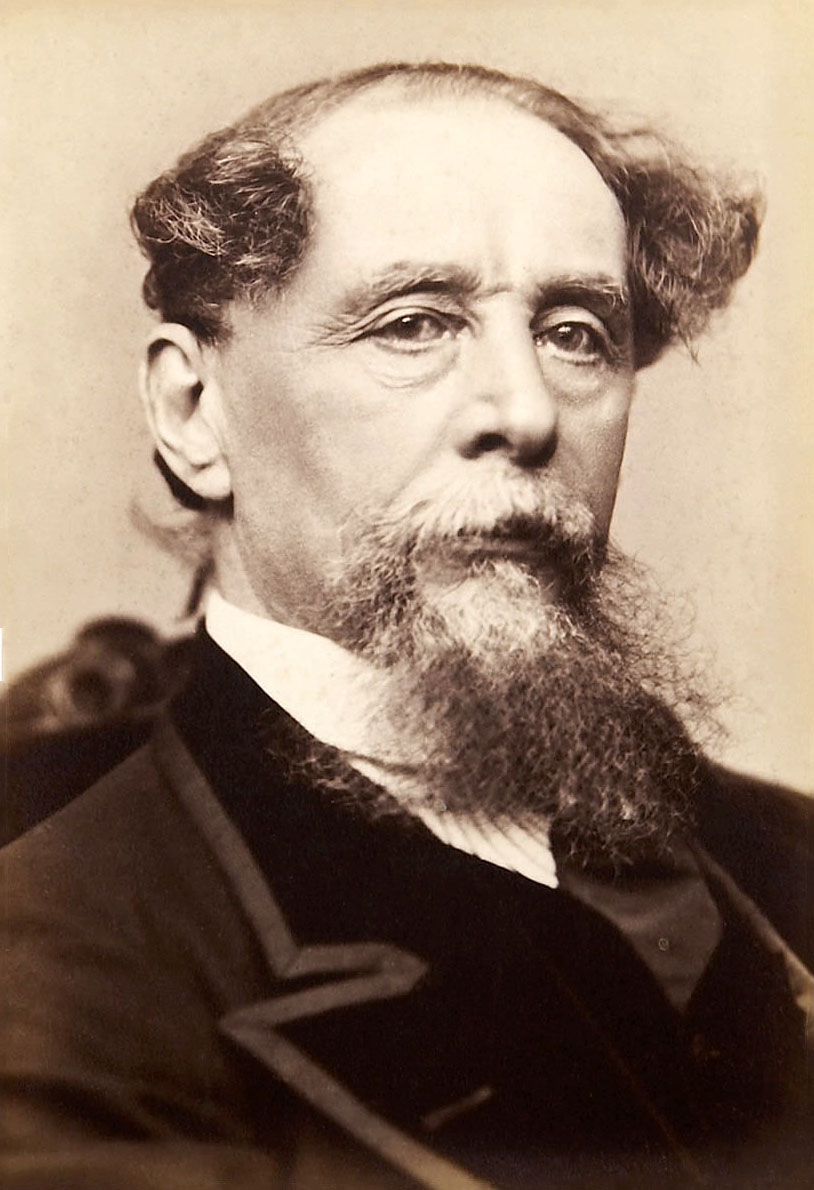
Charles Dickens
Sign in to saveAlso known as Dickens, Charles John Huffam Dickens, Boz, C. Dickens
Charles John Huffam Dickens was an English writer and journalist. He created some of literature's best-known fictional characters, and is regarded by many as the greatest novelist of the Victorian era. His works enjoyed unprecedented popularity during his lifetime and, by the 20th century, critics and scholars had recognised him as a literary genius. His novels and short stories are widely read today.
OverviewAI-generated
Charles Dickens was a British writer, novelist, journalist, and playwright. Born Charles John Huffam Dickens on 7 February 1812, he was the son of John Dickens. He held citizenship in the United Kingdom of Great Britain and Ireland and later the United Kingdom. His notable works include The Pickwick Papers, Oliver Twist, A Christmas Carol, and David Copperfield. Other significant titles are A Tale of Two Cities, The Life and Adventures of Nicholas Nickleby, Little Dorrit, and Nicholas Nickleby. He also wrote under the pseudonym بوز.
Dickens was married to Catherine Dickens, with whom he had four children: Charles Dickens, Jr., Mary Dickens, Kate Perugini, and Henry Fielding Dickens. He was also in an unmarried partnership with Ellen Ternan. He died of a cerebral hemorrhage on 9 June 1870 in Higham, with natural causes listed as the manner of death. He is buried at Westminster Abbey. Dickens was an Anglican and received the award of Fellow of the Royal Society of Arts.
Synthesized by Vinony from 26 facts across 2 sources: Wikidata, Open Library. Generated from structured data (not the Wikipedia text) and checked against those facts — may still contain errors.
In the Vinony graph
Within Vinony's link graph, Charles Dickens is referenced by 5,341 other articles, and connects out to Peter Ackroyd, Chatham and Leigh Hunt.
The entry is geolocated on the map.
It is catalogued under topics including 1812 births, 1870 deaths and 19th-century British letter writers.
Its subject is documented across 176 Wikipedia language editions.
Person · Open Library
- Born
- 7 February 1812
- Died
- 9 June 1870
- Works
- 7377
Top works
- Dickens birthday book
- Dawitʻ Kōppērfild
- A child's history of England
- The Lombard Street edition of the novels of Charles Dickens
- A Christmas carol
via Open Library + Wikidata
Film & TV
Portsmouth, Hampshire, England, UK
Charles John Huffam Dickens (7 February 1812 – 9 June 1870) was an English writer and social critic. He created some of the world's best-known fictional characters and is regarded as the greatest novelist of the Victorian era. His works enjoyed unprecedented popularity during his lifetime, and by the twentieth-century critics and scholars had recognised him as a literary genius. His novels and…
via TMDB
Wikipedia views (30d)
121,587 totalvia Wikimedia Pageviews API
Wikidata facts
- Instance of
- human
- Gender
- male
- Citizenship
- United Kingdom
- Place of birth
- Portsmouth
- Place of death
- Higham
- Spouse
- Catherine Dickens
- Father
- John Dickens
- Occupation
- court reporter
- Languages spoken
- British English
- Native language
- British English
- Religion
- Anglicanism
- Notable work
- The Mystery of Edwin Drood
- Field of work
- literature
- Genre
- non-fiction
- Movement
- literary realism
- Image
- Bust of Charles Dickens by Giovanni Fontana.jpg
- Work location
- Rochester
Show 26 more facts
- place of burial
- Westminster Abbey
- Commons category
- Charles Dickens
- date of birth
- 1812-00-00
- date of death
- 1870-00-00
- topic's main category
- Category:Charles Dickens
- cause of death
- cerebral hemorrhage
- Commons Creator page
- Charles Dickens
- pseudonym
- بوز
- birth name
- Charles John Huffam Dickens
- manner of death
- natural causes
- Commons gallery
- Charles Dickens
- list of works
- Charles Dickens bibliography
- unmarried partner
- Ellen Ternan
- ethnic group
- English people
- on focus list of Wikimedia project
- Wikipedia:Vital articles/Level/4
- name in native language
- Charles Dickens
- writing language
- British English
- topic has template
- Template:Charles Dickens
- has works in the collection
- Anne Frank House
- P8168
- Heike Meißner
- contributor to the creative work or subject
- Household Words
- medical condition
- epilepsy
- contributed to creative work
- Household Words
- P12674
- Kristen Nygaard
- P12749
- Corippo
- influenced by
- Henry Fielding
Sources (15)
via Wikidata · CC0
~40 min read
Encyclopedic overview
Charles John Huffam Dickens (/ˈdɪkɪnz/ ; 7 February 1812 – 9 June 1870) was an English writer and journalist. He created some of literature's best-known fictional characters, and is regarded by many as the greatest novelist of the Victorian era. His works enjoyed unprecedented popularity during his lifetime and, by the 20th century, critics and scholars had recognised him as a literary genius. His novels and short stories are widely read today.
Born in Portsmouth, Dickens left school at age 12 to work in a boot-blacking factory when his father John was incarcerated in a debtors' prison. After three years, he returned to school before beginning his literary career as a journalist. Dickens edited a weekly journal for 20 years; wrote 15 novels, 5 novellas, hundreds of short stories and nonfiction articles; lectured and performed readings extensively; was a tireless letter writer; and campaigned vigorously for children's rights, education and other social reforms.
Excerpted from Wikipedia’s “Charles Dickens” article, available under the CC BY-SA 4.0 licence.
Gallery (14)
On the map
Available in 176 languages
- Español
- Français
- Deutsch
- 中文
- 日本語
- Русский
- Português
- Italiano
- العربية
- हिन्दी
- abstract
- Afrikaans
- Albanian
- Albanian
- Amharic
- Aragonese
- Armenian
- Arpitan
Show 157 more
- Assamese
- Asturian
- Aymara
- azb
- Azerbaijani
- Bahasa Indonesia
- Balinese
- Bangla
- Bashkir
- Basque
- bat_smg
- Bavarian
- be_x_old
- Belarusian
- Bislama
- Bosnian
- Breton
- btm
- Bulgarian
- Buriat
- Burmese
- Catalan
- Cebuano
- Central Kurdish
- Chechen
- Cornish
- Corsican
- Crimean Tatar
- Croatian
- Czech
- Danish
- Egyptian Arabic
- Erzya
- Esperanto
- Estonian
- Fiji Hindi
- Filipino
- Finnish
- Frafra
- Galician
- Georgian
- Gilaki
- Greek
- Guarani
- Haitian Creole
- Hausa
- Hebrew
- Hungarian
- hyw
- Icelandic
- Ido
- Iloko
- Interlingua
- Interlingue
- Irish
- Javanese
- Jju
- Kabardian
- Kabyle
- Kannada
- Kanuri
- Kara-Kalpak
- Kashmiri
- Kazakh
- kbp
- Komi
- Kotava
- Kurdish
- Kyrgyz
- Latin
- Latvian
- Ligurian
- Limburgish
- Lingua Franca Nova
- Lithuanian
- lld
- Lombard
- Low German
- Luxembourgish
- Macedonian
- Madurese
- Maithili
- Malagasy
- Malay
- Malayalam
- Maltese
- Manx
- Marathi
- Mari
- Mazanderani
- Minangkabau
- Mingrelian
- Mongolian
- Moroccan Arabic
- nah
- Nederlands
- Nepali
- Newari
- Northern Frisian
- Norwegian
- Norwegian Nynorsk
- Occitan
- Odia
- olo
- Pashto
- Piedmontese
- Polski
- Punjabi
- Quechua
- roa_rup
- Romanian
- Rusyn
- Santali
- Saterland Frisian
- Scots
- Scottish Gaelic
- Serbian
- Serbian (Latin)
- Sicilian
- simple
- Sindhi
- Sinhala
- Slovak
- Slovenian
- Svenska
- Swahili
- Tachelhit
- Tajik
- Talysh
- Tamil
- Tatar
- Telugu
- Tiếng Việt
- Türkçe
- Turkmen
- Tuvinian
- Ukrainian
- Urdu
- Uzbek
- Veps
- Volapük
- Waray
- Welsh
- West Flemish
- Western Frisian
- Western Mari
- Western Panjabi
- Wu Chinese
- Yakut
- Yiddish
- Yoruba
- Zaza
- zh_min_nan
- zh_yue
- فارسی
- ไทย
- 한국어
via Wikidata sitelinks · CC0