
File:Darwins_Thinking_Path.JPG · Wikimedia Commons · See Wikimedia Commons
Charles Darwin
Sign in to saveAlso known as Charles Robert Darwin, Charles R. Darwin, C. R. Darwin, Darwin
English naturalist and biologist (1809-1882)
OverviewAI-generated
Charles Robert Darwin was a male geologist, explorer, travel writer, and ethologist from the United Kingdom of Great Britain and Ireland. Born on 12 February 1809 and dying on 19 April 1882, he was educated at Shrewsbury School, Christ's College, the University of Edinburgh Medical School, and the University of Cambridge, where he earned a Bachelor of Arts degree. His notable works include The Origin of Species, The expression of the emotions in man and animals, and The origin of species by means of natural selection or The preservation of favored races in the struggle for life.
Darwin was a member of the Royal Society, the German Academy of Sciences Leopoldina, the Royal Swedish Academy of Sciences, and the American Philosophical Society. He received the Royal Medal, the Copley Medal, and the Pour le Mérite. He was influenced by Thomas Robert Malthus, John Frederick William Herschel, Herbert Spencer, and Georges-Louis Leclerc, Comte de Buffon. He was married to Emma Darwin and had children including Anne, Francis, George Howard, and Leonard Darwin. He is buried at Westminster Abbey.
Synthesized by Vinony from 30 facts across 4 sources: Wikidata, Open Library, Europeana Sparql, Vinony collections. Generated from structured data (not the Wikipedia text) and checked against those facts — may still contain errors.
Person · Open Library
- Born
- 12 February 1809
- Died
- 19 April 1882
- Works
- 1971
Top works
- The origin of species by means of natural selection
- Selected works of Charles Darwin ...
- The Origin of Species
- The expression of the emotions in man and animals
- The origin of species by means of natural selection or The preservation of favored races in the struggle for life
via Open Library + Wikidata
Wikidata facts
- Instance of
- human
- Given name
- Robert
- Family name
- Darwin
- Gender
- male
- Citizenship
- United Kingdom of Great Britain and Ireland
- Place of birth
- Shrewsbury
- Place of death
- London
- Spouse
- Emma Darwin
- Father
- Robert Darwin
- Educated at
- University of Edinburgh
- Employer
- Royal Geographical Society
- Languages spoken
- English language
- Native language
- English language in England
- Religion
- agnosticism
- Award
- Darwin Medal
- Participant in
- Second voyage of HMS Beagle
- Student of
- John Edmonstone
- Field of work
- zoology
- Image
- Charles Darwin by Julia Margaret Cameron, c. 1868.jpg
- Residence
- The Mount
Show 26 more facts
- place of burial
- Westminster Abbey
- Commons category
- Charles Darwin
- member of
- Royal Entomological Society
- topic's main category
- Category:Charles Darwin
- date of birth
- 1809-02-12
- date of death
- 1882-00-00
- Commons Creator page
- Charles Darwin
- name in native language
- Charles Robert Darwin
- Commons gallery
- Charles Darwin
- influenced by
- Jean-Baptiste de Lamarck
- Y-DNA Haplogroup
- Haplogroup R1b
- on focus list of Wikimedia project
- Wikipedia:Vital articles/Level/4
- author citation (zoology)
- Darwin
- P6944
- Charles Darwin
- writing language
- English language
- owner of
- Down House
- short name
- Charles Darwin
- has works in the collection
- Memoria Chilena
- member of the crew of
- HMS Beagle
- birth name
- Charles Robert Darwin
- contributed to creative work
- Popular Science
- collection items at
- Bishop Museum
- medical condition
- myalgic encephalomyelitis/chronic fatigue syndrome
- P8168
- Menger sponge
- P12749
- taiga
- maintained by WikiProject
- WikiProject Skepticism
Sources (15)
via Wikidata · CC0
Works in European collections
18 objects attributed to Charles Darwin, held across European museums, libraries & archives · via Europeana
Orígen de las especies por medio de la selección natural : ó la conservación de las razas favorecidas en la lucha por la existencia
The variation of animals and plants under domestication
The origin of species : by means of natural selection, or the preservation of favoured races in the struggle for life
The descent of man and selection in relation to sex
Voyage d'un naturaliste autour du monde : fait a bord du navire Beagle
Mi viaje alrededor del mundo
Mi viaje alrededor del mundo
Reise eines Naturforschers um die Welt Mit vierzehn Holzschnitten
Untitled
Untitled
Untitled
Untitled
Untitled
Untitled
Untitled
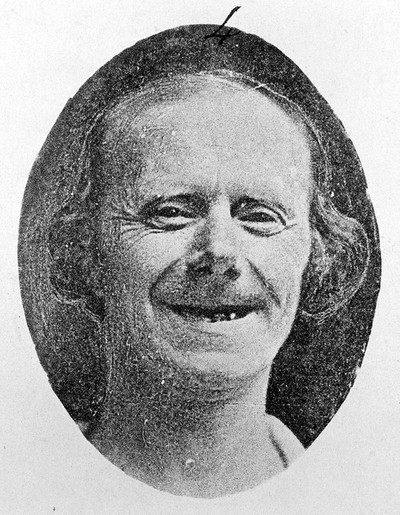
Untitled

Untitled

Untitled
~40 min read
Encyclopedic overview
Charles Robert Darwin (/ˈdɑːrwɪn/ DAR-win; 12 February 1809 – 19 April 1882) was an English naturalist, geologist, and biologist, widely known for his contributions to evolutionary biology. His proposition that all species of life have descended from a common ancestor is now generally accepted and considered a fundamental scientific concept. In a joint presentation with Alfred Russel Wallace, he introduced his scientific theory that this branching pattern of evolution resulted from a process he called natural selection, in which the struggle for existence has a similar effect to the artificial selection involved in selective breeding. Darwin has been described as one of the most influential figures in human history and was honoured by burial in Westminster Abbey.
Darwin's early interest in nature led him to neglect his medical education at the University of Edinburgh; instead, he helped Robert Edmond Grant to investigate marine invertebrates. His studies at the University of Cambridge's Christ's College from 1828 to 1831 encouraged his passion for natural science. However, it was his five-year voyage on HMS Beagle from 1831 to 1836 that truly established Darwin as an eminent geologist. The observations and theories he developed during his voyage supported Charles Lyell's concept of gradual geological change. Publication of his journal of the voyage made Darwin famous as a popular author. His first scientific work was The Structure and Distribution of Coral Reefs (1842). Along with his work on barnacles, it won him the Royal Medal in 1853.
Excerpted from Wikipedia’s “Charles Darwin” article, available under the CC BY-SA 4.0 licence.
Gallery (12)
Available in 211 languages
- Español
- Français
- Deutsch
- 中文
- 日本語
- Русский
- Português
- Italiano
- العربية
- हिन्दी
- abstract
- Afrikaans
- Albanian
- Albanian
- Amharic
- Angika
- Aragonese
- Armenian
Show 192 more
- Assamese
- Asturian
- Awadhi
- Aymara
- azb
- Azerbaijani
- Bahasa Indonesia
- Balinese
- Bangla
- Bashkir
- Basque
- bat_smg
- Bavarian
- be_x_old
- Belarusian
- Bhojpuri
- Bikol
- Bislama
- Bosnian
- Breton
- btm
- Bulgarian
- Buriat
- Burmese
- Catalan
- cdo
- Central Kurdish
- Chechen
- Chuvash
- Cornish
- Corsican
- Crimean Tatar
- Croatian
- Czech
- Danish
- dty
- Egyptian Arabic
- Erzya
- Esperanto
- Estonian
- Extremaduran
- Faroese
- Fiji Hindi
- Filipino
- Finnish
- fiu_vro
- Friulian
- Galician
- Gan Chinese
- gcr
- Georgian
- Goan Konkani
- Greek
- Guarani
- Gujarati
- Haitian Creole
- Hakka Chinese
- Hausa
- Hebrew
- Hungarian
- hyw
- Icelandic
- Ido
- Iloko
- Interlingua
- Interlingue
- Irish
- Jamaican Creole English
- Javanese
- Kabyle
- Kannada
- Kanuri
- Kara-Kalpak
- Kashmiri
- Kazakh
- kbp
- Khmer
- Kurdish
- Kyrgyz
- Ladino
- Lao
- Latin
- Latvian
- Lezghian
- Ligurian
- Limburgish
- Lingua Franca Nova
- Lithuanian
- Lojban
- Lombard
- Low German
- Luxembourgish
- Macedonian
- Madurese
- Maithili
- Malagasy
- Malay
- Malayalam
- Maltese
- Manx
- map_bms
- Marathi
- Mazanderani
- Minangkabau
- Mingrelian
- Mirandese
- mnw
- Mongolian
- Moroccan Arabic
- nds_nl
- Nederlands
- Nepali
- Newari
- Nias
- Northern Frisian
- Northern Sotho
- Norwegian
- Norwegian Nynorsk
- Occitan
- Odia
- Old English
- olo
- Ossetic
- Pampanga
- Pashto
- Picard
- Piedmontese
- Polski
- ppl
- Punjabi
- Quechua
- rki
- roa_rup
- Romanian
- Romansh
- rsk
- Rusyn
- Sanskrit
- Santali
- Sardinian
- Scots
- Scottish Gaelic
- Serbian
- Serbian (Latin)
- Sicilian
- Silesian
- simple
- Sindhi
- Sinhala
- Slovak
- Slovenian
- Standard Moroccan Tamazight
- Sundanese
- Svenska
- Swahili
- szy
- Tachelhit
- Tajik
- Talysh
- Tamil
- Tatar
- Telugu
- Tiếng Việt
- Toki Pona
- Türkçe
- Ukrainian
- Urdu
- Uyghur
- Uzbek
- Venetian
- Veps
- Volapük
- Walloon
- Waray
- Welsh
- West Flemish
- Western Frisian
- Western Panjabi
- Wolof
- Wu Chinese
- Yakut
- Yiddish
- Yoruba
- Zaza
- Zeelandic
- zh_classical
- zh_min_nan
- zh_yue
- Zhuang
- فارسی
- ไทย
- 한국어
via Wikidata sitelinks · CC0