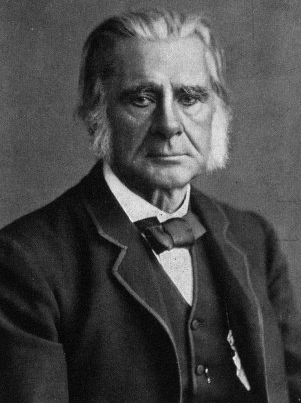
File:Thomas_Henry_Huxley_-_Project_Gutenberg_eText_16935.jpg · Wikimedia Commons · See Wikimedia Commons
agnosticism
Sign in to saveAgnosticism is the stance that the existence of God, the divine, the supernatural, or any other untestable claim is either unknowable in principle or unknown in fact. It can also mean an apathy towards such religious belief and refer to personal limitations rather than a worldview. Another definition is the view that "human reason is incapable of providing sufficient rational grounds to justify either the belief that God exists or the belief that God does not exist."
Agnosticism is the position that we either cannot know or do not currently know whether God or the divine exists, since such claims are difficult or impossible to test conclusively. It matters because it represents a distinct middle ground between atheism and religious belief, focusing on the limits of what humans can actually know or prove about ultimate spiritual questions.
AI-generated from the Wikipedia summary — may contain errors.
In the Vinony graph
Within Vinony's link graph, agnosticism is referenced by 4,107 other articles, and connects out to Sextus Empiricus, empiricism and teleological argument.
It is catalogued under the topic Agnosticism.
Its subject is documented across 114 Wikipedia language editions.
Wikidata facts
- Instance of
- point of view
- Subclass of
- belief
Show 9 more facts
- opposite of
- metaphysics
- topic's main category
- Category:Agnosticism
- Commons gallery
- Agnosticism
- Commons category
- Agnosticism
- different from
- gnosticism
- on focus list of Wikimedia project
- Wikipedia:Vital articles/Level/4
- named by
- Thomas Henry Huxley
- significant person
- Protagoras
- facet of
- irreligion
Sources (6)
via Wikidata · CC0
~23 min read
Encyclopedic overview
29 sectionsContents
- Defining agnosticism
- Etymology
- Qualifying agnosticism
- Types
- Strong agnosticism
- Weak agnosticism
- Apathetic agnosticism
- History
- Hindu philosophy
- Hume, Kant, and Kierkegaard
- United Kingdom
- Charles Darwin
- Thomas Henry Huxley
- William Stewart Ross
- Bertrand Russell
- Leslie Weatherhead
- United States
- Robert G. Ingersoll
- Bernard Iddings Bell
- Demographics
- Criticism
- Theistic
- Christian
- Atheistic
- Ignosticism
- See also
- References
- Further reading
- External links
Agnosticism is the stance that the existence of God, the divine, the supernatural, or any other untestable claim is either unknowable in principle or unknown in fact. It can also mean an apathy towards such religious belief and refer to personal limitations rather than a worldview. Another definition is the view that "human reason is incapable of providing sufficient rational grounds to justify either the belief that God exists or the belief that God does not exist."
The English biologist Thomas Henry Huxley claimed that he originally coined the word agnostic in 1869 "to denote people who, like [himself], confess themselves to be hopelessly ignorant concerning a variety of matters [including the matter of God's existence], about which metaphysicians and theologians, both orthodox and heterodox, dogmatise with the utmost confidence." In this sense, agnosticism reflects a stance of withholding belief on any claim that cannot be tested or verified. Although Huxley coined the term in 1869, the agnostic viewpoint itself had been expressed by earlier thinkers, such as Sanjaya Belatthiputta, a 5th-century BCE Indian philosopher who expressed agnosticism about any afterlife; and Protagoras, a 5th-century BCE Greek philosopher who expressed agnosticism about the existence of "the gods".
Excerpted from Wikipedia’s “agnosticism” article, available under the CC BY-SA 4.0 licence.
Gallery (197)
Available in 114 languages
- Español
- Français
- Deutsch
- 中文
- 日本語
- Русский
- Português
- Italiano
- العربية
- हिन्दी
- Afrikaans
- Albanian
- Albanian
- Angika
- Aragonese
- Armenian
- Asturian
- Azerbaijani
Show 95 more
- Bahasa Indonesia
- Bangla
- Basque
- be_x_old
- Belarusian
- Bosnian
- Bulgarian
- Catalan
- Cebuano
- Central Kurdish
- Corsican
- Croatian
- Czech
- Danish
- Egyptian Arabic
- Esperanto
- Estonian
- Filipino
- Finnish
- fiu_vro
- Galician
- gcr
- Georgian
- Greek
- Hebrew
- Hungarian
- Icelandic
- Interlingua
- Irish
- Jamaican Creole English
- Javanese
- Kannada
- Kazakh
- kbp
- Kurdish
- Kyrgyz
- Latin
- Latvian
- Limburgish
- Lingua Franca Nova
- Lithuanian
- Lombard
- Low German
- Luxembourgish
- Macedonian
- Malagasy
- Malay
- Malayalam
- Manx
- Marathi
- Minangkabau
- Mirandese
- Moroccan Arabic
- nds_nl
- Nederlands
- Nepali
- Newari
- Norwegian
- Norwegian Nynorsk
- Occitan
- Ossetic
- Pashto
- Polski
- Punjabi
- Romanian
- Scots
- Scottish Gaelic
- Serbian
- Serbian (Latin)
- Sicilian
- simple
- Slovak
- Slovenian
- Somali
- Svenska
- Swahili
- Tajik
- Tamil
- Tibetan
- Tiếng Việt
- Türkçe
- Ukrainian
- Urdu
- Uzbek
- Waray
- Welsh
- Western Frisian
- Wu Chinese
- Yiddish
- Zaza
- zh_min_nan
- zh_yue
- فارسی
- ไทย
- 한국어
via Wikidata sitelinks · CC0