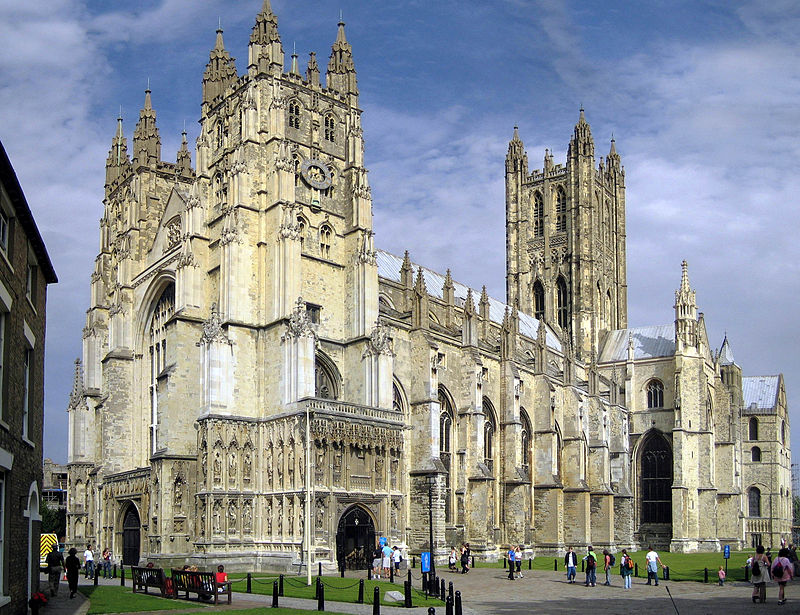
File:Canterbury_Cathedral_-_Portal_Nave_Cross-spire.jpeg · Wikimedia Commons · See Wikimedia Commons
Anglicanism
Sign in to saveAlso known as Anglican Church
Anglicanism, also known as Episcopalianism in some countries, is a Western Christian tradition which developed from the practices, liturgy, and identity of the Church of England following the English Reformation, in the context of the Protestant Reformation in Europe. It is one of the largest branches of Christianity, with around 110 million adherents within the Anglican Communion, and more than 400,000 outside of the Anglican Communion, worldwide as of 2025.
Anglicanism is a major branch of Christianity that emerged from the Church of England during the Protestant Reformation and is now practiced by around 110 million people worldwide as part of the Anglican Communion. It matters as one of the largest Christian traditions, shaping the religious, cultural, and historical identity of millions of people across the globe.
AI-generated from the Wikipedia summary — may contain errors.
Wikidata facts
- Subclass of
- Protestantism
- Religion
- Christianity
- Image
- Westminster abbey west.jpg
Show 7 more facts
- topic's main category
- Category:Anglicanism
- described by source
- Granat Encyclopedic Dictionary
- Commons category
- Anglicanism
- member count
- 110
- P8168
- The Smith of Kochel
- on focus list of Wikimedia project
- Wikipedia:Vital articles/Level/4
- Stack Exchange tag
- christianity.stackexchange.com/tags/anglicanism
via Wikidata · CC0
~98 min read
Encyclopedic overview
47 sectionsContents
- Terminology
- Definition
- Identity
- Early history
- Development
- Theories
- Doctrine
- "Catholic and reformed"
- Guiding principles
- Distinctives of Anglican belief
- Divines{{anchor|Anglican_divines}}
- Churchmanship
- Sacramental doctrine and practice
- Eucharistic theology
- Practices
- ''Book of Common Prayer''
- Worship
- Eucharistic discipline
- Daily office
- Communion
- Principles of governance
- Archbishop of Canterbury
- Conferences
- Ordained ministry
- Episcopate
- Priesthood
- Diaconate
- Laity
- Religious orders
- Worldwide distribution
- Ten largest Anglican populations (2020 statistics)
- Ecumenism
- Theological diversity
- Internal conflict
- Continuum
- Social activism
- Working conditions and Christian socialism
- Pacifism
- Opposition to apartheid
- Abortion and euthanasia
- Ordinariates within the Roman Catholic Church
- Notes
- References
- Citations
- Sources
- Further reading
- External links
Anglicanism, also known as Episcopalianism in some countries, is a Western Christian tradition which developed from the practices, liturgy, and identity of the Church of England following the English Reformation, in the context of the Protestant Reformation in Europe. It is one of the largest branches of Christianity, with around 110 million adherents within the Anglican Communion, and more than 400,000 outside of the Anglican Communion, worldwide as of 2025.
Adherents of Anglicanism are called Anglicans; they are also called Episcopalians in some countries. Most are members of national or regional ecclesiastical provinces of the international Anglican Communion, one of the largest Christian bodies in the world, and the world's third-largest Christian communion. The provinces within the Anglican Communion have historically been in full communion with the See of Canterbury and thus with the archbishop of Canterbury, whom the communion refers to as its (Latin, 'first among equals'). The archbishop calls the decennial Lambeth Conference, chairs the meeting of primates, and is the president of the Anglican Consultative Council. Some churches that are not part of the Anglican Communion or recognised by it also call themselves Anglican, including those that are within the Continuing Anglican movement and Anglican realignment.
Excerpted from Wikipedia’s “Anglicanism” article, available under the CC BY-SA 4.0 licence.
Gallery (601)
Available in 80 languages
- Español
- Français
- Deutsch
- 中文
- 日本語
- Русский
- Português
- Italiano
- العربية
- हिन्दी
- Albanian
- Albanian
- Armenian
- Arpitan
- Asturian
- Bahasa Indonesia
- Bangla
- Basque
Show 61 more
- Bavarian
- be_x_old
- Belarusian
- Betawi
- Bulgarian
- Catalan
- Croatian
- Czech
- Egyptian Arabic
- Esperanto
- Filipino
- Finnish
- Galician
- Georgian
- Greek
- Hebrew
- Iban
- Ido
- Interlingua
- Irish
- kbp
- Latin
- Latvian
- Lingua Franca Nova
- Lithuanian
- Lombard
- Macedonian
- Malagasy
- Malay
- Manx
- Mingrelian
- Nederlands
- Occitan
- Piedmontese
- Polski
- Scots
- Scottish Gaelic
- Serbian
- Serbian (Latin)
- simple
- Slovak
- Slovenian
- Svenska
- Swahili
- Tamil
- Tiếng Việt
- Türkçe
- Ukrainian
- Urdu
- Uzbek
- Venetian
- Waray
- Welsh
- Western Panjabi
- Wu Chinese
- Yoruba
- zh_min_nan
- zh_yue
- فارسی
- ไทย
- 한국어
via Wikidata sitelinks · CC0