
File:ABBA_-_TopPop_1974_5.png · Wikimedia Commons · See Wikimedia Commons
ABBA
Sign in to saveAlso known as Festfolket, Agnetha, Benny, Björn & Anni-Frid
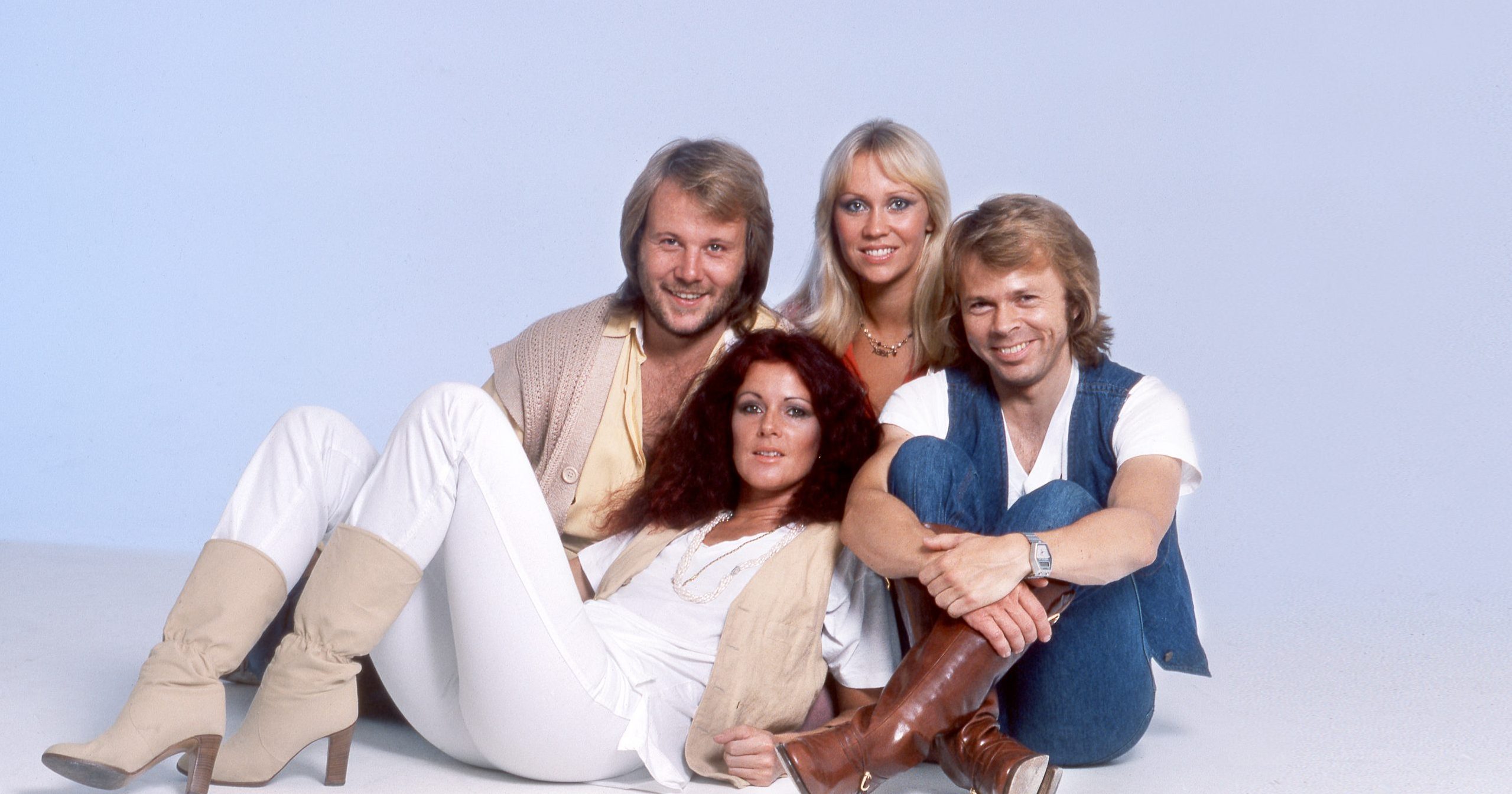
ABBA ( ) (often stylised as A𐤡BA) were a Swedish pop group formed in Stockholm in 1972 by Agnetha Fältskog, Björn Ulvaeus, Benny Andersson, and Anni-Frid Lyngstad. They are among the most renowned and commercially successful musical groups in history.
ABBA was a Swedish pop group formed in Stockholm in 1972 by four members: Agnetha Fältskog, Björn Ulvaeus, Benny Andersson, and Anni-Frid Lyngstad. They became one of the most famous and commercially successful musical groups in history.
AI-generated from the Wikipedia summary — may contain errors.
Key facts
- Musical artist.name
- ABBA
- Musical artist.image
- ABBA - TopPop 1974 5.png
- Musical artist.landscape
- yes
- Musical artist.caption
- ABBA in 1974; from left: Benny Andersson, Anni-Frid "Frida" Lyngstad, Agnetha Fältskog, and Björn Ulvaeus
- Musical artist.origin
- Stockholm, Sweden
- Musical artist.awards
- Full list
- Musical artist.past_members
- Benny Andersson Agnetha Fältskog Anni-Frid Lyngstad Björn Ulvaeus
via Wikipedia infobox
Official website
ABBA | The one and only ABBA Official Fanclub
The one and only ABBA Official Fanclub on ABBA…
abbasite.com →Link to the official site · 17,725 chars · not written by Vinony
Wikidata facts
- Has part
- Anni-Frid Lyngstad
- Named after
- Anni-Frid Lyngstad
- Genre
- disco
- Country of origin
- Sweden
- Instrument
- accordion
- Discography
- ABBA discography
- Official website
- www.abbasite.com
- Image
- ABBA - TopPop 1974 5.png
Show 26 more facts
- hashtag
- ABBA
- member category
- Category:ABBA members
- Commons category
- ABBA
- topic's main category
- Category:ABBA
- location of formation
- Stockholm
- Commons gallery
- ABBA
- inception
- 2018-00-00
- start of work period
- 1972-00-00
- topic has template
- Template:ABBA
- has works in the collection
- ABBA: The Museum
- review score
- 71
- social media followers
- 44823
- name
- AB-a
- member count
- 4
- uses
- Wall of Sound
- director / manager
- Stig Anderson
- influenced by
- The Mamas & the Papas
- on focus list of Wikimedia project
- Wikipedia:Vital articles/Level/4
- dissolved, abolished or demolished date
- 2016-00-00
- competition won
- Eurovision Song Contest 1974
- end of work period
- 1982-00-00
- copyright representative
- Polar Music International AB
- stylized name
- ᗅᗺᗷᗅ
- IPA transcription
- æbə
- maintained by WikiProject
- WikiProject Eurovision
- P12674
- Gangdong Station
Sources (15)
via Wikidata · CC0
~84 min read
Encyclopedic overview
43 sectionsContents
- History
- 1958–1970: Before ABBA
- Member origins and collaboration
- First live performance and the start of "Festfolket"
- First record together "Hej, gamle man"
- 1970–1973: Forming the group
- First hit as Björn, Benny, Agnetha and Anni-Frid
- "Ring Ring"
- Official naming
- Official logo
- 1973–1976: Breakthrough
- Eurovision Song Contest 1974
- Post-Eurovision
- 1976–1981: Superstardom
- ''Greatest Hits'' and ''Arrival''
- European and Australian tour
- ''ABBA: The Album''
- Polar Music Studio formation
- North American and European tours
- Progression
- 1981–1982: ''The Visitors'' and later performances
- Later recording sessions
- Later performances
- Break and reunion
- Resurgence of public interest
- 2016–2024: Reunion, ''Voyage'', and ABBAtars
- Artistry
- Recording process
- Fashion, style, videos, advertising campaigns
- Political use of ABBA's music
- Success in the United States
- Members
- Discography
- Tours
- Awards and nominations
- Documentaries
- See also
- References
- Notes
- Citations
- Bibliography
- Further reading
- External links
ABBA ( ) (often stylised as A𐤡BA) were a Swedish pop group formed in Stockholm in 1972 by Agnetha Fältskog, Björn Ulvaeus, Benny Andersson, and Anni-Frid Lyngstad. They are among the most renowned and commercially successful musical groups in history.
In , ABBA won the Eurovision Song Contest for with their song "Waterloo". In 2005, "Waterloo" was chosen as the best song in the competition's history during its 50th anniversary celebration. During their peak, ABBA comprised two married couples: Fältskog and Ulvaeus, and Lyngstad and Andersson. As their fame grew, their personal lives suffered, leading to the dissolution of both marriages. These relationship changes were reflected in the group's later music, which featured darker and more introspective lyrics.
Excerpted from Wikipedia’s “ABBA” article, available under the CC BY-SA 4.0 licence.
Gallery (385)
Available in 153 languages
- Español
- Français
- Deutsch
- 中文
- 日本語
- Русский
- Português
- Italiano
- العربية
- Abkhazian
- Achinese
- Afrikaans
- Albanian
- Albanian
- Aragonese
- Armenian
- Asturian
- Aymara
Show 134 more
- azb
- Azerbaijani
- Bahasa Indonesia
- Bangla
- Bashkir
- Basque
- bat_smg
- Bavarian
- be_x_old
- Belarusian
- Bikol
- Bosnian
- Breton
- Buginese
- Bulgarian
- Burmese
- Catalan
- cbk_zam
- Cebuano
- Central Kurdish
- Chechen
- Cherokee
- Church Slavic
- Chuvash
- Colognian
- Cornish
- Crimean Tatar
- Croatian
- Czech
- Danish
- Egyptian Arabic
- eml
- Esperanto
- Estonian
- Faroese
- Fiji Hindi
- Filipino
- Finnish
- fiu_vro
- Galician
- Georgian
- Greek
- Hawaiian
- Hebrew
- Hungarian
- hyw
- Iban
- Icelandic
- Ido
- Igbo
- Iloko
- Interlingua
- Irish
- Javanese
- Kabyle
- Kara-Kalpak
- Kongo
- Kurdish
- Kyrgyz
- Latgalian
- Latin
- Latvian
- Lezghian
- Limburgish
- Lingala
- Lingua Franca Nova
- Lithuanian
- Lojban
- Low German
- Luxembourgish
- Macedonian
- Malagasy
- Malay
- Malayalam
- Manx
- Mongolian
- Neapolitan
- Nederlands
- Norwegian
- Norwegian Nynorsk
- nup
- Occitan
- Old English
- Pampanga
- Pangasinan
- Papiamento
- Pennsylvania German
- Piedmontese
- Polski
- Punjabi
- Quechua
- Romanian
- Rusyn
- Sardinian
- Scottish Gaelic
- Serbian
- Serbian (Latin)
- Sicilian
- simple
- Sinhala
- Slovak
- Slovenian
- Somali
- Svenska
- Swahili
- Tajik
- Tamil
- Tiếng Việt
- Tok Pisin
- Türkçe
- Turkmen
- Ukrainian
- Urdu
- Uzbek
- Venetian
- Volapük
- Walloon
- Waray
- Welsh
- West Flemish
- Western Frisian
- Western Mari
- Wu Chinese
- Yakut
- Yiddish
- Yoruba
- Zaza
- Zeelandic
- zh_min_nan
- zh_yue
- Zulu
- فارسی
- ไทย
- 한국어
via Wikidata sitelinks · CC0